
Journalist and Host of The Spiro Circle Podcast
For a generation shaped by Oct. 7, service may not end with the army

Three years of war does something to the abstract question of what your obligation is to the place you live. Photo credit: ChatGPT
There’s a question I’ve been asked more times than I can count, usually by diaspora Jews visiting Israel for the first time or by those keen to write their own “Startup Nation” pieces: where does it all come from?
The innovation, the risk tolerance, the seemingly bottomless supply of young people who’ve just left the army and are already raising their first round.
Usually, people expect me to answer by crediting the IDF – which is somewhat right, and something I was doing for many years. But when I spoke with Mars Security co-founder and CEO Shahaf Galili, he told me something I didn’t expect. He spent 22 years inside Israeli military intelligence before going into the private sector – far longer than most Startup Nation founders, so he’s observing a different pipeline emerge among former soldiers of the October 7 generation. He says many are turning away from high-tech and feel a call toward public service.
“We have enough startups,” he told me when we reconnected for a virtual coffee a few weeks ago. “We don’t have enough very smart people in public service.”
He’s describing a generation of soldiers, not only in age, but in time, of intelligence officers and commanders who are coming out the other side of some of the most clarifying conditions imaginable and asking not how to fix something for success, but how to build something for societal health and prosperity.
It is an entirely different thought process I have heard from countless tech founders in a post-October 7 world who leave the army to build defense or cyber companies with the mission to fix a problem they identify in war zones. I have documented this extensively in my work for JNS, by appearing on ILTV’s Podcast to explain how war and high-tech often collide, and on my own podcast and publication, The Spiro Circle. That sentiment, Shahaf told me, is changing.
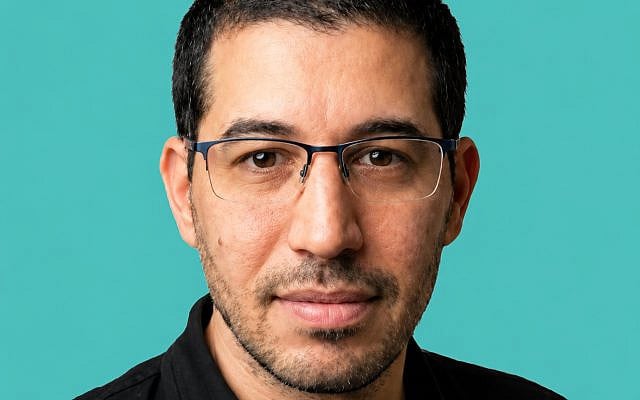
“A lot of them are saying, ‘to make this a viable place, a place I want to [raise] my children, it’s not enough to go and do a startup and make a lot of money,'” he said. “They’re choosing to enter public service in many forms, because they understand that’s the way to make this country better.”
One example he gave was a hacker he knew. Upon leaving the army, he told Shahaf he was going to join the police. Shahaf was surprised to hear him want to join a “terrible” organization, with terrible pay, and surrounded by bureaucracy. But the fact that it made no sense was exactly why it was the right thing to do.
“That blew my mind,” Shahaf said. “He was a bright star in very dark skies. Today I’m seeing way more of these. Way, way, way more.”
I find this genuinely hopeful. Not because public service is inherently more noble than building a company in Startup Nation – it isn’t, and Shahaf was quick to note the irony that he himself is now a startup founder. I spent so long speaking to one type of founder, but now I was hearing about someone whose relationship with the country they’ve just spent years defending is leading them down a new path dedicated to public service. They’re not cashing out. They’re staying in – even though the trenches look a bit different.
In Britain, where I grew up, this problem runs in the other direction. Those with the skills, the values, and a clear-eyed view of what’s broken tend to look at politics and public life and decide it’s not worth the hassles that come with that lifestyle. They go and do something safer instead, and what’s left in public life is, broadly, people who wanted to be there for other, more self-serving reasons.
Israel is different right now, and not only because it has no choice. Something has shifted in the calculus these people are making. Three years of war does something to the abstract question of what your obligation is to the place you live. It makes it concrete. It makes it personal. And apparently, for a meaningful number of very capable people, it makes the answer something other than a Series A.
We have already seen examples of Israeli high-tech talent entering public office, perhaps most notably Naftali Bennett, who co-founded the anti-fraud software company Cyota before entering politics, eventually serving as Prime Minister from 2021–22.
Joining him is Mati Gill, who established AION Labs, a venture studio focused on AI-driven pharmaceutical startups. He joined Bennett’s B’Yachad party slate ahead of the October election and is leading the party’s reform plan for the high-tech sector, explicitly framing his move as a call for “a new generation of public servants.”
I asked Shahaf whether he thought the army did enough to point people toward a future that celebrates public service the way it celebrates exits and unit commanders turned unicorn founders.
He didn’t hesitate. “We can do more.”
We can. And apparently, some people are starting to anyway.
I spend a lot of time speaking to founders and investors across Startup Nation. You can read my work on my independent platform and podcast, The Spiro Circle.
BONUS: I spoke to Mati Gill about how Israel can play a role as “a central hub” for pharma research.
Related Topics
Related Posts