


For my children and me, tolerance isn’t just a slogan
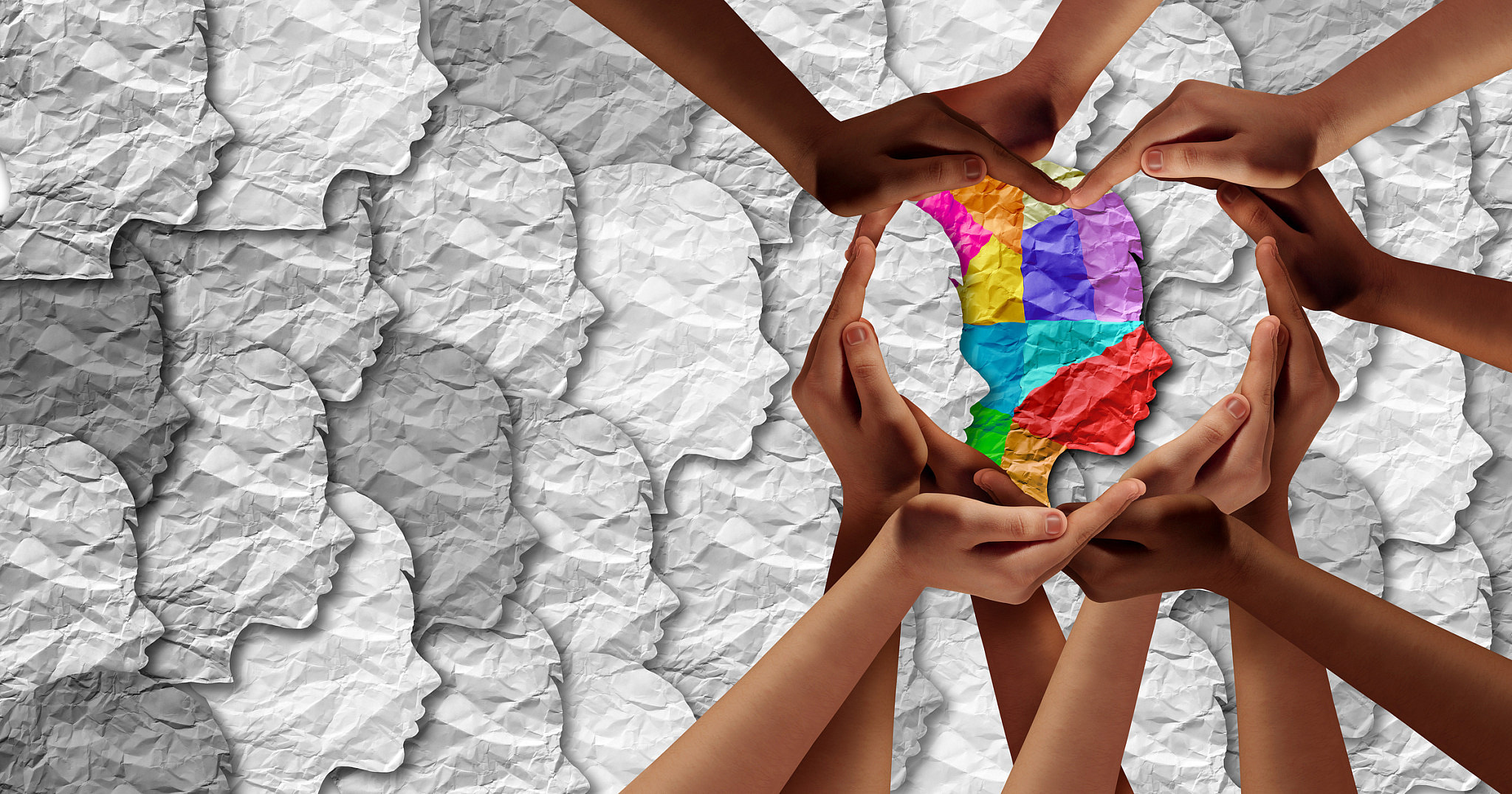
I am an autistic woman, a mother of two autistic children, and I also work with autistic people. This gives me three perspectives on the same reality, one where “tolerance” isn’t just a lofty educational value, but a basic condition for existence.
Yet it seems that our world today is drifting further away from that idea. We live in an era that glorifies uniformity, image, and perfection, a time when any deviation is immediately labeled a “problem.”
If you don’t think like me, you’re an enemy.
If you feel differently, you’re abnormal.
If you behave differently, you don’t belong.
Cancel culture has become the norm. Our ability to hold complexity, to listen, to pause judgment has been completely eroded. And when there’s no space for complexity, there’s no space for autistic people.
I think about this a lot, especially now, as the International Day for Tolerance approaches, with its message that tolerance is neither indulgence nor indifference, but rather respect and appreciation of the rich variety of the world’s cultures and forms of expression. Because at a time when society is divided, exhausted, busy scoring points and hunting for someone to blame, it’s hard to talk about real tolerance. And yet, I believe there’s no better moment to have this conversation.
I discovered I was autistic only as an adult. Not because it wasn’t there before, but because I spent my whole life trying not to be who I was. I tried to imitate others, to fit myself into molds considered “normal,” to play the game of “looking functional,” “being fine,” “fitting in socially.”
It was exhausting. It burned me out from the inside. Because living behind a constant mask of hiding, self-correcting, analyzing every word and glance isn’t really living. It’s an inner prison where every day you judge yourself anew, just to earn a temporary stamp of approval from the world.
I don’t want my children to live like that. I don’t want them to grow up thinking that being themselves is something that needs to be fixed, hidden, or toned down. I want them to know they’re not broken, that they’re not an inferior version of someone else.
Because when you tell a child from a young age that they must change to be “okay,” they learn one thing: that they themselves are not good enough. And then they grow up to be adults alienated from who they are, adults who know how to play roles, but don’t know who they really are. Adults afraid to make mistakes, afraid to hurt, afraid to speak. Adults who feel like strangers in their own lives.
This is one of the most painful outcomes of a society without true tolerance: it creates generations of people disconnected from themselves, people who learn not to be, but merely to appear.
And this isn’t just a personal story. It’s a broader social question: What message are we sending our children when we treat autism – or any other form of difference – as a defect that must be “fixed”?
When world leaders, including presidents and ministers, speak of autism as a “mistake of nature” that must be “solved once and for all,” they’re not only scientifically wrong — they’re reinforcing a destructive moral view: that some human beings deserve less space in the world.
But autism is not a mistake. It’s simply another way of being human. It’s not worse, it’s just different. And that’s precisely where tolerance begins — not in accepting those who are like us, but in embracing those who think, feel, and experience the world differently.
True tolerance isn’t “I’ll tolerate you as long as you try to be like me.” It’s the ability to say, “I accept you even if you never change.” Even if you speak differently. Even if you don’t make eye contact. Even if you need silence. Even if you feel too much, tire too easily, care too deeply.
The world tends to forget that tolerance isn’t weakness, it’s moral strength. It says, I’m not afraid of you. I’m willing to learn from you.
And perhaps, right here, in Israeli society – so polarized, so toxic at times – we have a chance to rethink what it really means to live together. Because living together doesn’t mean agreeing on everything. It means recognizing that there’s room for all of us, even if we experience reality differently.
And it begins not in schools or media campaigns, but in our homes, in conversations with our children, in parents who explain that the world is full of colors, not just shades of black and white labeled “right” and “wrong.”
On the International Day for Tolerance, I want to remind the world, and myself, that real tolerance isn’t measured by posters in the streets or festive declarations. It’s measured in that small, quiet moment when we meet someone who isn’t like us and choose to see, simply, another human being.