

Forgotten Mirrors and Cruel Oracles of the Balkans
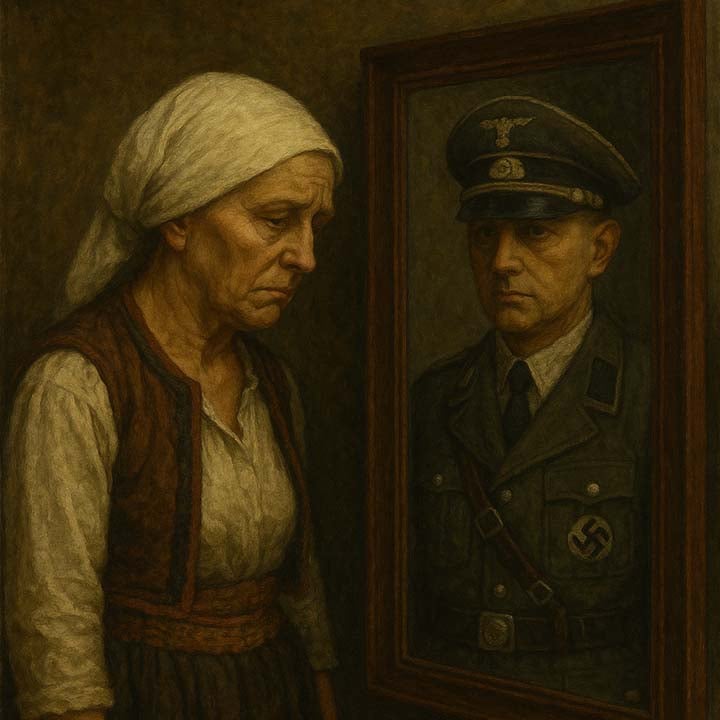
I am not ready for repentance;
Nor to match regrets. –Harold Hart Crane
How Serbia reformed its controversial WWII past and why the world lets it happen to this day.
The Myth of the ‘Heroic’ Serb Nation
The Balkans is not just a region-its the Valhalla of mythmaking.
As Nazi forces overran Belgrade in April 1941, few could have predicted that Serbia—at the epicentre of yet another European war—would emerge from the rubble as a symbol of resistance. Yet, within years, it had done exactly that.
Through shrewd diplomacy, a fragmented and sympathetic media narrative, and decades of state-driven mythmaking, Serbia constructed an enduring story: that of the noble resister, the loyal Allied partner, the eternal victim.
But beneath this surface lies a far murkier reality. Wartime Serbia, and particularly the royalist Chetnik movement led by General Draža Mihailović, did not merely resist the Germans – in many cases, they collaborated—sometimes tacitly, sometimes directly—with Axis forces.
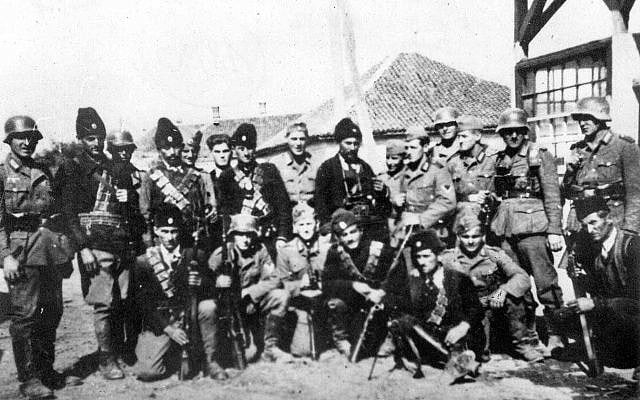
Above: A group of Chetniks pose with German soldiers in an unidentified village in Serbia. Source: Wikipedia.
Yet while Croatia’s collaborationist Ustaše regime has been globally vilified, Serbia’s two-faced role in WWII remains oddly sanitized, and in some cases, utterly suppressed, while in the country itself, savagely censored.
How did this happen? How did the Chetniks, many of whom struck deals and even worked closely with Nazis and Italians become national icons, while at the same time Serb collaborators like the quisling Milan Nedic or the SS-run Dinara Division of Momcilo Djujic, slipped quietly from the global narrative?
The Double Game of Draža Mihailović
Mihailović’s Chetniks began the war with a mandate to restore the Yugoslav monarchy. At first, this meant resisting the German and Italian occupiers. But by 1942, the calculus had changed. Tito’s Partisans—communist, multi-ethnic, and uncompromising in their brutality—were seen as the greater threat to Mihailović’s vision of a Serb-led Yugoslavia.
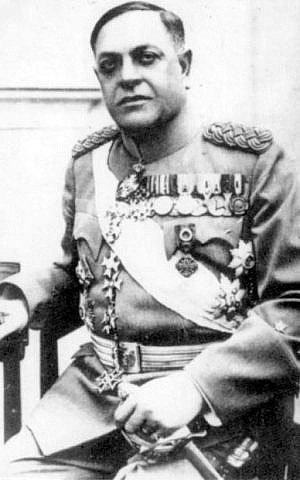
Above: Serbian Quisling Milan Nedic, responsible for the murder of 15,000 Serbian Jews, 11, 000 Roma and tens of thousands of anti-fascist Serbs and others between 1941-44. Source: Wikipedia.
Declassified British and American intelligence documents reveal Chetnik negotiations with German and Italian commanders, often coordinating attacks on Partisan strongholds. These weren’t isolated betrayals. They were strategic alliances – in some cases close collaboration – dressed up as resistance.
British Special Operations Executive (SOE) officers on the ground began reporting their concerns. By the end of 1943, Churchill and Roosevelt shifted their support from Mihailović to Tito.
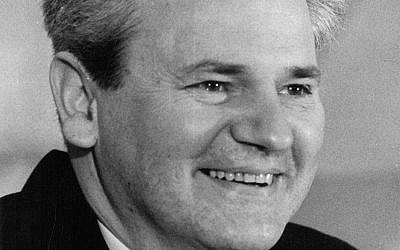
Above: Slobodan Milošević. Source: Wikipedia
The change was based not on ideology, but effectiveness. Tito’s fighters were killing Germans. Mihailović’s on the other hand were cutting deals, and in some cases working with them.
Still, even as Mihailović’s star faded in Allied circles, the myth of Chetnik heroism endured—especially in exile, and later, in postwar Serbia.
Croats as Convenient Villains
No wartime narrative in the Balkans is complete without confronting the horrors of the war. The regime in the Independent State of Croatia did commit atrocities that in the end, brought widespread retribution upon innocent Croatian civilians, culminating in the post May 1945 Bleiburg massacres , where thousands of Ustaše and civilian alike were slaughtered en mass by the victorious Partizans.
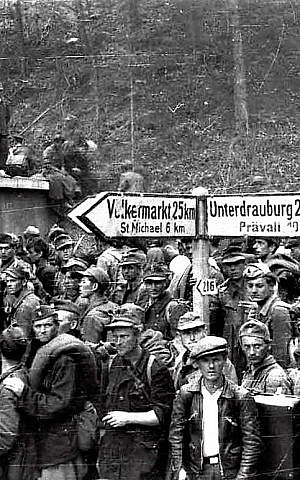
Above: Croatian Soldiers, May 1945, days before being killed by Tito’s Partisans in Slovenia. Source: Wikipedia.
For postwar Serbia, the Ustaše have served a dual, and some would say, very useful purpose all to this day: as a national trauma and as a narrative shield. By focusing global attention on Croatian crimes, Serbian crimes and collaboration were minimized, downplayed, and for the most part, conveniently forgotten.
In effect, Serbian complicity, including in the Holocaust, was airbrushed out of history.
This displacement wasn’t accidental. It was both deliberate and politically expedient. While Yugoslavia under Tito suppressed open ethnic grievances, post-communist Serbia revived them with a vengeance.
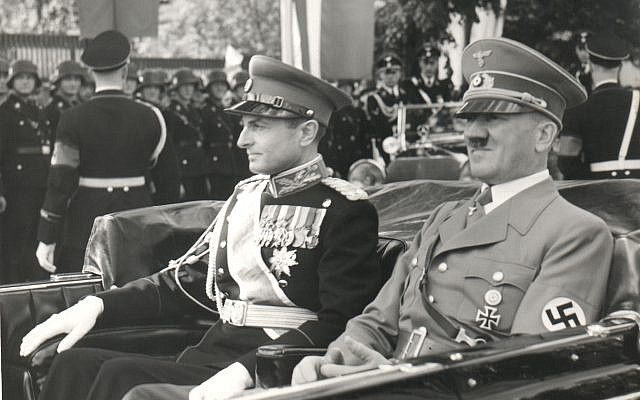
Above: Adolf Hitler and Serbia’s Prince Paul of Yugoslavia, 1938. Source: Wikipedia.
In the 1990s, many Serbian leaders, including Slobodan Milošević, leaned heavily on WWII-era imagery, reframing Serbs as the region’s perpetual victims, even while they were committing well-documented barbaric atrocities of their own across Slovenia, Croatia, Bosnia, and Kosovo.
Historical Amnesia by Design
After the war, Mihailović was captured, tried for treason, and in 1946, executed by the new communist government. His supporters claimed the trial was political and the evidence fabricated. For decades, the Partisan narrative dominated Yugoslav history. But following Yugoslavia’s breakup, Mihailović was rehabilitated—both literally and culturally.
In 2015, a Serbian court formally annulled his conviction. His legacy was restored in school textbooks, national speeches, and public monuments. No similar move was made to re-examine the crimes of the Ustaše with equal nuance—mainly because those in power in Zagreb were either too complicit with the Partisans or too fearful of any repercussions to offer Croatia the same historical fairness as Serbia.
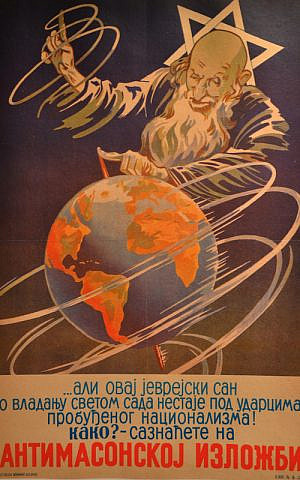
Above: Anti-Semitic poster from Serbia (1943). Source: Ina Vukic private archive.
For the Serbs, this was a very convenient truth. And why wouldn’t it be when it serves a useful political purpose for Serb propagandists?
This unequal asymmetry is very telling. It reveals a cultural and political strategy that projects guilt outward and recasts complicity as victimhood. It’s a phenomenon seen not only in Serbia but globally: where nations would rather inherit the glory of resistance than the stain of collaboration.
Echoes in the Present
Today, the story lives on in education, media, and diplomacy. Serbian officials regularly denounce “revisionism” when Croatia’s wartime past is raised yet resist efforts to interrogate their own. In Bosnian schools, the war is taught differently depending on the ethnic majority.
Moreover, in Belgrade, Mihailović is a Serb patriot and war hero. In Sarajevo, he’s an ethnic cleanser, an Islamophobe and a butcher, while in Zagreb, he’s a murderer, a collaborator, and a Greater Serbia imperialist.
Western media, too, played a role—during both WWII and the 1990s. The complexity of Balkan politics made it easier to adopt narratives provided by more organised or vocal diaspora groups. And during the Yugoslav Wars, the idea of Serbs as victims—not aggressors—echoed in headlines, but not in reality.
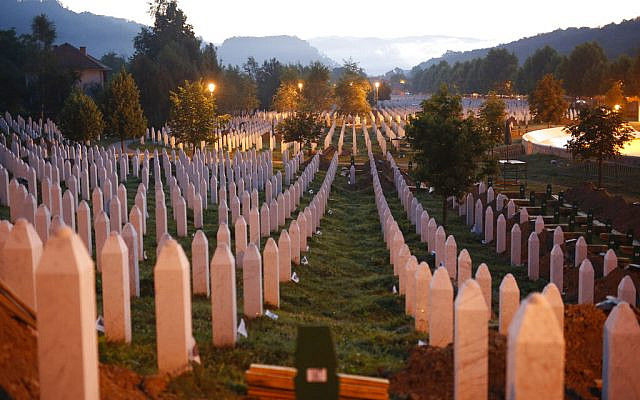
All this highlights how selective memory and strategic storytelling have distorted the entire Balkan region’s historical ledger, with repercussions that echo to this very day.
One of those enduring repercussions was the Srebrenica massacre, also known as the Srebrenica genocide, the July 1995 killing of more than 8,300 Bosnian Muslim men and boys in and around the town of Srebrenica during the Bosnian War by Serbian troops, many of whom employed the iconography of World War Two.
The horrors of Srebrenica and other atrocities of the 1990s Bosnian War like Foca, Visegrad and Omarska were both a mirror and an oracle from the manipulation of the true history of World War Two.
Confronting the Past with Brutal Honesty
History is not a courtroom. Nor is it an echo chamber. Or some perverse kind of reality TV show. But it is a mirror – a very big one in fact. And for Serbia, that mirror remains carefully angled in its own favour.
Over time, this mirror has become a cruel oracle that reflects truths many Serbs can not or do not want to face.
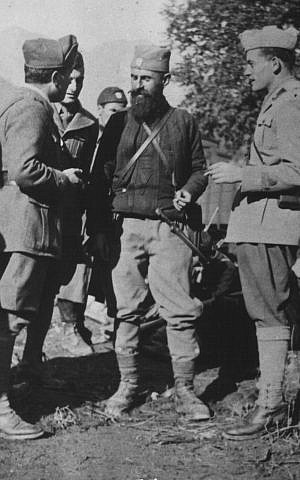
Above: Serbian Chetnik with his Italian fascist overlords in Jablanica, Bosnia, 1942. Source: Wikipedia.
A true reckoning with WWII would require Serbia to admit what the world has long overlooked: that parts of its so-called resistance were in fact active Nazi collaborators, and that mythmaking—however patriotic—is not justice nor reality.
It would also mean understanding that remembering others’ crimes does not absolve one’s own.
Perhaps the greatest challenge isn’t that these myths were created in the first place – It’s that they still endure to this very day.
References:
- Marko Attila Hoare, Genocide and Resistance in Hitler’s Bosnia Key text on Chetnik collaboration and wartime atrocities
- Jozo Tomasevich, War and Revolution in Yugoslavia, 1941–1945 Foundational work on both Partisan and Chetnik movements
- Philip J. Cohen, Serbia’s Secret War Argues that Serbian nationalist forces were complicit in Nazi collaboration
- British SOE Archives Declassified material on Mihailović’s shifting alliances
- United States OSS Reports S. intelligence reports on the effectiveness of Yugoslav resistance groups
- Yugoslav War Crimes Trials (post-1945) Official proceedings against collaborationists, including Mihailović
- Serbian Supreme Court ruling, 2015 Rehabilitation of Draža Mihailović, controversial in historical circles
- Museum of Genocide Victims (Belgrade) Official state narratives on WWII; contrasts with independent accounts
- Yad Vashem Records of Serbian and Croatian individuals who protected Jews (to balance claims)