France in Lebanon: The illusion of a comeback
When powerlessness cloaks itself in firmness
The declaration specifically calls for Israel to maintain a buffer zone in southern Lebanon after the ceasefire. Israel regards this area as a strategic element of security, while Beirut sees it as an infringement of its sovereignty. So this is not an accusation of formal annexation, but a de facto occupation of a strip of post-conflict Lebanese territory.
Israel does not want to “annex Lebanon”. But, the formulation “territorial aims” is deliberately broader and more suggestive than factual reality—and this is where deciphering becomes interesting.
Three overlapping readings
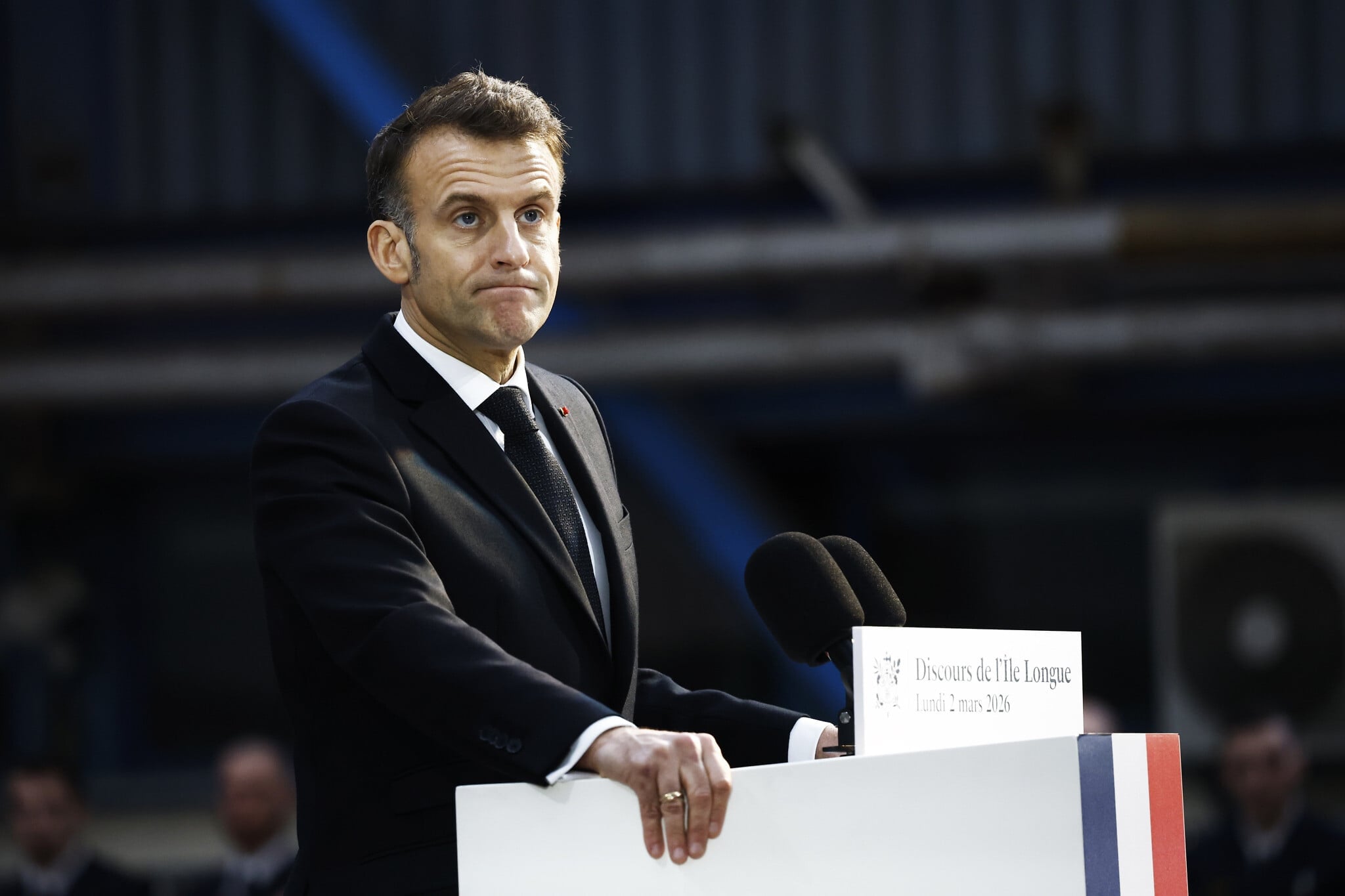
1. The diplomatic interpretation of E. Macron follows the traditional French line: rejection of de facto annexations and support for international stabilization mechanisms. On this front, the message is consistent with French doctrine, which has been consistent for decades. It does not invent anything.
2. The geopolitical positioning indicates that Paris is trying to regain its capacity for influence in a situation where its diplomatic power has significantly weakened compared to the United States and the negotiations held in Washington. E. Macron receives Nawaf Salam at the Élysée, posing as a lawyer from Lebanon (an operation to recover French influence in a theater where France is marginalized). To speak loudly against Israel is also to express oneself forcefully in order to exist.
3. The electoral reading. The phrase “territorial aims” is semantically charged: it implicitly evokes Gaza, the West Bank, and the Golan – and conjures up an expansionist image of Israel in the minds of the French public. It maximizes the signal effect among a French electorate sensitive to the Palestinian/Arab cause, without major diplomatic costs since France has no real coercive capacity.
The formula is asymmetrically calibrated: President Macron asks Israel to “renounce its territorial aims” with a maximalist formulation, and he asks Hezbollah to “stop targeting Israel” (a much more factual and limited formulation). He also says that Hezbollah’s disarmament must be done “by the Lebanese themselves,”, which, in practical terms, is tantamount to saying that it will not happen.
This rhetorical asymmetry is not accidental. It reveals an implicit hierarchy of demands that says more than the surface discourse.
E. Macron does not provoke in the tactical sense of the term – he does not seek escalation. But it deliberately overcodes a limited factual reality, specifically the buffer zone in southern Lebanon, using a vocabulary that has strong symbolic resonance. This is less diplomacy than diplomatic rhetoric for internal use: he speaks in the hall, not in Jerusalem. The signal to the French electorate—and to Arab capitals—has priority over analytical precision. It is a classic form of powerlessness dressed in firmness.