

Mathematics Teaching Professor, Author
From 1876 to Today: 150 Years of Temple B’nai Sholom, Huntsville, Alabama
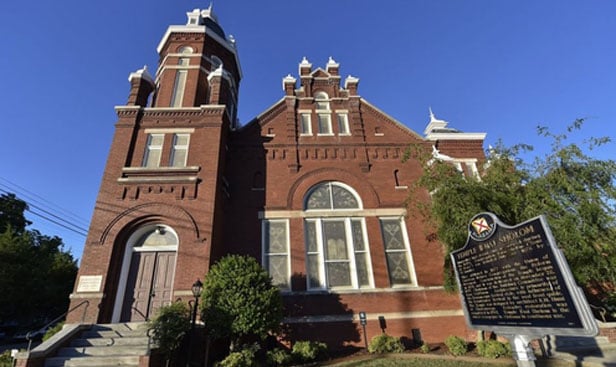
Temple B'nai Sholom (Source: Temple B'nai Sholom, Huntsville, Alabama)
Temple B’nai Sholom in Huntsville, Alabama is beginning their 150th anniversary celebration at the end July.
For 150 years, Temple B’nai Sholom has been the heart of Jewish life in Huntsville, Alabama. Guided by its founding mission of worship, learning, fellowship, and service, the congregation has remained a welcoming spiritual home for generations of Jewish families, newcomers, interfaith families, LGBTQ+ individuals, and all who seek community. As it celebrates its sesquicentennial, Temple B’nai Sholom honors a rich legacy while looking ahead to the future.
I would like to thank the esteemed Rabbi PJ Schwartz for his guidance.
Synagogue
Temple B’nai Sholom’s synagogue, built in 1898 and completed in1899, is one of Huntsville’s architectural treasures. Designed by noted architect R.H. Hunt of Chattanooga, Tennessee, the brick building is an outstanding example of Romanesque Revival architecture, a style inspired by the great Romanesque churches of 11th- and 12th-century Europe. The synagogue was added to the Alabama Register of Landmarks and Heritage in 1977 and is a contributing property in Huntsville’s Old Town Historic District, which was listed on the National Register of Historic Places in 1978.
The Holocaust Torah
Temple B’nai Sholom is honored to be the permanent home of a Holocaust Torah scroll on loan from the Memorial Scrolls Trust in London, England. Rescued after World War II from a destroyed Jewish community in Bohemia or Moravia, which is now part of the Czech Republic, the scroll was brought to the congregation in 1997 through the generosity of Dr. Louis Weiner and dedicated in memory of his daughter, Julie Ann Weiner. Though separated from its original community, the Torah now occupies a place of honor in the sanctuary, serving as a powerful symbol of remembrance, resilience, and the enduring continuity of Jewish life.
Religious Life
Jewish life at Temple B’nai Sholom is vibrant, welcoming, and rooted in the traditions of Reform Judaism. As a congregation of the Union for Reform Judaism, they celebrate their heritage through worship, lifelong learning, meaningful holidays, and acts of justice and compassion. Whether marking life’s milestones or exploring Jewish traditions, their community offers a place where everyone can grow, connect, and belong.
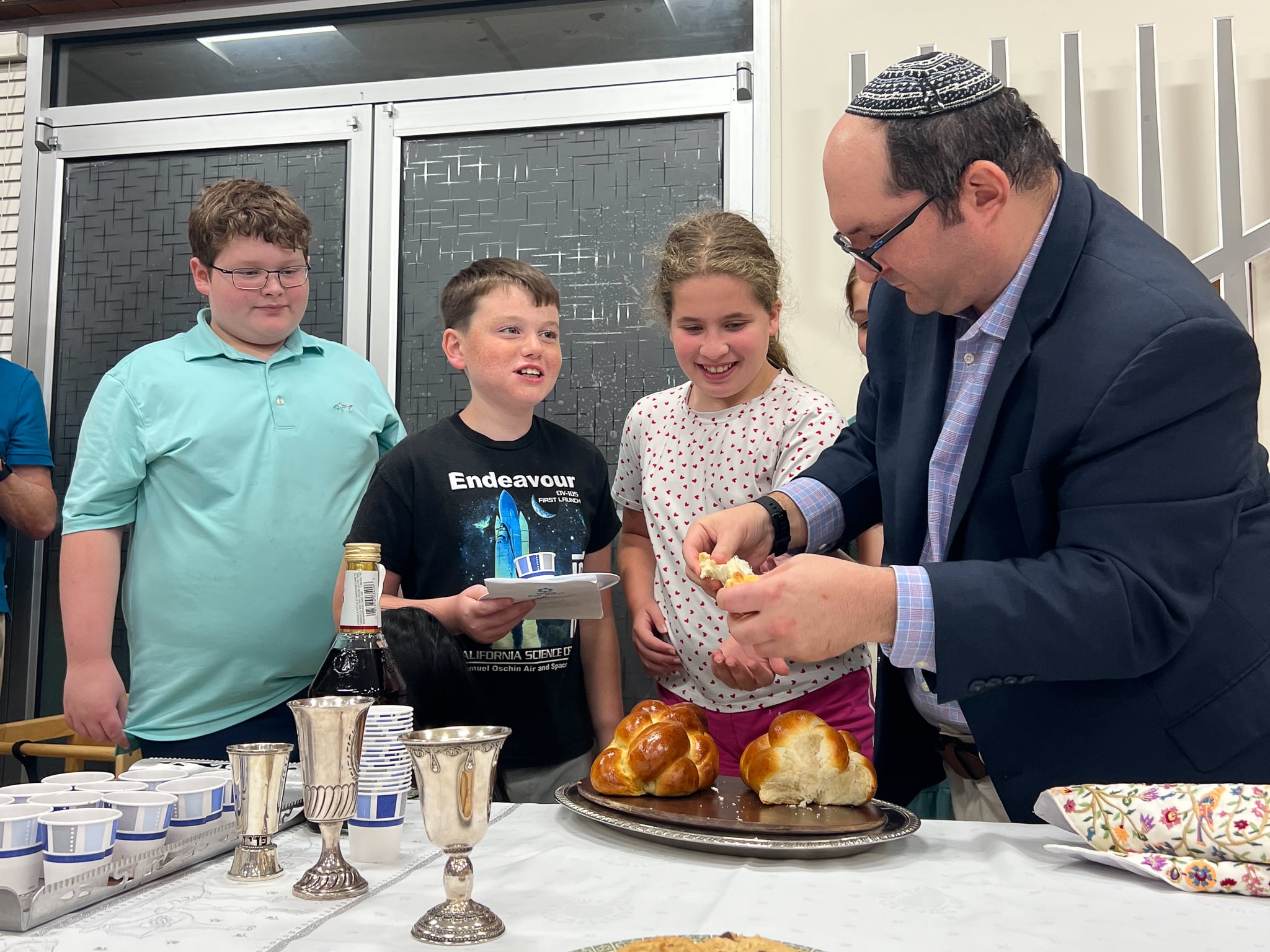
Shabbat at Temple B’nai Sholom is every Friday evening, our congregation gathers in our historic sanctuary to welcome Shabbat with prayer, music, reflection, and community. Led by Rabbi Schwartz or guest speakers, the services are warm, inclusive, and open to everyone, whether you are a lifelong Jew, part of an interfaith family, exploring Judaism, or simply seeking a place of peace and connection.
Tot Shabbat is held one Saturday each month. Tot Shabbat is a joyful celebration for families with young children. Through songs, simple prayers, stories, and movement, little ones experience the joy of Shabbat, followed by a relaxed potluck brunch where families connect and build community.
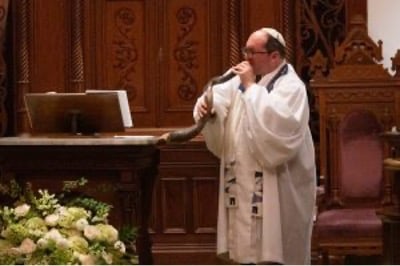
The Jewish calendar shapes the life of Temple B’nai Sholom, bringing our congregation together in worship, celebration, learning, and fellowship throughout the year. From the solemn reflection of Rosh Hashanah and Yom Kippur to the joy of Sukkot, Hanukkah, Purim, and Passover, each holiday offers opportunities to strengthen our faith, celebrate our traditions, and create lasting memories across generations.
Whether gathering to build a sukkah, dance with the Torah, light the Hanukkah menorah, share a community Seder, or remember loved ones during Yizkor services, Temple B’nai Sholom celebrates each season with warmth, inclusivity, and a deep connection to Jewish heritage. Together, these sacred moments enrich our community and affirm the enduring traditions that have united generations of Jewish families.
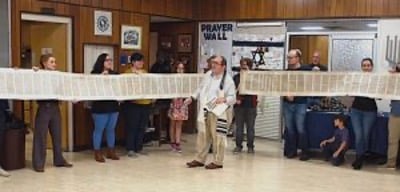
Simchat Torah is celebrated with music, dancing, and joy, and celebrates the Torah as a living, ongoing story. Children and adults come together to unroll the scroll, mark the completion and renewal of the annual reading cycle, and honor our Torah readers and learners.
Jewish life cycles at Temple B’nai Sholom accompany members through every stage of life, from birth and naming ceremonies to B’nai Mitzvah, weddings, anniversaries, and end-of-life traditions. In each moment, they provide guidance, prayer, and support, helping individuals and families shape meaningful rituals that reflect their identities and values.
Culture
At Temple B’nai Sholom, the congregation believes that learning about our sacred tradition and discovering its relevance for today helps us live with greater meaning and purpose. Through Torah study, Hebrew classes, and a wide range of educational programs, we create opportunities for lifelong learning that deepen knowledge, strengthen Jewish identity, and build community connection at every stage of life. Each week, participants gather for Torah study, exploring the weekly parashah through open discussion and traditional commentary in an accessible, welcoming setting where no prior preparation is needed and every voice is valued.
Beyond weekly study, courses and learning opportunities are offered both in person and on Zoom, designed to meet diverse interests and levels of experience. Past offerings have included Adult Hebrew, Introduction to Judaism, the Treasury of Reform Responsa, and special community-wide days of Jewish learning.
In addition, the congregation is honored to welcome visiting scholars and musicians whose presence enriches our spiritual and intellectual life, including teachers and performers such as Rabbi Rami Shapiro, Rabbi Paula Mack-Drill, Cantor Becky Mann, and Rabbi Micah Lapidus in partnership with the Scottsboro Boys Museum.
Historical Background
The first known Jewish resident in Alabama was Abraham Mordecai, who settled in Montgomery County in 1785 as a trader, though organized Jewish communities did not begin to take shape until the 1820s and 1830s in cities such as Mobile and later Selma.
Jewish residents arrived in Huntsville as early as the 1820s, including early merchants like Zalegman and Joseph Andrew, who opened a dry goods store downtown in 1829. Many of these settlers were German Jews drawn to Reform Judaism, which emphasized balancing tradition with participation in American civic life. By the mid-19th century, families such as Jacob Herstein and Daniel and Solomon Schiffman helped establish a growing German-Jewish community in Huntsville, where Jewish residents became active as business leaders and contributors to civic life.
Which brings us to 1876.
In 1876, the United States was a rapidly expanding nation of 38 states celebrating its Centennial, emerging from the Reconstruction Era while grappling with the aftermath of the Panic of 1873. Under President Ulysses S. Grant, the country was focused on westward expansion and economic recovery.
In Alabama in 1876, life remained largely rural and agrarian, with an economy deeply tied to cotton production and sharecropping in the post-Civil War South. Huntsville, meanwhile, was a small but resilient Madison County seat of roughly 5,000 residents, gradually rebuilding and beginning its transition toward a regional industrial center shaped by railroads and textile development.
It was in this year, 1876, Temple B’nai Sholom was founded on July 30, 1876, when Huntsville’s Jewish community formally organized as Congregation B’nai Sholom. Comprised largely of German and Prussian immigrants who were active as merchants and civic leaders, the congregation was established to preserve Jewish faith and heritage while fully participating in the civic life of the city. By that time, the foundations of Jewish communal life were already in place, including land purchased in 1874 for burials at Maple Hill Cemetery and the founding of a local B’nai B’rith chapter in 1875.
Today, Temple B’nai Sholom, located at 103 Lincoln Street SE, stands as the oldest synagogue in continuous use in Alabama, serving as a living link between its pioneering founders and the generations that followed.
For over two decades, the congregation worshipped in rented spaces, often at the Masonic Lodge on Lincoln Street, before purchasing land in 1898 at Lincoln Street and Clinton Avenue. Designed by architect R.H. Hunt, the synagogue was completed and dedicated on November 26, 1899, giving the community its first permanent home.
In the early 20th century, B’nai Sholom faced declining membership and limited resources, especially during the Great Depression and World War II, and often relied on visiting clergy or lay leadership after losing full-time rabbinic support in 1913. Despite these challenges, the congregation endured through member dedication and community support, maintaining a continuous Jewish presence in Huntsville until renewed growth arrived in the postwar era.
On its 150th anniversary, Temple B’nai Sholom stands as a living legacy of Jewish life in Huntsville, Alabama. The congregation continues to serve as a spiritual, cultural, and educational anchor for the community, honoring its historic roots while remaining vibrant and forward-looking. Guided by Reform Jewish values, Temple B’nai Sholom is committed to inclusion, learning, and meaningful engagement for all who enter its doors.
While its building reflects more than a century of history, the congregation itself is ever evolving, carrying forward a rich heritage into the future.
Contact Information:
Temple B’nai Sholom, P.O. Box 2463, Huntsville, Alabama 35804
Phone: 256-932-1107
Email: admin@tbshsv.org
Website: https://tbshsv.org/