


From 20 Points to 23 Countries: a Historic Diplomatic Breakthrough
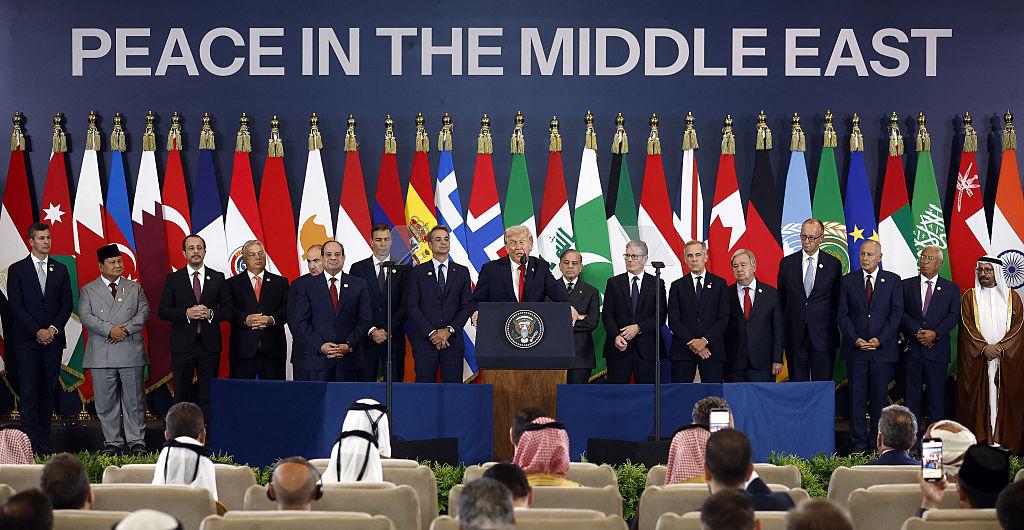
Recently, an important detail emerged that may have escaped our notice amid the noise of wars and elections: the Trump administration is not content to plan only for the day after the war (See Barak Ravid’s tweet: https://x.com/BarakRavid/status/2095935530433474937).
He is starting to think about “something much bigger” – a regional strategy that will connect the weakening of Iran, the expansion of the Abraham Accords, regional stabilization, and the closure of the “open wars” since October 7.
If this is indeed the direction taking shape in Washington, it is excellent news for Israel. But Israel needs not only to respond but also to offer a strategic goal. This goal should be greater than Gaza, Iran, and normalization with Saudi Arabia: a regional arrangement of 23 countries – Israel, a demilitarized Palestinian state, and all the Arab League countries.
This vision builds on existing foundations. All the Arab League countries have endorsed the Arab Peace Initiative of 2002 over the years, which offers full normalization with Israel in exchange for an Israeli-Palestinian settlement.
The initial components of the move are already in place. Trump’s 20-point plan could serve as the basis for the first stage: ending the war in Gaza, demilitarizing the Strip, and establishing a new civilian Palestinian government and its reconstruction, alongside a significant political horizon for the Palestinians.
The 15 points presented by Nickolay Mladenov, the CEO of the peace council established by Trump, can provide the transition mechanism: who will govern Gaza, how demilitarization will be carried out, who will ensure security, how the Israeli withdrawal will be executed, and how reconstruction will progress according to the fulfillment of commitments.
But these are the implementation stages, not the vision. If the process ends only with the “day after” in Gaza, without a political regional horizon, the conflict may revert to the familiar cycle of ceasefire, rearmament, and another war.
Instead of viewing the Israeli-Palestinian conflict as merely a bilateral issue or trying to ignore it, we should see it as part of a broader regional system. Israel does not need to choose between security and peace; it needs to build a framework in which the security interests of Israel and the Arab states reinforce each other.
A demilitarized Palestinian state, alongside regional and international security guaranties, could be part of a broader deal: Israel would gain regional legitimacy, full diplomatic relations with the Arab world, security and economic cooperation, and a joint framework to counter Iran and its proxies.
The Palestinians will receive self-determination, and Arab countries will have the opportunity to integrate into a more stable, prosperous, and connected Middle East – including through trade corridors from India to Europe.
Therefore, immediately after a new government is formed in Israel, it should initiate – in collaboration with the United States and Saudi Arabia – a regional conference in Riyadh. No more conferences that end with a general statement, and no more negotiations that start and stop between Israel and the Palestinians. A conference must recognize that the region’s problems are intertwined, so the solution must also be integrated.
The model exists. The Madrid Conference in 1991 created, for the first time, a framework in which Israel, Arab countries, and the Palestinians entered into a joint political process. It did not resolve the conflict, but it changed the situation dramatically: it paved the way for Israeli-Palestinian negotiations and the peace agreement with Jordan, which shares the longest border with Israel.
This time, a regional infrastructure exists that did not in 1991: the Abraham Accords, security ties between Israel and Arab countries within the framework of the U.S. Central Command, a shared interest against Iran, and accumulated experience in regional cooperation.
Such a conference allows each side to achieve what it cannot achieve alone. Israel will receive a regional and international security and legitimacy package, including Palestinian and Lebanese demilitarization, guarantees, monitoring mechanisms, and cooperation against regional threats.
The United States will get what it is looking for: a regional arrangement under American leadership where its allies share the burden, instead of the United States having to be the “regional cop.” Trump will be able to present a diplomatic and historical achievement, alongside promoting the economic deals he seeks with the Gulf states–deals that are difficult to realize in an unstable Middle East.
The elections in Israel should not just be a debate about the identity of the government. They should be an opportunity to decide what kind of Middle East Israel wants for itself.
A new government arriving in Washington and asking to continue the current situation will miss a historic opportunity. A government that arrives at Trump with a clear proposal can say: We are ready to take your 20-point plan and move beyond it; to use the 15-point mechanism to implement the next phase in Gaza and connect it to the West Bank; and to integrate the moves in Gaza, the West Bank, Lebanon, and Syria into a broader regional process.
There are those in Israel who see any mention of a Palestinian state as a threat. But precisely from a Zionist and security perspective, the conclusion is the opposite. A demilitarized Palestinian state, with international oversight mechanisms, agreed borders, security guarantees, and integration into a regional framework, would be less dangerous for Israel than the current reality, which continues to generate radicalization and damage Israel’s legitimacy around the world.
If Trump indeed seeks to leave behind a Middle East where Iran is weakened, American allies are cooperating, the Abraham Accords are expanded, Saudi Arabia is normalized with Israel, and the wars that began on October 7 are concluded – the Israeli-Palestinian solution cannot remain off the table. It needs to be the keystone that connects all parts of the process. American recognition of a Palestinian state at the beginning of the process, and not just at the end, could be the game changer that gives the entire process credibility and direction.
History does not allow countries to choose when an opportunity arises. It only asks whether they recognize it. The Middle East is at such a point today. The war with Iran, the changes in Gaza, the developing relations between Israel and Arab countries, the governments in Lebanon and Syria seeking to reduce Iranian influence, American thinking about the day after, Trump seeking legacy – all of these can remain a collection of tactical moves. But they can also become the beginning of a historic move.
For such an outcome, Israel must take the initiative. Immediately after the new government is established, Jerusalem should reach out to Washington and Riyadh and propose convening a regional conference – the “new Madrid Conference” in Riyadh.