
From a former hostage negotiator: This is what Israel must do
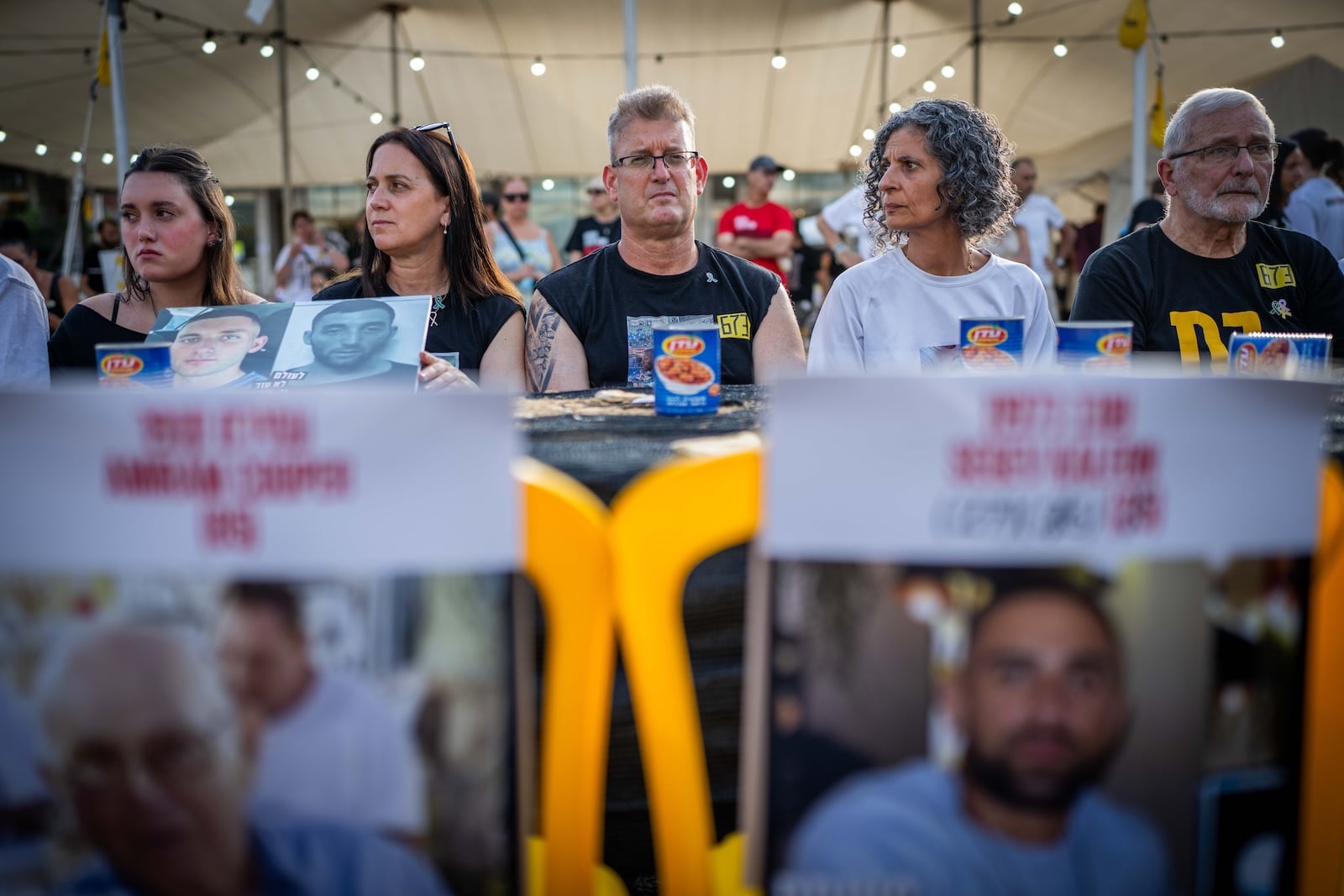
It’s hard to believe, but the collapse of the “women and children deal” in late November 2023 now feels like a distant chapter in a cursed war. As someone who sat in the inner negotiation rooms and worked to revive that deal, I never imagined that deep into 2025, we’d still be negotiating while many hostages remain imprisoned in Hamas tunnels.
Since its inception, Israel has had to navigate painful POW/MIA negotiations. Over time, we’ve built up a hard-won body of experience marked by moral dilemmas, public pressure, and security risks. Yet, nothing compares to the post–October 7th reality. Past deals followed a familiar script: one hostage, one price tag. Today, we face chaos – an unpredictable, multi-variable equation. This is the tunnel era of negotiation, where no rules apply and no certainties remain.
From linear to chaotic equations
Past deals, including the infamous Jibril Agreement (1985), the Tenenbaum deal (2004), the Regev and Goldwasser deal (2008), and the Shalit deal (2011), shared similar features. They involved a defined number of hostages. The price tag for the exchange was measured in prisoners. Negotiations operated in a “bubble,” detached from real-time battlefield events. They were facilitated by mediators who weren’t players in the conflict. And they enjoyed broad public unity behind the goal of bringing captives home.
Even when there was debate over the price, the process followed recognizable patterns. You could plan strategically, identify a ZOPA (Zone of Possible Agreement), and negotiate with a shared understanding of the parameters.
In contrast, today’s equation is full of unknowns. We’re no longer trading one soldier for a fixed list. We’re dealing with dozens of captives – men, women, children, soldiers, and civilians – scattered across Gaza, hidden in tunnels under active combat zones, controlled by factions we don’t fully understand.
Mediators who are also players
In past negotiations, countries like Germany acted as neutral mediators. They facilitated dialogue without personal stakes in the outcome. Today, our main mediators – Egypt and Qatar – are deeply involved players that have their own interests. Egypt wants regional stability and containment. Qatar, closely tied to the Muslim Brotherhood, seeks prestige and influence, not necessarily a resolution favorable to Israel.
Add to this the US, acting as a super-mediator and major power broker, and the picture becomes even more complex. There’s no clean channel. Every move is political, and every mediator has an agenda. This is no longer technical mediation; it’s geopolitical bargaining disguised as diplomacy.
Hostage negotiation during wartime
The October 7 attack created an unprecedented crisis: the largest hostage-taking event in Israel’s history, at the heart of a war still ongoing. Every dimension of the negotiation has changed: The number of hostages is unknown and constantly shifting; The ground is unstable – Gaza is an active battlefield, and every operational move risks hostage lives; Hamas is split between Gaza and its leadership abroad; Families of hostages, rightfully desperate, apply unrelenting pressure; Iran and its proxies continue to fan the flames regionally, prolonging instability.
We’re navigating a battlefield and a negotiation table simultaneously. There are no pauses. No sanctuaries. Every gain in one arena risks a setback in another.
What Israel must do
In this new reality, old tools are not adequate. We need a clear set of principles:
- A strategy for “the day after”: Without clarity about Gaza’s future governance, we lack strategic leverage at the negotiation table.
- Flexibility within limits: Willingness to reshape the structure of a deal, but draw red lines that are never crossed.
- Synchronized clocks: The military and diplomatic timelines must align.
- Maximization of mediator pressure: Qatar, in particular, hasn’t yet felt the full weight of our expectations, with or without US support.
- Control of the narrative: Explain the Israeli position consistently and assertively to the world. This isn’t just PR, it’s negotiation leverage.
- Internal coordination: Synchronization between the security establishment, political leadership, and international allies is essential.
No good alternatives – only necessary ones
In negotiation theory, we speak of the BATNA, the Best Alternative to a Negotiated Agreement. In hostage deals during wartime, the alternatives are bleak. This isn’t theory. It’s reality.
There is no operational alternative as long as hostages remain underground. Rescue missions like “Operation Arnon” are only viable when hostages are above ground. The deeper they’re held, the slimmer the chances – and the greater the risk to both captives and soldiers.
That’s why a deal, painful as it may be, must be viewed not as capitulation but as strategy. Bringing the hostages home is not a detour; it’s a waypoint on the road to long-term victory over Hamas. It frees us to reassert military pressure, rebuild deterrence, and chart a path forward, not just tactically, but morally.
Returning to our compass
Before October 7th, we had a national compass: a shared value that said no one gets left behind. That compass guided us through impossible choices. Now, nearly two years into this war, as the hostages remain underground and the clock keeps ticking, we must return to that compass. It doesn’t mean abandoning strength. It means defining it differently – through moral clarity, strategic foresight, and the will to bring our sons and daughters home.