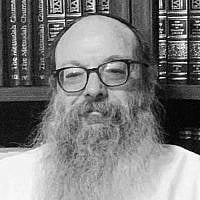
Rabbi and Professor Emeritus
From Catastrophe to Zion: Iberian Jews and the Pull of the Holy Land, 1391–1492
Between the pogroms of 1391 and the expulsion of 1492, Iberian Jews and conversos maintained a tenacious bond with the Land of Israel despite catastrophic violence and forced conversion. Through ideologically driven appeals for emigration, philanthropic networks, messianic ferment after 1453, and documented, if modest, settlement in Jerusalem, Safed, and Hebron, they kept the dream of Zion alive across a century of destruction.
———
The century between 1391 and 1492 marked both the twilight of medieval Spanish Jewry and a remarkable testament to resilience. In these hundred years, Iberian Jews endured catastrophic violence, forced conversions, and displacement on a scale that shattered centuries-old communities. Yet their spiritual and material bonds to the Land of Israel remained unbroken.
The turning point came in 1391, when anti-Jewish pogroms erupted across Castile, Aragon, and Catalonia following the inflammatory preaching of Ferrand Martínez. Synagogues were torched, Jewish quarters pillaged, and tens of thousands were baptized under duress. These events decimated Spain’s Jewish cultural and religious centers and gave rise to a new, complex social reality: the conversos. The catastrophe of 1391 was compounded by the Laws of Valladolid in 1412, which confined Jews to separate quarters and imposed crushing restrictions, and the prolonged Disputation of Tortosa (1413–14). This coerced theological confrontation led to further mass conversions.
From this period, Spanish Jewish scholars, philosophers, and poets made impassioned, ideologically motivated appeals to their coreligionists to immigrate to the Holy Land. Their writings extolled the Land’s power to secure divine forgiveness and the great merit of burial in its soil, as opposed to interment in the “impure land of the diaspora.” Above all, they voiced utter revulsion from their native land, which after 1391 and 1412 had become, in their words, “a land which devours its Jews.”
A pivotal moment came with the Ottoman conquest of Constantinople in 1453, which European Jewry interpreted as a harbinger of messianic redemption. After this, messianic elements blended powerfully with the aspiration to immigrate. A letter from the communal leaders of Saragossa, datable to after 1453, describes a mass awakening among Jews in Castile, fueled by messianic impulses, to immigrate to the Holy Land via Aragon.
Yet desire and arrival were different things. Many who set out for the Land of Israel never reached their destination. Along the way, they encountered the wretched conditions of Jewish life under despotic Mamluk rule, and large numbers abandoned the idea of aliyah, settling instead in Jewish centers under Ottoman rule in Turkey and the Balkans, or in Mamluk Egypt, where local rulers welcomed them.
Still, a handful did arrive. A group of Spanish Jewish immigrants settled in Jerusalem in 1447. A document from 1467–68 indicates that a Spanish scholar, R. Yosef ben Gedaliah ibn Emmanuel, served as the head of the rabbinical court in Jerusalem. In 1473, the Spanish rabbinical judge R. Joseph was dispatched by the Jerusalem community to Crete. And the Spanish chronicler Alonso de Palencia (1423-1492) indicates that in the 1470s, conversos from Córdoba and Seville planned to find a safe haven in Egypt and Jerusalem. These fragments, though isolated, testify to a Spanish Jewish presence of some standing in the Holy Land.
One figure who illustrates the trajectory of 1391 refugees is R. Yitzchak ben Sheshet Perfet (1326–1408), also known as the Rivash, a towering halachic authority. Born in Barcelona (or, maybe, Valencia), the Rivash was actually forced to accept baptism on July 4, 1391, a date that fell on the Ninth of Av. Roughly eighteen months later, he managed to leave Valencia for North Africa and resume his life as a Jew, settling in Algiers. Though he never reached the Land of Israel, his responsa addressed the anguished situation of conversos seeking to return to Judaism, establishing precedents that guided later refugees and maintained the spiritual connection to Zion.
For the great majority who could not make the journey, support for Eretz Yisrael became a central communal duty. Communities such as Saragossa maintained donations for synagogues, cemeteries, and welfare in Jerusalem and Hebron. Emissaries dispatched from Palestine traveled across Iberia to collect funds. And even among conversos, fragmentary Inquisitorial records suggest that discreet financial aid, sometimes routed through business dealings, reached Jews in Jerusalem and Safed, testifying to an illicit but potent bond.
By the last two decades of the fifteenth century, however, the status of the Sephardic community in Jerusalem was overshadowed by the growing Ashkenazi presence. When R. Obadiah of Bartenura (c.1450-c.1515)£arrived in Jerusalem from Italy in 1488, he found the city’s Jewish population reduced to about seventy families. He noted only “a few penitents of converso origin” in the city. In Hebron, however, he found “about twenty householders, all of them rabbis, half of whom are of converso origin, who arrived recently to be sheltered under the wings of Divine Providence”, a vivid snapshot of the Iberian link to the Holy Land on the very eve of the expulsion.
When the Alhambra Decree of 1492 expelled all remaining Jews from Spain, the exile scattered families to North Africa, the Ottoman Empire, Italy, and Portugal. For the few who reached Jerusalem, Safed, or Hebron, arrival symbolized not merely relocation but the fulfillment of a spiritual journey, uniting them physically with the land that had long been the focus of prayers, poems, and dreams.
Related Topics
Related Posts