
From Clicks to Chaos: Internet Burnout and the Rise of the Mob Mind
Once hailed as the greatest human innovation since the printing press, the internet was supposed to connect the world, democratize information, and spark creativity. In its early years, it largely fulfilled that promise. Commerce expanded. Education became global. Whole industries were born. But somewhere along the way, it broke us.
The digital age that began with boundless optimism has quietly ushered in a psychological and moral burnout that we’re only beginning to comprehend. We’re watching an entire generation—chronically online, emotionally fragmented, and morally disoriented—latch onto extreme ideologies not out of deep conviction, but from a desperate need to feel something. This is no longer about politics. It’s about purpose, identity, and the collapse of the individual self.
One of the most corrosive forces in this story is pornography. Often dismissed as a private vice, its effects have been anything but private. Porn has reprogrammed the reward systems of millions, especially the young, reinforcing compulsive, instant-gratification behavior. It detaches intimacy from meaning. It trains users to consume bodies like data. The result isn’t just loneliness—it’s a deep erosion of empathy. When connection is reduced to pixels and pleasure to algorithms, how long before humanity becomes optional?
Then came outrage culture. Movements like Black Lives Matter, initially grounded in legitimate grievances, were quickly weaponized by platforms optimized for virality over truth. Social media, instead of amplifying justice, became a battleground of performance. Likes replaced listening. Rage became currency. And moral authority was granted not to those with wisdom, but to those with the loudest hashtags.
Layered over all of this is the existential despair of climate anxiety, economic stagnation, and a culture that increasingly tells young people their future is doomed. What happens when a generation grows up scrolling past war footage, melting glaciers, and TikTok dances in the same feed? Numbness. Confusion. A hollow craving for something—anything—that feels real.
Into that void steps the mob.
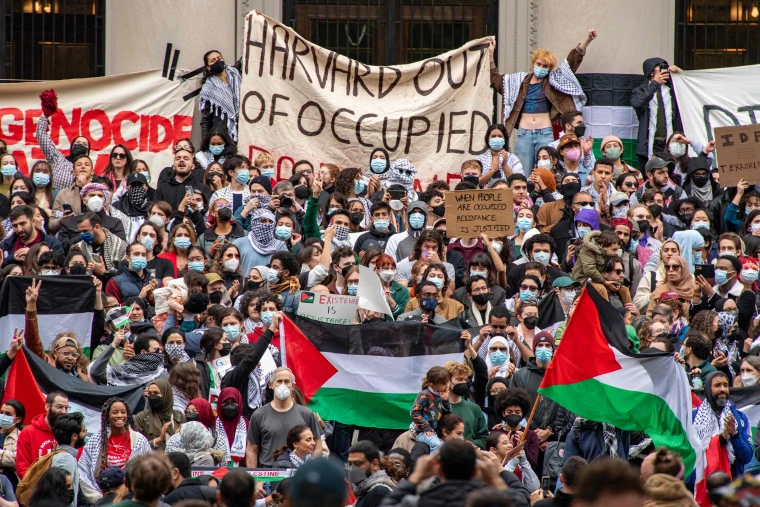
Today’s support for Hamas on elite college campuses cannot be explained purely by politics. It’s not about policy. It’s about identity. These students, many of whom can’t place Gaza on a map, are swept into collective emotional fervor because it offers what the digital age has stolen from them: certainty, belonging, and a cause that appears to give moral clarity—even if it glorifies barbarism.
The psychology isn’t new. It’s deindividuation. Groupthink. Pack behavior. But what makes it dangerous today is the scale and speed of contagion. Social media doesn’t just reflect mob behavior—it manufactures it. It amplifies the irrational, rewards the extremist, and buries the truth under waves of manipulated content.
Supporting Hamas has become a viral act of rebellion, not a rational stand. It offers a fake sense of righteousness to those who’ve been spiritually emptied by years of digital overstimulation and moral relativism. Antisemitism, long buried under the weight of Holocaust memory, now finds new life cloaked in activism, anti-colonial rhetoric, and identity politics.
This isn’t a political crisis. It’s a civilizational one.
The Jewish people have seen what happens when societies abandon truth for tribe, reason for rage. We’ve seen it in the blood-soaked pogroms of Europe, in the propaganda of Nazi Germany, and now in campus protests where Jewish students are chased out of libraries in the name of “justice.”
The solution isn’t censorship. It’s not silence. It’s moral clarity. It’s rebuilding what the internet and its many addictions have burned down: empathy, integrity, and courage. We need to raise a generation capable of thinking critically, feeling deeply, and standing against the mob—not because it’s popular, but because it’s right.
Because if we don’t fix the burnout of the soul, no bandwidth in the world will save us.