


Mathematics Teaching Professor, Author
From Colonial Roots to Today: Congregation Beth Ahabah of Richmond, Virginia
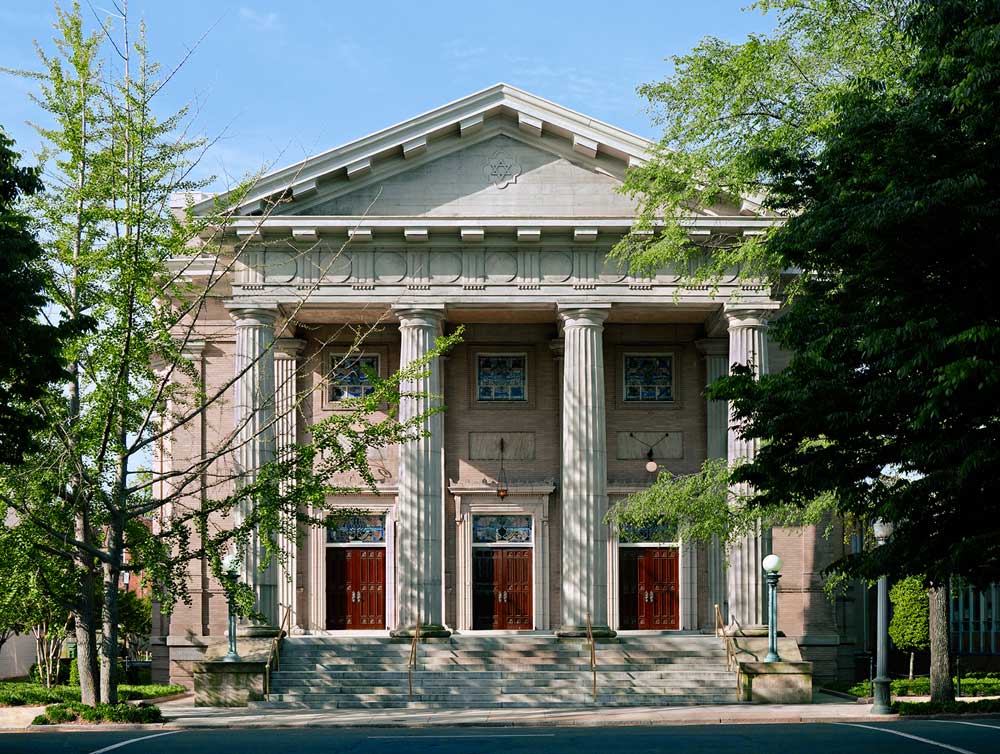
Congregation Beth Ahaba Synagogue (Source: Congregation Beth Ahaba of Richmond, Virginia)
Congregation Beth Ahabah is a vibrant Reform Jewish congregation that balances the preservation of religious tradition with active participation in the civic life of Richmond, Virginia. As the oldest and largest synagogue in the city, and the 6th oldest congregation in the United States. The congregation has a more than 230 year history of building community among congregants, clergy, and staff, as well as fostering strong connections with the wider public. Through worship, education, cultural programming, and social engagement, the congregation welcomes all who wish to join in the celebration and practice of Judaism.
Synagogue
Congregation Beth Ahabah is a historic synagogue that includes the Sanctuary, dedicated in 1904, the Barbara and William B. Thalhimer, Jr. Religious School Building, dedicated in 1957, and Joel House, that dates to the early 1900s. A 2018 renovation connected these three building and created a modern light filled lobby and new congregational offices. The main entrance is framed by an arch representing the Hebrew letters chet and yud, which spell chai or life. Two tall windows divided into five sections symbolize the Ten Commandments, while eight smaller windows surrounding a larger ninth window form a chanukiah, representing the eight nights of Hanukkah and the shamash candle. These features reflect the congregation’s Jewish heritage and identity.
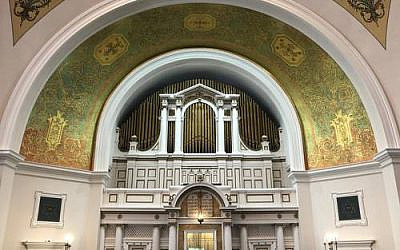
The sanctuary of Congregation Beth Ahabah is a Neo-Classical space centered on a prominent proscenium arch, which has featured an elaborate painted decoration since 1913. At the front of the sanctuary, the Ner Tamid, Eternal Light, an original feature of the 1904 building, hangs before the Ten Commandments and symbolizes God’s continual presence. The sanctuary also reflects early Reform Jewish worship through the placement of the pulpit and ark at the front and an original pipe organ of more than 2,000 pipes.
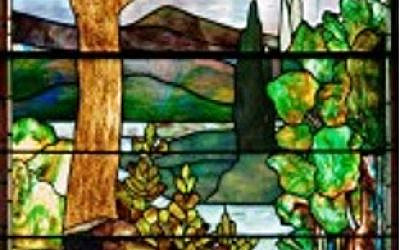
The sanctuary is especially known for its 29 stained-glass windows, many of which commemorate members of the congregation and depict important Jewish symbols and biblical scenes, including the Garden of Eden, the Burning Bush, Noah’s dove, the Eternal Light, and the House of the Lord. The most significant is a 1923 window by Louis Comfort Tiffany depicting Mount Sinai at the moment Moses receives the Ten Commandments. Other windows portray themes of peace, faith, divine guidance, and the Temple in Jerusalem, reflecting both the congregation’s history and Jewish religious tradition.
Holocaust Torah
Protected within the Ark of Congregation Beth Ahabah is Holocaust Memorial Torah #1392, one of 1,564 Torah scrolls recovered in Prague after World War II. During the Holocaust, the Nazis confiscated Jewish ritual objects and stored them in the Pinkas Synagogue as part of a planned museum commemorating the destruction of European Jewry.
Written in 1820 by the scribe David Lipin, the scroll survived the war and was later restored through the Memorial Scrolls Trust before being entrusted to Beth Ahabah in 1974. Today, it serves as both a sacred Torah and a memorial to Holocaust victims. Its mantle, dedicated in 2002 and created by Elsa Wachs, depicts a survivor reaching toward God and bears the Hebrew phrase “Am Yisrael Chai“ or “The People of Israel Live.”
Hebrew Cemetery
Since 1816, The Hebrew Cemetery, operated by the Hebrew Cemetery Company, has been closely connected with Congregation Beth Ahabah and its predecessor, K.K. Beth Shalome. Located on Shockoe Hill, it replaced the congregation’s original 1791 burial ground on Franklin Street, the first Jewish cemetery in Virginia.
Listed on the National Register of Historic Places in 2006, the cemetery contains the graves of prominent congregants, rabbis, and civic leaders. Its monuments feature both traditional Jewish symbols, such as the Star of David and the priestly hands of the Kohanim, as well as common nineteenth-century funerary motifs including obelisks, broken columns, doves, flowers, and weeping willows.
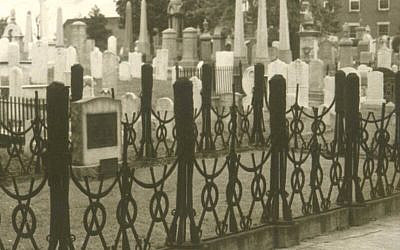
A distinctive feature of the cemetery is its Confederate Soldiers’ Section, the only known Jewish military cemetery in the United States. It contains the graves of 30 Jewish Confederate soldiers who died during the American Civil War. After the war, the Hebrew Ladies’ Memorial Association cared for the site, erecting grave markers, commemorating the soldiers, and enclosing the section with an ornamental iron fence featuring military motifs.
Museum
The Beth Ahabah Museum and Archives preserves and interprets the history of Richmond’s Jewish community through rotating exhibitions that explore Jewish life, culture, and local heritage. Current and past exhibits have examined the Jewish lifecycle through birth, bar and bat mitzvah, marriage, and death rituals, while others have highlighted significant artifacts, prominent individuals and families, Jewish contributions to the wider Richmond community, the history of Jews in Virginia from the colonial era to the modern period, and the experiences of Richmond’s Jewish community during major historical events such as World War I and World War II. Together, these exhibitions illustrate the enduring religious, cultural, and civic contributions of Jewish communities in Virginia.
Religious Events
Congregation Beth Ahabah celebrates the Jewish calendar through regular worship services and community events marking major holidays such as Passover, Hanukkah, Purim, and the High Holy Days. The congregation also observes important life-cycle events, including Brit Milah and baby naming ceremonies, Bar and Bat Mitzvahs, Confirmation, weddings, conversions to Judaism, and funerals. These ceremonies reflect the traditions of Reform Judaism while welcoming diverse families and emphasizing lifelong Jewish learning, community participation, and the continuity of Jewish faith and identity.
Carole and Marcus Weinstein Education Center
Dedicated in 2021, the Carole and Marcus Weinstein Education Center at Beth Ahabah is a modern classroom and meeting space equipped for both in-person and virtual learning. The center also features the complete collection of Parsha Posters by artist Hillel Smith, whose typographic designs creatively incorporate the Hebrew names of the weekly Torah portions, with the current week’s poster displayed in the synagogue lobby.
Culture
Congregation Beth Ahabah offers a wide range of programs that support lifelong Jewish learning, including study opportunities, family engagement, and discussions that explore Jewish identity and practice. As a Reform Jewish congregation, it also emphasizes inclusion and encourages members to connect Jewish tradition with contemporary life, particularly through a strong commitment to social justice.
The congregation’s social and community life is supported through groups such as the Tikkun Olam Committee, which advances justice and service efforts inspired by the covenant of Brit Olam in partnership with the Union for Reform Judaism. Additional programming includes the Brotherhood, which organizes service-oriented and holiday events, the Women of Beth Ahabah, which supports congregational and educational activities, and youth groups such as BAGELS, BAM, and BATTY, which provide social, educational, and service-based experiences for children and teens.
Music
Congregation Beth Ahabah offers a vibrant music program that enhances worship and community life through services, concerts, and educational events such as Shabbat Shirah and Global Jewish Music Shabbat. The congregation also produces recordings of original Shabbat music by its Music & Choral Director, Natan Berenshteyn, featuring performances from clergy, choir members, and guest musicians.
Music is supported by both adult and youth ensembles, including the Beth Ahabah Choir, open to teens and adults, and the Kol Simchah Youth Choir for students in grades 3 and above. These groups participate in services and events throughout the year, providing opportunities for congregants of all ages to engage in Jewish music through singing and instrumental performance.
Historical Background
Jews were doing business in the Virginia Territory as early as 1650, and by the 1760s they began to settle in Richmond.
In 1789, the same year George Washington took the oath of office as the first President of the United States and the U.S. Constitution went into effect, Richmond was a small but rapidly growing frontier capital with about 1,062 residents, including a Jewish community of roughly 100 people. Jewish residents comprised about 4% of the city’s white population
It was in that year, 1789, Kahal Kadosh Beth Shalome was organized in the Sephardic tradition as Richmond’s first Jewish congregation and the sixth in the United States, established just three years after Virginia’s Statute for Religious Freedom.
By 1822, during President James Monroe’s second term, the United States continued the “Era of Good Feelings,” marked by national unity, westward expansion, and growing international influence. The country had 24 states and was beginning to assert itself on the world stage by recognizing newly independent Latin American nations, developments that helped set the foundation for the Monroe Doctrine issued the following year.
In 1822, Richmond was Virginia’s capital with a population just over 12,000, and a major economic center, driven by tobacco, flour milling, and river-based trade. Its population was roughly divided between white residents and both free and enslaved Black residents.
The city was also expanding culturally and religiously for it was in this year, 1822, members of K.K. Beth Shalome were worshipping in the first synagogue building in Virginia on Mayo Street, as the Jewish community in Richmond was beginning to grow and evolve.
As German and Eastern European Jews later arrived seeking Ashkenazic worship traditions, they founded Congregation Beth Ahabah in 1841 as an offshoot of K.K. Beth Shalome. The congregation appointed the Rev. M.J. Michelbacher as its first minister in 1846, established Richmond’s first Jewish school that same year, and built its first synagogue in 1848 at Eleventh and Marshall Streets. It gradually adopted Reform practices beginning in 1867, joined the Reform movement in 1875, and constructed a new building in 1880, before formally consolidating with K.K. Beth Shalome in 1898.
The history of Congregation Beth Ahabah reflects the broader story of Jewish life in Richmond and the United States, one shaped by migration, adaptation, and continuity across centuries. From its early roots in K.K. Beth Shalome and the establishment of Virginia’s first synagogue building, to the founding of Beth Ahabah and its later embrace of Reform Judaism, the congregation has continually evolved while preserving its traditions.
Today, its institutions, programs, and historic sites together illustrate a community deeply connected to its past and actively engaged in education, worship, and civic life, ensuring that its heritage remains a living and meaningful part of Richmond’s cultural landscape. The congregation continues to thrive with 650 member families.
Contact Information:
Congregation Beth Ahabah, 1121 West Franklin Street, Richmond, VA 23220
Phone: 804.358.6757
Email: hdinkin@bethahabah.org
Website: https://www.bethahabah.org/