


From Douze Points to Boycotts: The Eurovision Stars Who Haven’t Forgotten Israel
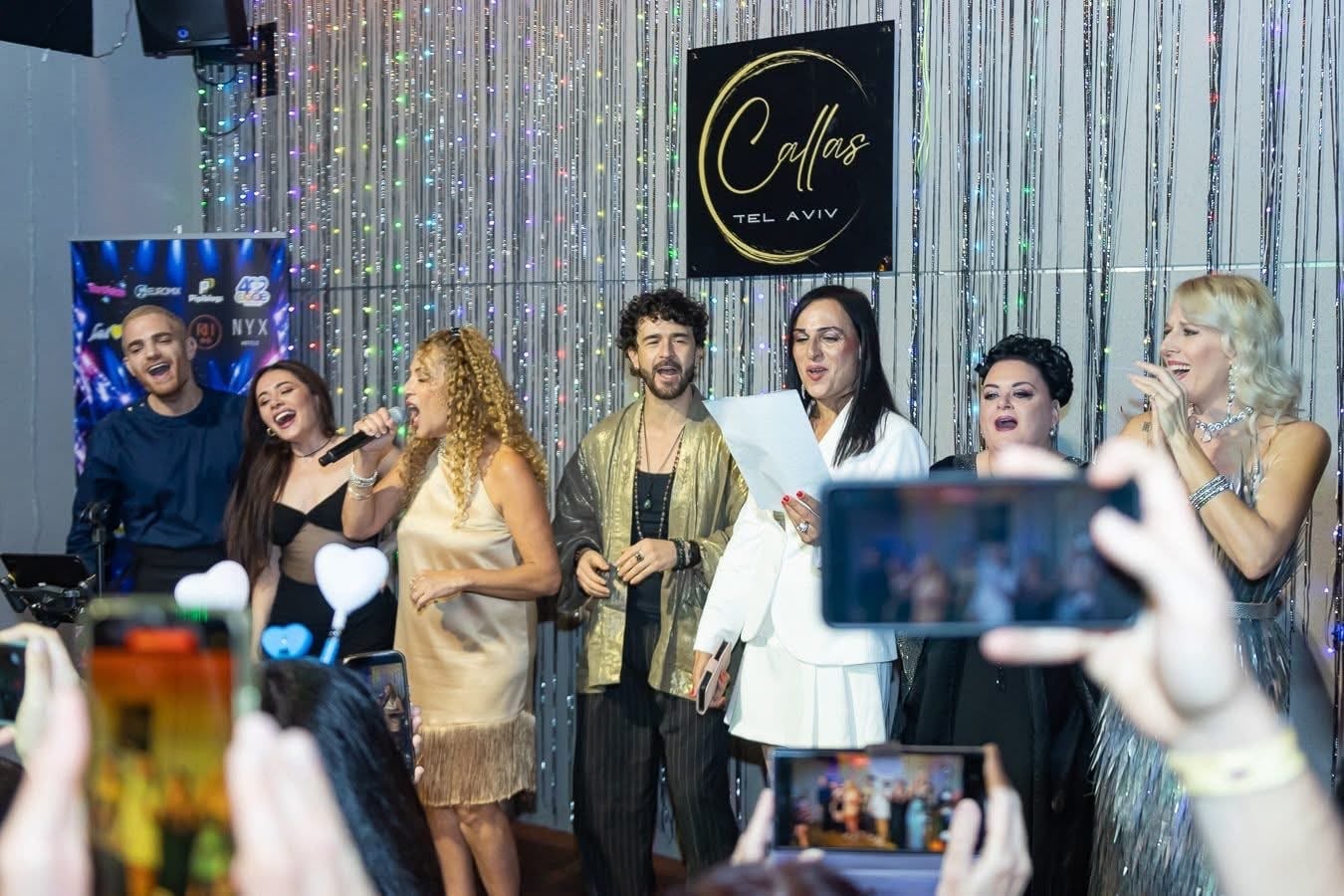
As OGAE Israel celebrates 40 years, international Eurovision stars return to Tel Aviv with a message of friendship, courage and connection.
Not so long ago, Tel Aviv was one of Europe’s most exciting party destinations. When Netta Barzilai won Eurovision in 2018 with “Toy,” Israel became the center of the Eurovision universe. The following year, international artists and thousands of fans descended on Tel Aviv, filling its beaches, clubs and Eurovision Village with music, excitement and celebration. Everyone seemed eager to be part of the party.
Seven years later, how dramatically things have changed.
With Israel facing international boycotts, continued tensions involving Iran and growing hostility over its participation in Eurovision, even an artist’s decision to perform in Tel Aviv can become a political controversy.
And yet, last week, international Eurovision stars from Malta, Azerbaijan, Hungary and Moldova did something surprisingly meaningful.
They came anyway.
On November 19, hundreds of Eurovision fans gathered in Tel Aviv to celebrate a remarkable milestone: the 40th anniversary of OGAE Israel, the country’s official Eurovision fan club.
For four decades, this community has kept the Eurovision spirit alive in Israel, connecting generations of fans through music, friendship and a shared passion that transcends borders. The sold-out anniversary celebration was a testament not only to the club’s resilience but also to the enduring relationships Israeli fans have built with artists around the world.
I spoke with several of the visiting performers, curious about what motivated them to travel to Israel at such a sensitive time.
Among them was Chiara, Malta’s beloved Eurovision veteran, who has represented her country three times and enjoys a particularly special relationship with Israeli fans.
Who could forget the dramatic Eurovision voting in 1998, when Chiara and Dana International were battling for victory until the final moments? Dana ultimately won with “Diva,” while Chiara finished third, narrowly missing the trophy. Yet nearly three decades later, Chiara’s affection for Israel remains as strong as ever.
Before traveling, friends had expressed concerns about her safety. But Chiara decided to come, excited to reconnect with an audience that has embraced her for decades. Her performance was a reminder that Eurovision friendships can survive even the fiercest competition, and the most difficult political circumstances.
Elnur Huseynov, who represented Azerbaijan in 2008 and 2015, expressed similar warmth toward Israel, showing no hesitation about returning.
His presence also highlighted the special relationship between Israel and Azerbaijan, a Muslim-majority nation bordering Iran that has maintained close diplomatic, economic and strategic ties with Israel for decades. Azerbaijan’s decision to open an embassy in Tel Aviv in 2023 was another important milestone in that friendship.
But beyond diplomacy, there is something particularly moving about seeing Azerbaijani artists warmly embraced by Israeli audiences at a time when cultural relationships across borders are increasingly strained.
Perhaps the most emotional story belonged to another Azerbaijani artist, Efendi.
Efendi, who represented Azerbaijan in Eurovision 2021 with “Mata Hari,” was in Israel on October 7, 2023, when Hamas launched its devastating attacks. What was supposed to be a joyful visit to perform for Eurovision fans suddenly became a frightening experience involving rocket alerts, uncertainty and the difficulty of leaving a country at war.
When we spoke in Tel Aviv, she recalled how afraid she had been during that visit.
“The first time I was afraid,” she acknowledged.
And yet, three years later, she was back.
I asked whether she had experienced pressure from Eurovision fans not to travel to Israel, particularly amid the growing boycott movement.
“Oh my God, no!” she responded emphatically, adding, “I love Israel.”
Then came a sentence that captured the spirit of the evening.
“The music, it’s not the politics.”
Of course, Eurovision has never been entirely free of politics. Five countries boycotted the 2026 contest over Israel’s participation, reflecting the deep disagreements and anger surrounding the war in Gaza.
People have every right to criticize governments, question political decisions and protest peacefully. But performing for Israeli audiences is not the same as endorsing every decision made by Israel’s government. Nor should friendship with Israeli fans require an artist to pass a political loyalty test.
The artists who came to Tel Aviv demonstrated that distinction beautifully. They didn’t arrive with political speeches or grand declarations. They came to sing, reconnect with old friends and celebrate a community that has supported them for years.
The celebration also featured Hungary’s Kati Wolf, Moldova’s Pasha Parfeni and Israeli Eurovision performers. The evening concluded with the artists joining together to sing “Hallelujah,” Israel’s winning Eurovision song from 1979.
It was a fitting tribute to four decades of Eurovision fandom and a reminder of what this community represents.
As an Israeli American who helped establish a Eurovision fan community in New York, I have experienced firsthand music’s extraordinary ability to turn strangers into friends. For many of us, particularly within the LGBTQ+ community, Eurovision has always offered something deeper than entertainment: a sense of belonging.
That is why watching parts of this community become increasingly polarized is especially painful.
I don’t believe music can end wars or erase suffering. But I also refuse to believe that isolating people brings us closer to peace.
At a time when the world seems determined to build more walls, perhaps we should pay greater attention to those who still choose to build bridges.
Forty years after OGAE Israel was established, perhaps the greatest gift these international artists offered Israeli fans was not another performance of a beloved Eurovision song.
It was the reassurance that they had not been forgotten, that their friendships still mattered, and that they were more than the politics of their country.
We do not have to agree on everything to sing together.