


From Embassies to Social Media: How Digital Transformation Is Reshaping Diplomacy
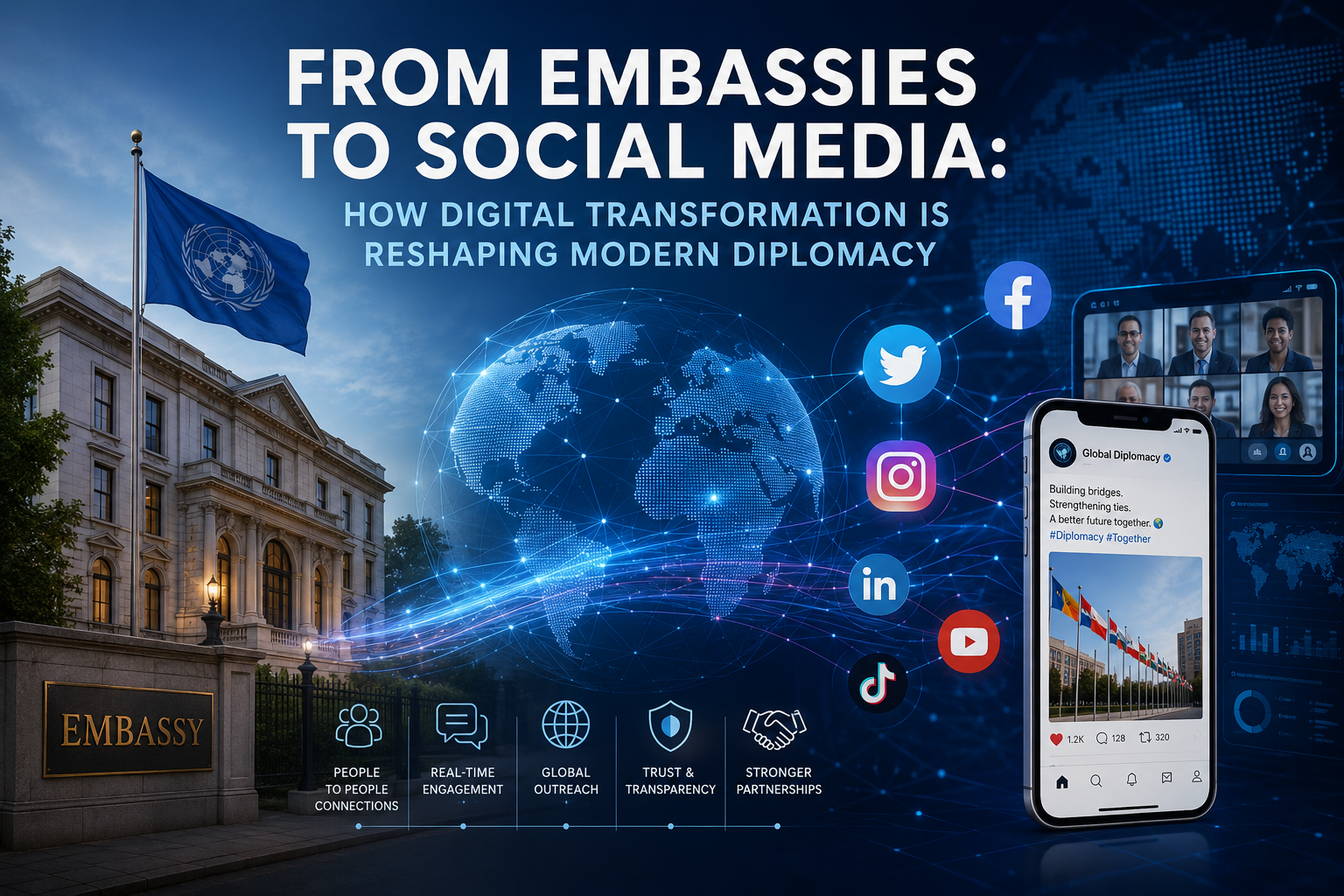
Diplomacy has always been an important part of international relations. It helps countries build partnerships, solve disputes, and promote their interests through dialogue instead of conflict. Traditionally, diplomacy was carried out through embassies, official meetings, and direct communication between governments. However, the rapid growth of digital technology has changed the way diplomacy works today.
In the past, embassies were the main centers of diplomatic activity. Ambassadors represented their countries abroad, negotiated agreements, and maintained relationships with foreign governments. Communication was often slow and depended on formal channels. While these responsibilities remain important, modern technology has created new ways for diplomats and governments to communicate.
One of the biggest changes has been the use of social media in diplomacy. Platforms such as X, Facebook, LinkedIn, and Instagram allow governments and foreign ministries to communicate directly with people around the world. Instead of relying only on official statements and press conferences, leaders can now share information instantly and reach millions of people with a single post.
This digital transformation has brought many benefits. First, it allows governments to respond quickly to international events. During crises, natural disasters, or political conflicts, officials can provide updates and important information in real time. Second, social media increases transparency by giving the public greater access to government messages and foreign policy decisions. This can help build trust and improve understanding between countries.
Digital diplomacy also helps governments engage with a wider audience. In the past, diplomacy mainly involved communication between states. Today, diplomats interact not only with foreign governments but also with journalists, businesses, researchers, and ordinary citizens. This broader engagement can strengthen international cooperation and promote dialogue across different communities.
Despite these advantages, digital diplomacy also presents challenges. Information spreads very quickly online, and false or misleading content can create confusion and tension. A single message posted on social media can sometimes lead to diplomatic misunderstandings or public criticism. As a result, governments must be careful about how they communicate in the digital space.
Another challenge is that social media cannot replace the personal relationships that are central to diplomacy. Successful negotiations often require trust, patience, and private discussions. While digital tools are useful for communication and public engagement, many important diplomatic decisions still depend on face-to-face meetings and confidential negotiations.
As technology continues to evolve, diplomacy will continue to change with it. Future diplomats will need both traditional diplomatic skills and digital communication skills. They must be able to negotiate effectively while also understanding how to engage audiences online and respond to fast-moving global events.
In conclusion, digital transformation has reshaped modern diplomacy by expanding communication beyond embassies and official meetings. Social media and other digital tools have made diplomacy faster, more accessible, and more connected to the public. However, traditional diplomatic practices remain essential. The most successful approach is to combine the strengths of both traditional and digital diplomacy to meet the demands of an increasingly interconnected world.