


From Fracture to Revival – Two weeks inside an Israeli exhibition where strangers met, spoke, and rediscovered hope
“I do not like that you ask us to speak about revival,” a woman told me during one of the discussion circles. “Why rush to hope when we are still deep in pain?”
I listened. Then I asked, “But how can we rise if we keep giving power only to the pain?”
It is not about ignoring sorrow. On the contrary, my work in memory and commemoration is my life’s mission. Yet to truly honor memory, we must also ask where it leads us.
I spent two weeks working at the temporary exhibition From Fracture to Revival, created by Israel’s Ministry of Heritage. It opened during the Sukkot holiday and was planned to run for only two weeks, yet it became a living meeting point for thousands. The exhibition stands across from the lot of burnt cars where I have guided so many groups before.
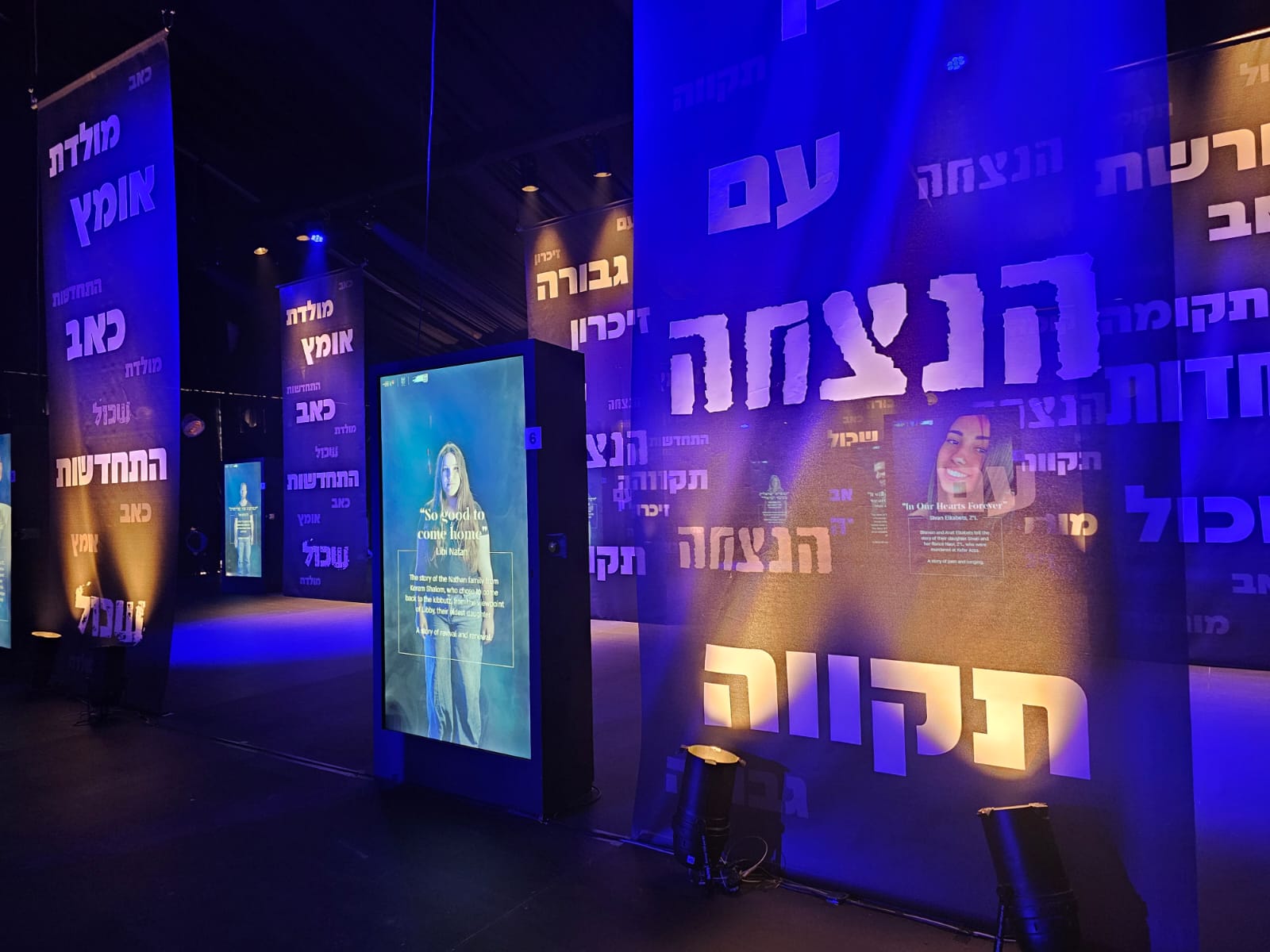
The exhibition takes visitors on an emotional journey, moving gradually from devastation toward hope.
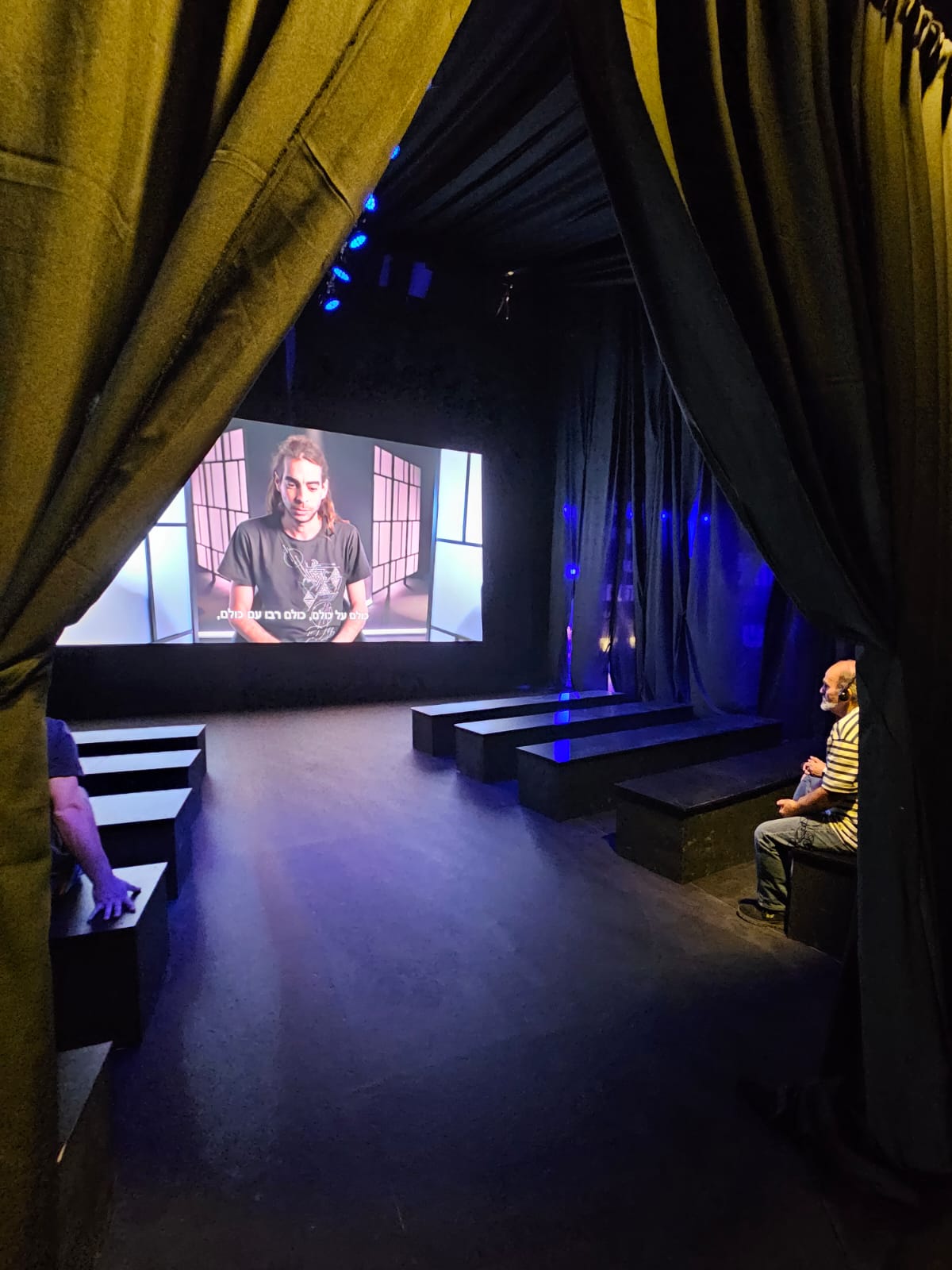
Photographs by Ziv Koren bring the viewer back to the terrifying early days of the war, capturing moments that are impossible to forget. Then comes the Forest of Testimonies, where the voices of survivors and witnesses are heard, telling stories not only of what happened but also of what still can be. The short films in this forest end on a note of hope, like a deep breath after pain.
At the end of the route, a powerful film about unity born after October 7 is projected.
Ziv Koren, one of Israel’s most respected and influential photographers, created work that manages to hold both the depth of tragedy and the light that emerges from it. The entire exhibition is built with exceptional artistic and professional care, a precise blend of documentation, emotion, and hope, a journey that shows how art can hold pain and still give birth to life.
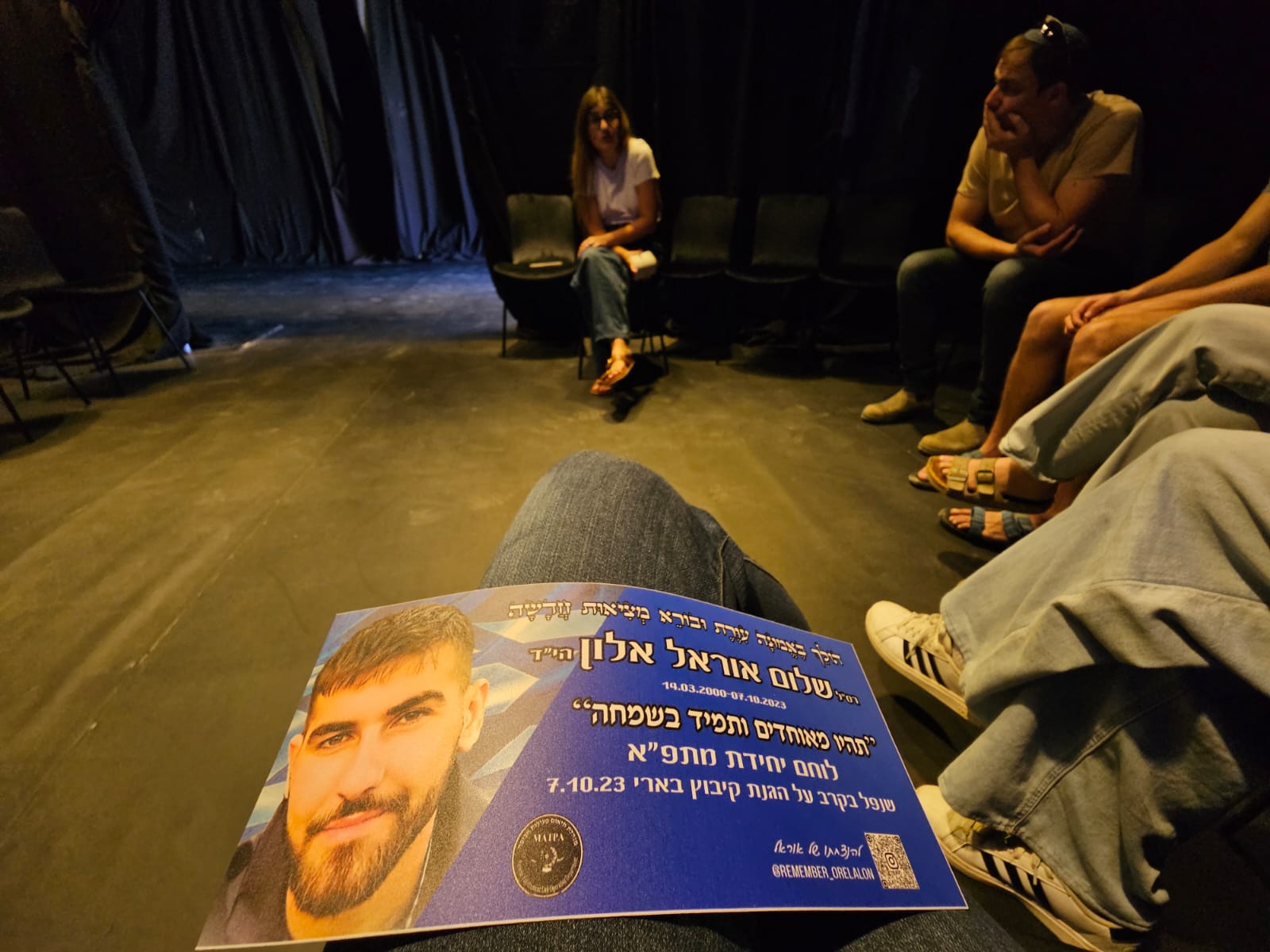
In the final room, where I work, people are invited to sit, talk, and process what they experienced. Not by force, but by choice. The goal is to let emotions settle, to listen and to be heard. Circles formed naturally, bringing together religious and secular, left and right, young and old, from the center and the periphery. The very act of sitting together, of strangers sharing and listening to one another, felt like revival itself.
Over the week I noticed patterns. There are two kinds of people. The optimistic kind, those who believe in life, in humanity, in the quiet strength of good. And the pessimistic kind, those who stay trapped in anger and helplessness, waiting for salvation from leaders or the state. Again and again I saw how difficult it is for us to believe that we, not politicians, hold the power to change.
Most visitors I met were of the first kind. One woman said this was her first memorial visit since the war began. “The name From Fracture to Revival drew me,” she said. “It felt like a place that sees the pain but also reminds us that life continues.”
An elderly woman who lived through the British Mandate spoke about the Altalena and the divisions of that time. A man from the Yom Kippur generation said that revival is not a line that rises and falls like a monitor, but one that moves steadily upward, like a good stock. There are dips and peaks, but the direction is always up. We smiled and said that perhaps we are that stock, a people who fall and rise, yet always keep climbing.
A bereaved sister told us her brother fell in Beeri and that his last message was about unity. A family from Kibbutz Alumim came, the parents returned home, but their son and daughter-in-law did not. The pain on their faces said everything. And there was a kindergarten teacher from Netivot, full of heart, whose quiet denial protects her optimism and keeps her moving.
One conversation stayed with me. A man told me that revival would come only with brave leadership. I asked him, “When you face personal hardship, who is the one person who can really help you?” He said, “Myself.”
“So why should this be different?” I asked. “Why can’t an entire people lift itself from darkness?”
Responsibility is not guilt. It is simply the only path to change.
Many spoke about the fracture within our society. One mother said her son’s political shift had torn their family apart. When people stop seeing each other as complex human beings and start confusing political views with morality, they lose the ability to love. Others spoke about the media, about how it feeds division.
In the final part of the exhibition, a question rises between the lines:
What story are we telling ourselves, a story of hatred or of unity?
Because whoever tells the story holds the power to change it.
Some visitors said revival means rebuilding the land, planting again. Others felt the exhibition was too engineered. And I thought, even if it is, what is wrong with guiding ourselves toward the good? How else do we rise if not by choosing to look forward?
A week in that small room felt like a miniature version of the entire country.
Fracture and revival, despair and hope, division and grace.
I came to see that revival does not begin only after fracture, just as fracture never fully ends. They live side by side, intertwined. That is life, to move between opposites, to know that even when everything cracks, there is still movement toward rising.
And in the end, almost everyone left with the same quiet understanding.
Revival begins when we take responsibility.
It starts inside us, grows through our actions, and reaches outward to our communities, to our nation, to the future we are building together.
The exhibition is currently closed, standing across from the parking lot, still facing the horizon. Yet many hope it will reopen soon, as originally planned, to continue offering a space for reflection, encounter, and renewal.