


Mathematics Teaching Professor, Author
From Frontier Roots to Modern Faith: Temple Israel of West Lafayette, Indiana
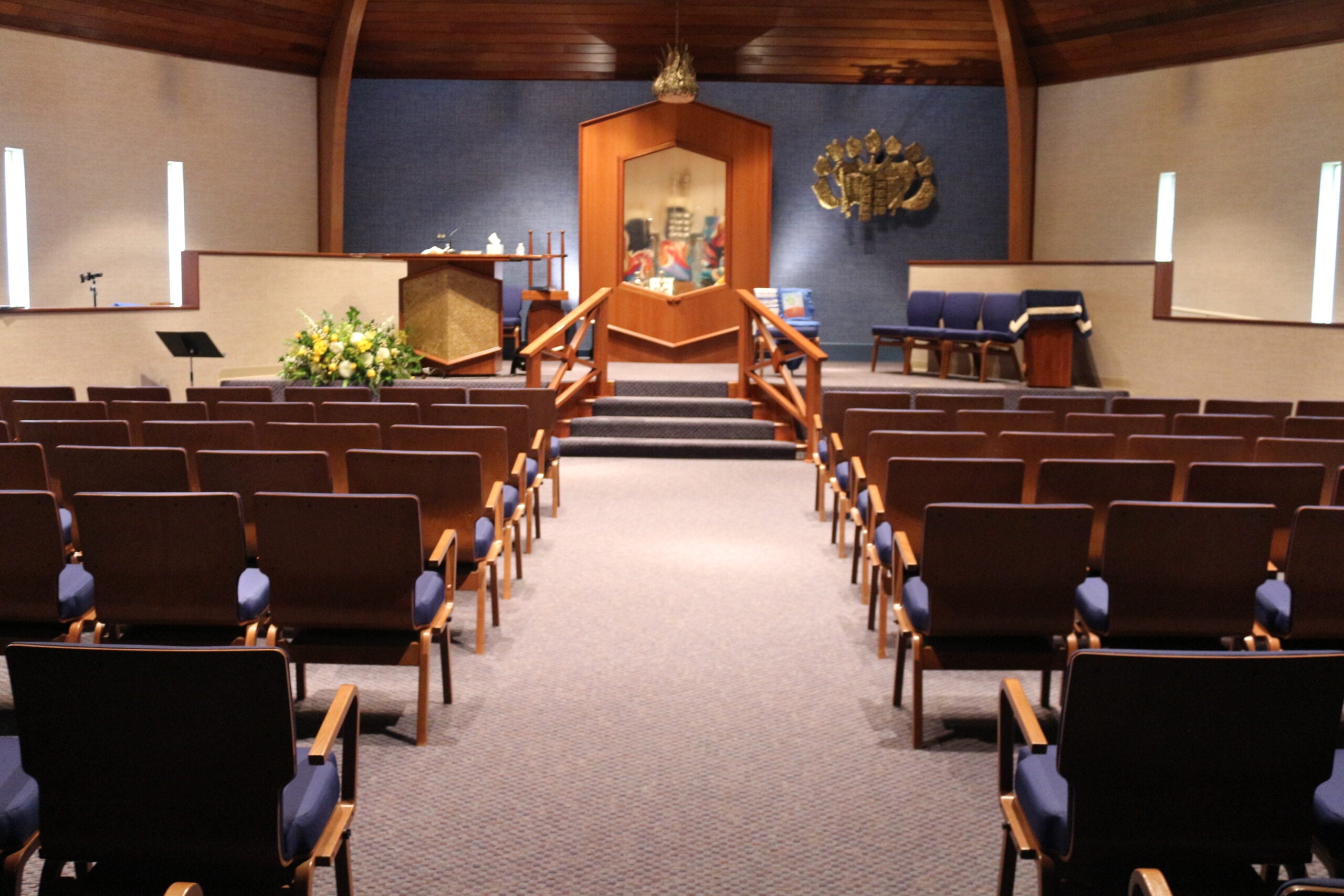
Sanctuary (Source: Temple Israel of West Lafayette, Indiana)
Temple Israel of West Lafayette, Indiana, founded in 1849, is one of the oldest Jewish congregations in the state and remains a cornerstone of Jewish life in the Greater Lafayette area. The congregation traces its roots to early Jewish settlers who helped shape Indiana’s frontier communities, and it has grown alongside the region’s development from its earliest days into the present. Temple Israel’s mission is to create the feeling of a Jewish home within the congregation, honor the history of the Lafayette Jewish community, and ensure its continuity by upholding core values of Jewish worship and education, tikkun olam, repairing the world, and inclusiveness, while also building partnerships across both Jewish and non-Jewish communities. Today, the congregation continues this legacy through a vibrant Reform Jewish community dedicated to faith, learning, service, and connection.
I would like to thank the esteemed Deb Seders, Communications chair, Temple Israel of West Lafayette, Indiana, for their support of this article.
Synagogue
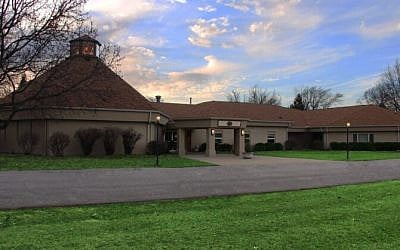
Temple Israel’s West Lafayette home features a modest, modern design with a low-profile, masonry exterior on Cumberland Avenue. Large windows, landscaped grounds, and spaces for education and community use, along with a playground and parking, reflect its role as both synagogue and community center. The congregation moved here in 1969 from its historic 1867 downtown Lafayette synagogue, which was a two-story brick structure built in the Rundbogenstil and Romanesque Revival styles with rounded-arch windows and a more traditional nineteenth-century design.
The inside of the synagogue reflects a modern, functional Reform synagogue design. The bright sanctuary features simple lines, seating oriented toward the bimah and Torah ark, and tall windows with light-colored finishes that create an open atmosphere. A central cupola provides natural light and serves as the sanctuary’s focal point.
The Torah

Temple Israel’s historic Torah Scroll, Sefer Torah No. 607, is one of 1,564 Czech Memorial Torah scrolls looted by the Nazis from Jewish communities in Bohemia and Moravia during World War II. After the war, the collection was preserved by the Czechoslovak government and later transferred to Westminster Synagogue in London in 1964. Temple Israel acquired its scroll, originally from the synagogue in Bzenec, Czechoslovakia, through donations from congregation members who funded its restoration and transport. Rabbi Burton Levinson dedicated the Torah on February 6, 1970, in memory of Czechoslovakian Jews and the Christian Underground that helped protect the scrolls during the Holocaust.
Religious Life

Temple Israel offers welcoming Shabbat services that blend traditional prayer, music, and Torah reading in a community-centered atmosphere. Services often encourage participation and may be proceeded by shared meals that foster connection and fellowship among congregants. In addition to in-person gatherings, many services are also accessible via Zoom, helping ensure that members can take part in worship regardless of location. The congregation also hosts festive holiday events, including Passover Seders that bring people together for celebration and remembrance.
The congregation observes the High Holy Days with worship services and educational programs focused on teshuvah, repentance, reflection, and spiritual renewal. Non-members are welcome to attend with advance RSVP for security purposes. These observances provide opportunities for communal prayer, personal reflection, and reaffirmation of Jewish identity.

As Rabbi Karen Fanwick, formerly of Temple Israel, once reminded congregants at the close of Shabbat services: “Let us remember all the good we have in the world and treat each other with kindness. If we disagree, we disagree but we can be kind. Always share kindness as if it were challah made of love.”
Learning
Temple Israel supports Jewish learning for all ages through youth and adult educational programs.
Children can begin Jewish education in early childhood and continue through high school. Programs include Hebrew school, where students learn the Hebrew alphabet and prayers; preparation for becoming a B’nai Mitzvah, including Torah reading, service leadership, and a mitzvah project; and confirmation classes that explore contemporary Jewish life and identity. The congregation also houses the Lafayette Jewish Community Religious School, a nondenominational program serving Jewish families throughout the Greater Lafayette area.
Adult education opportunities include Hebrew language study, Torah study, and an Adult B’nai Mitzvah program for those seeking a deeper connection to Jewish tradition or who did not celebrate a bar or bat mitzvah in their youth. Classes emphasize Jewish texts, worship, and lifelong learning.
Culture

Temple Israel’s Sisterhood is a women’s group that fosters friendship, support, and connection among congregants and Jewish women in the Greater Lafayette area. Members form a diverse community united by shared Reform Jewish values, offering mutual support through both social gatherings and times of need.
The Sisterhood plays an active role in congregational life, supporting Temple operations, maintaining the Judaica shop, and contributing to facility and program needs. It also engages in philanthropy, supporting Temple initiatives and local organizations dedicated to education, health, youth services, and social welfare, guided by the value of tikkun olam.
Temple Israel’s youth programs are rooted in Reform Jewish values and focus on building friendships, identity, and community through age-appropriate activities. Programs include WeLFTY for grades 8–12, WeLFTY Jr. for grades 6–7, and YOTI for younger children through grade 5. Activities range from social events like bowling and pizza outings to supervised group gatherings that strengthen connections to Jewish life.
The congregation’s Social Action Committee provides regular opportunities to engage in tikkun olam through volunteering, donations, and community partnerships. Activities include food drives, environmental restoration projects, literacy initiatives, support for local shelters and nonprofits, and participation in broader community events promoting inclusion, health, and social welfare.
Historical Background
Temple Israel has a long history in the Greater Lafayette area. Jewish pioneers were present in Indiana even before statehood in 1816, as early land and settlement efforts such as the Illinois and Wabash Land Company attracted settlers seeking liberty and opportunity in the Northwest Territory. Early Jewish figures associated with Indiana’s frontier history include Baruch Hays, a Revolutionary War veteran from one of the earliest Jewish American families, his son Jacob Hays, and Samuel B. Judah (1799–1869), a Rutgers Law graduate and early Indiana legislator. Judah served in the Indiana House of Representatives and helped shape civic and legal life in frontier communities.
In the early 1820s, the United States was a rapidly growing agrarian nation of about 9.6 million people during the so-called “Era of Good Feelings.” It was a period shaped by westward expansion, the rise of the cotton economy, and increasing sectional tensions over slavery. Expansion into western territories accelerated, including the Missouri Compromise of 1820, which admitted Missouri as a slave state and Maine as a free state to maintain balance in Congress. Settlement across the frontier increased as migrants moved west along routes such as the Santa Fe Trail.
During this period, Lafayette, Indiana developed rapidly due to its strategic location at the head of navigation on the Wabash River and its connection to the Wabash and Erie Canal. Established around 1825, Lafayette quickly became a key commercial hub linking eastern markets with the expanding western frontier, earning it the reputation as the “Star City of the West.”
German Jewish settlement in Lafayette grew significantly after 1820, when waves of European immigrants arrived in Indiana seeking economic opportunity and relief from discrimination in Central Europe. By the mid-1840s, German Jewish families were firmly established in Indiana communities. By 1847, Jewish families were present in river towns such as Madison and Vincennes, and by 1848 early organized Jewish communal life was developing in Fort Wayne. These small settlements reflected broader mid-19th-century migration patterns of German and Bavarian Jewish families moving into the American Midwest.
Which brings us to 1849.
In 1849, the United States was a rapidly expanding nation of 30 states, shaped by Manifest Destiny, westward migration, and the economic impact of the California Gold Rush. Zachary Taylor had just become the 12th president, following James K. Polk, whose administration had overseen major territorial expansion to the Pacific. Indiana remained largely rural and agricultural, though growing towns like Lafayette were emerging as regional trade centers along the Wabash River due to expanding canal and railroad networks.
That year, 1849, Indiana was largely an agrarian frontier undergoing a massive transition. Still, Lafayette was the fourth-largest town in Indiana. A bustling shipping center on the Wabash River, it had over 6,000 residents and was nicknamed “Sproutsburgh” due to its explosive growth. The town was booming thanks to the recent arrival of the Wabash & Erie Canal and developing railroad.
It was in April of 1849 that twenty Jewish families in Lafayette, Indiana formed a congregation named it Ahavath Achim or “Brotherly Love.” It was one of the earliest Reform Jewish congregations in Indiana. The establishing of Ahavath Achim as a congregation marked the beginning of organized Jewish communal life in the area. Eighteen years later, in 1867, the congregation built its first synagogue at 7th and Alabama Street.
The congregation changed its name to Temple Israel in 1919, and the synagogue remained at 7th and Alabama Street for 50 years. In 1969, the congregation moved to its current location 620 Cumberland Ave. West Lafayette, Indiana.
Temple Israel of West Lafayette stands as both a historic institution and a living, evolving community that continues to reflect the enduring presence of Jewish life in Indiana. From its origins among early Jewish settlers in the mid-19th century to its present-day role as a center for worship, education, and community engagement, the congregation has maintained a consistent commitment to continuity and growth. Guided by its mission of fostering a Jewish home, honoring local Jewish history, and promoting inclusiveness, tikkun olam, and meaningful partnerships, Temple Israel remains deeply connected to both its heritage and its broader civic community. As it moves forward, the congregation carries its history with it while continuing to shape a vibrant and inclusive future for generations to come.
Contact Information:
Temple Israel 620 Cumberland Ave. West Lafayette, IN 47906
Phone: (765) 463-3455
Email: templeisrael@templeisraelwlaf.org
Website: templeisraelwlaf.org/