
President and CEO of Netzach Educational Network
Featured Post
From Haredi fighter to fallen protester: 3 generations
The Hasidic grandfather of the boy whose father championed death over IDF service served in the army – it seems we may already hold the key to healing
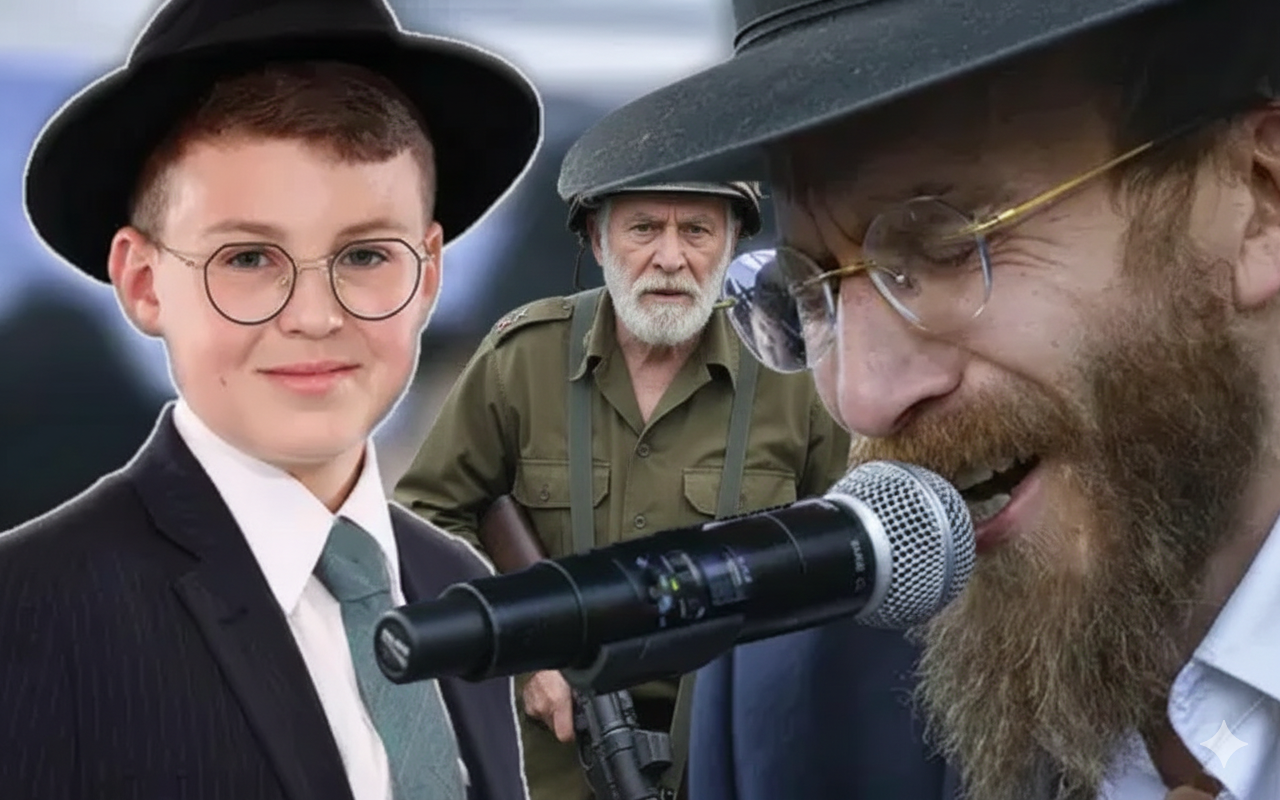
Three generations, with some help from Gemini.
There are moments when family and national history collide so painfully that they force us to stop and look in the mirror. This composite photograph of the late Yitzhak Eisental alongside his late great-grandson, Yosef, is exactly such a collision. It is not just an image of a forefather and his progeny; it is a haunting snapshot of the Israeli fracture — and perhaps, the silent key to its healing (Note: The separate images are real photographs; combining them was done with AI).
The Haredi Revolutionary of 1948
Yitzhak Eisental’s story belongs to a vanishing generation of giants. He grew up in the heart of the Gur Hasidic sect, one of the most conservative and secluded communities in the Jewish world, yet he saw wearing a uniform and carrying a weapon as a supreme religious mission rather than a contradiction. As a fighter in the Irgun (Etzel) underground and later in the IDF’s 8th Brigade under the legendary Yitzhak Sadeh, he didn’t just defend the land; he actively worked to recruit and mentor other yeshiva students for the front lines. For him, the ancient words of the Torah and the modern defense of the Jewish home were woven into one inseparable tapestry of faith and action.
The Tragedy of the Fourth Generation
A leap of several decades brings us to the stark and jarring reality of today. Yosef, Yitzhak’s great-grandson, met a horrifying end during a violent protest against the Haredi draft into the IDF. The contrast between the two men is deafening: while the great-grandfather dedicated his youth to bridging the world of the Beit Midrash (study hall) with the service of the nation, the great-grandson was swept into a struggle where the very army that protects him is perceived as an existential threat to be fought at all costs. This ideological shift represents a profound transformation in how parts of the Haredi community view their relationship with the State of Israel.
The harsh sentiment expressed by the family following the tragedy — “I prefer he die this way than enlist” — is a chilling testimony to the psychological distance traveled over the last seventy years. It forces us to ask a difficult question: How did the Israel Defense Forces, an institution Yitzhak Eisental risked his life to establish, become a symbol so feared that some would prefer a grave over a uniform? This sentiment highlights a deep-seated crisis of trust and identity that goes far beyond politics.
The Way Back: Hope Rising from Pain
Despite the jarring tragedy and the sharp contrast, a spark of optimism remains buried in Yitzhak’s original legacy. He proved that it is possible to be a God-fearing Hasid and, at the same time, a brave warrior who views sharing the national burden as a sacred privilege. He left behind a blueprint for a life based not on the fear of the “other” or the secular state, but on a deep, shared destiny that binds all Jews together.
The shock that has rippled through Israeli society upon seeing this image is proof that our collective conscience still recognizes when something has gone fundamentally wrong. The grief over young Yosef’s loss must become more than just a headline; it should serve as a powerful wake-up call for a return to dialogue. It reminds us that the bridge Yitzhak once built has not been completely demolished — it has simply been neglected, and it is waiting for a new generation to restore it.
Ultimately, we rediscover that in moments of profound crisis, the spirit of the founding generation often begins to pulse within us once more. If we can re-adopt Yitzhak Eisental’s courageous gaze — a gaze that sees Judaism and modern pioneering as two sides of the same coin — we can find the strength to bridge the chasm. Out of this heavy mourning arises the understanding that our shared life here is our most precious asset. Only together, with respect for our heritage and an unwavering responsibility for our future, can we ensure that the next chapter of the Eisental family, and of the Jewish people, will be one of unity and shared purpose.
Related Topics