


From Horror to Hope: The Resilience of Israel in the Face of Terror
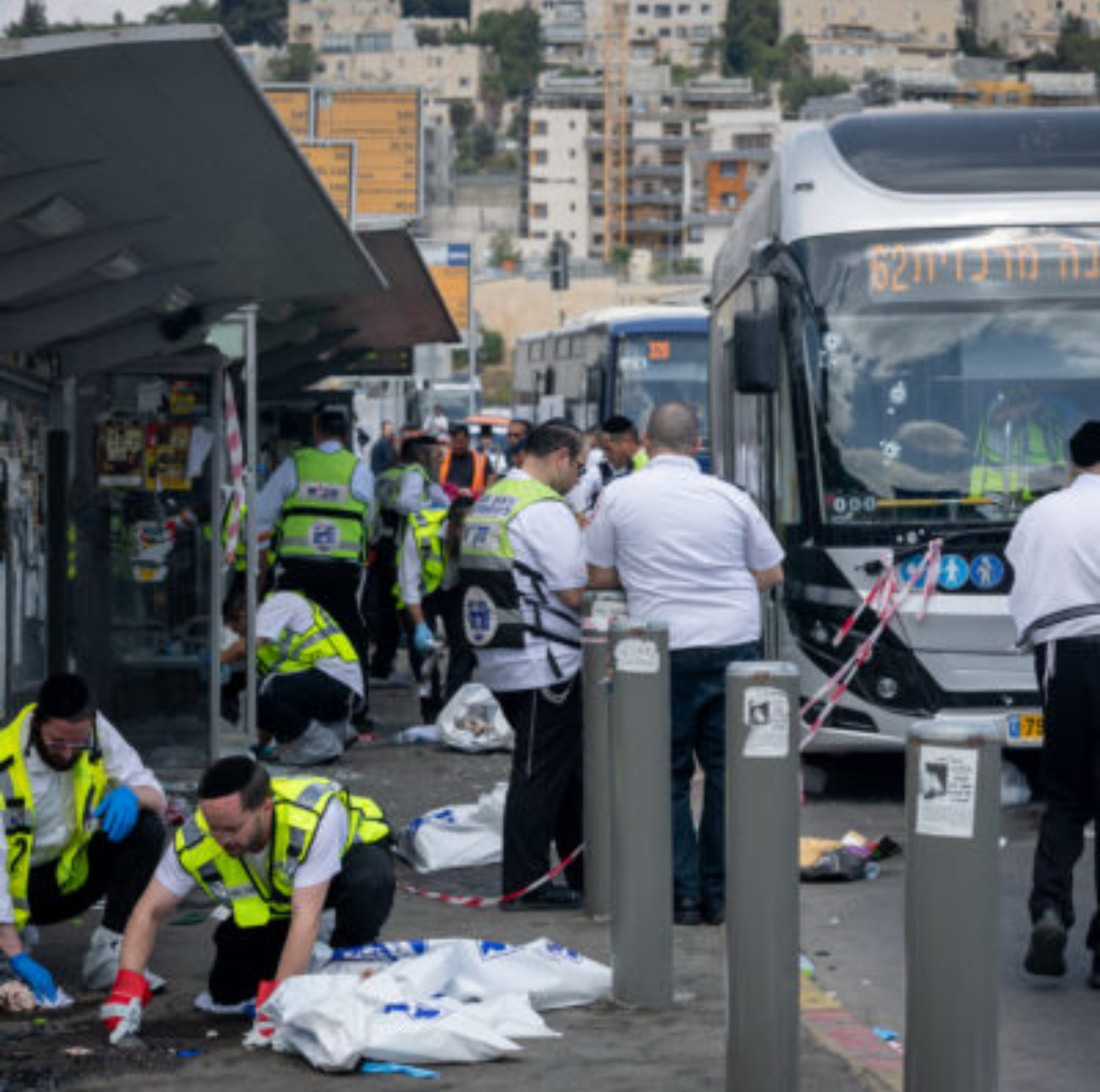
This morning, the granddaughter of a dearest friend—an 18-year-old on her way to her accounting class at the university—stood at a Jerusalem bus stop. The bus she meant to board was full, so she waited for the next one. That small, ordinary delay saved her life.
From the seat of the following bus, she first heard it—the piercing, relentless crack of gunfire. At first, it was disorienting, then unmistakable. Within seconds came the screaming, high-pitched and desperate. As she looked ahead, the scene unraveled before her eyes: bodies slumped unnaturally in the aisles, glass shattered across the pavement, blood pooling on the ground. The bus itself had become a trap, passengers clawing for cover with nowhere to run. The chaos spilled into the street—people shouting names, phones falling from trembling hands, the sirens of ambulances fighting to cut through the terror.
For four hours, she remained detained nearby, witnessing paramedics tend to the wounded and cover the dead. An ordinary teenager on her way to class became an eyewitness to terror, her innocence shattered in an instant.
The Victims: Lives Cut Short
The recent attack in Jerusalem claimed the lives of six individuals, each with their own story:
- Levi Yitzhak Pash, 57, a beloved community member known for his generosity and kindness.
- Yisrael Matzner, 28, a newlywed whose life and marriage had just begun.
- Yaakov Pinto, 25, a Spanish student who came seeking education and opportunity—cut down far from home.
- Sarah Mendelson, 60, a mother and grandmother who simply stepped onto a bus like thousands of Jerusalemites every morning.
- Rabbi Yosef David, 43, a teacher and community leader who touched many lives.
- Rabbi Mordechai Steintzeg, 79, a devoted grandfather and elder whose Torah devotion left a lasting imprint.
Among the victims were students, young couples, parents, grandparents, and rabbis—people from every walk of life, connected only by the misfortune of being in the wrong place at the wrong time.
Each name is a universe, each life a tapestry of relationships, dreams, and contributions. A young couple planning a future, a teacher shaping minds, a grandmother tending to family, a student chasing opportunity—strangers in life, they became bound together in death, united by nothing more than the timing of a bus.
Hamas’s Celebration
In stark contrast to the mourning of the victims, Hamas celebrated the attack as a “heroic response,” glorifying death and terror. This celebration of violence stands in direct opposition to the values upheld by Israeli society.
United Hatzalah: The First Responders Who Bring Hope Amidst Chaos
In the immediate aftermath of the attack at Ramot Junction, United Hatzalah volunteers were among the first to arrive at the scene. Their rapid response, facilitated by a network of over 8,000 trained volunteers equipped with advanced medical tools, exemplifies the organization’s commitment to saving lives under the most challenging circumstances.
One volunteer, EMT Avi Swissa, provided critical care to the injured moments after the attack, while Daniel Katzenstein assisted a bus driver who had rushed to help others. Despite the chaos, these responders remained focused, delivering life-saving interventions amidst terror.
United Hatzalah’s Psychotrauma and Crisis Response Unit, comprising over 150 trained mental health professionals, also provided essential emotional support to victims and their families, helping them navigate the psychological aftermath of the attack.
Acts of Kindness: The Heartbeat of Israeli Society
In the wake of tragedy, Israeli society has demonstrated remarkable resilience through countless acts of kindness:
- Community Support: Neighbors opened their homes to those affected, offering shelter, meals, and emotional comfort.
- Volunteer Efforts: Organizations like OneFamily Fund and ZAKA mobilized quickly, providing financial assistance, counseling, and logistical support to victims’ families.
- Public Memorials: Vigils and prayer services allowed communities to mourn together and honor the memories of the victims.
These acts are not isolated incidents but a testament to the collective spirit of a nation that refuses to be broken by terror.
Mothers Leading the Way: Strength from Grief
Some of the most profound examples of resilience come from mothers who have lost children to terror, transforming unimaginable grief into action:
- Rachel Goldberg-Pollin, whose son Hersh was taken hostage by Hamas, advocates tirelessly for the release of hostages, speaking at international forums to inspire action.
- Rachelle Fraenkel, mother of Naftali Fraenkel, speaks publicly to foster understanding and resilience, addressing the United Nations and engaging communities worldwide.
- Sherri Mandell, whose son Koby was murdered in 2001, founded the Koby Mandell Foundation, providing retreats, counseling, and programs for other bereaved families.
These women, among many others, show that even in the darkest moments, there is light. Their courage supports others, turning private grief into public strength.
Choosing Goodness in the Face of Barbarism
In Israel, the response to terror is never solely about security—it is about humanity. Amid the horror of the Ramot Junction attack, communities, volunteers, and ordinary citizens have mobilized to tip the scales toward goodness.
Every act of kindness, no matter how small, becomes a defiance of barbarism: neighbors delivering meals to mourning families, volunteers offering counseling and practical support, young people organizing blood drives, and communities holding vigils and prayer services. Organizations such as OneFamily Fund and ZAKA continue their tireless work to provide for victims of terror, reinforcing the truth that life and dignity can prevail even amidst the darkest moments.
It is in these efforts—the quiet, persistent acts of goodness—that Israel’s true resilience shines. Ordinary people choose to live, to help, to care, and to pray. They refuse to let violence dictate the moral order. In the face of terror, Israel’s citizens demonstrate that while attackers may sow fear, the people can respond with courage, unity, and a commitment to life.
The granddaughter of my dearest friend will carry the memory of this day forever. But she, like so many Israelis, will continue forward—not in fear, but in a determination to preserve life, community, and hope. That, in itself, is a powerful answer to those who glorify death: the choice to live well, to act with compassion, and to tip the scales toward goodness.