From Kristallnacht to Freedom Week
I was told not to share with anyone in Berlin that I am Jewish or Israeli. Locals from the Jewish and Iranian community told me Jews had been spit on and attacked. Some said that if an event was known to be Jewish or featuring an Israeli, people just wouldn’t come. That felt strange to me on my first night in the city, eating a late meal at a cozy kosher/vegan place. I sat among German patrons, everyone dredging their pita in hummus with menorahs and Judaic art on the walls.
I landed in Berlin 87 years after Kristallnacht began. Nearly nine decades later, the city of Berlin was hosting Berlin Freedom Week, a strong repudiation of their communist and authoritarian past.
As the founder and director of a women’s rights group, The 49%, I was there to participate in a conference and host an official side event.
During my time in the capital, I experienced a city determined to position itself as a hub for human rights defenders while grappling with (and failing at?) rooting out racism and extremism.
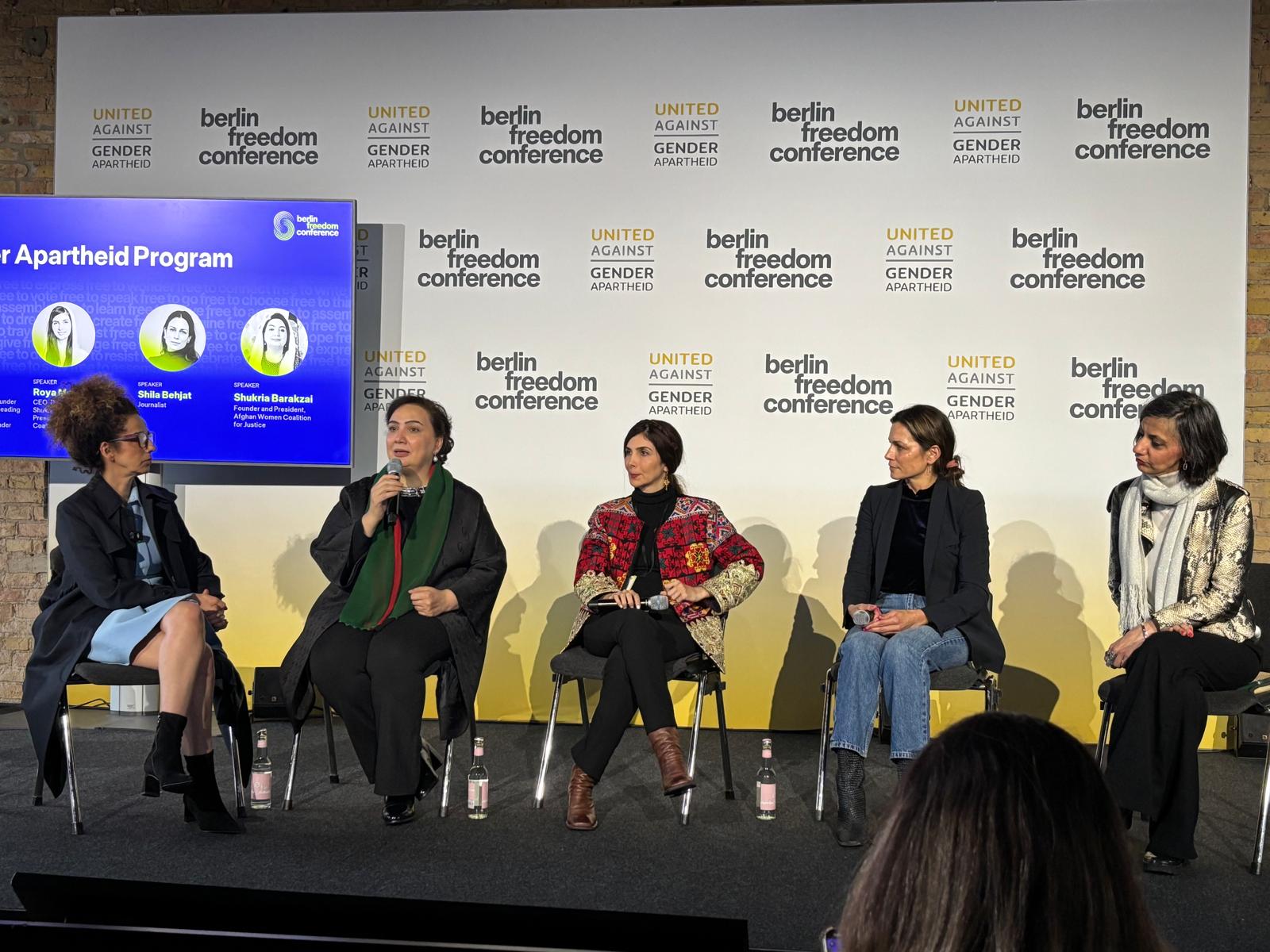
At the Berlin Freedom Conference, dissidents from Iran, Venezuela, Rwanda, Taiwan, Hong Kong, and Russia shared the stage pledging solidarity to one another. The event was co-sponsored by the Axel Springer Freedom Foundation, a phenomenal organization supporting dissidents and freedom fighters from the world’s most egregious dictatorships. Early in the day, Iranian feminist activist Masih Alinejad declared, “the dictators are united, so we must be too.” The World Liberty Congress, a response by dissidents to the failings of the UN, elected its board. Later in the day, Palestinian peace activist Hamza Howidy and former hostage and Nir Oz agronomist Gadi Mozes spoke about a shared future.
The experience was electrifying; a heady atmosphere of connections and possibility.
And yet, I couldn’t stop thinking about the warnings I was receiving. An Iranian activist told me not to tell anyone in Berlin I was from Israel. “Outside of the conference you mean?” I asked her. “Yes, outside – don’t tell anyone.” The security team for our side event got in touch with me with a message, “After an assessment, we’ve decided to add an agent to your program tomorrow.”
I was told not to take an Uber or any ride-sharing service. Someone told me our event was taking place “in enemy territory.” It was jarring, but also confusing.
Germany, a paradigm of democracy and Berlin, the home of freedom week and a safe haven for dissidents, was a place I couldn’t reveal I’m Jewish?
At our side event the following day, I gathered Middle East dissident and minority women. I shared with my fellow panelists and participants the warnings I had received; did they know it wasn’t allowed to be Jewish in their city?
My Darfuri (Sudanese) friend said she also couldn’t share her identity in her own country or in certain communities in Europe for fear of retaliation. The Kurdish scholar on our panel said from a young age she realized it wasn’t safe to say she’s Kurdish. She grew up in Vienna. The Druze-Syrian refugee on the panel said when she posted about the Islamist massacre in Suweida, she was threatened and didn’t leave her house – in Dresden – for days.
My Afghan colleague told me the German government will open an Afghan consulate in Berlin; in essence, it will be an embassy for the Taliban as the terrorist group still controls the country. I was shocked. “The Taliban flag will wave in Berlin,” she said. “But why wasn’t this normalization conditioned on girls’ education?” I asked. She shrugged, “Interests, I guess.”
What are the interests she refers to? If Berlin is a beacon of freedom for dissidents, why are they also hosting the world’s most nefarious human rights abusers? The International Criminal Court has issued multiple arrest warrants for leaders of the Taliban for their crimes against humanity, specifically the treatment of women and girls. If they visit their new consulate in Germany, will they be arrested?
The political whiplash was disorienting. At one point, I spoke to one of my hosts, a German organization committed to shared values including freedom and democracy. I said, “I hope you’ll forgive the frankness of my question, but many people told me not to come to Berlin. They said, ‘Europe is dead.’ Do you think there is something to fight for here?”
Perhaps it was a silly question; her face registered shock, and she said, “What choice do we have?”
I posed the same question to my Kurdish friend. She smiled at me and said, “Of course there’s hope! We can’t give up.”
I am struck by her optimism and grateful for her voice. But I wonder how Germany will successfully push back against Islamist extremism and deep-seated hatred, especially as they normalize ties with terrorist organizations.
Is a city truly free when its citizens – and visitors – are told they must lie about their identity? Can a democracy survive when it normalizes authoritarianism?
Perhaps Berlin’s past holds the key to its future. While there is still historical debate about the success of the Marshall Plan’s denazification process, Germany moved from authoritarianism to democracy in a period of a few years.
Walking along streets which had seen the worst atrocities of the 20th century, I wanted to believe that history’s teachings would protect those who refuse to be silent. Yet during my time in Berlin, I felt more dread than hope. In a place eager to champion human rights, many of us are told to hide who we are.