


Senior Research Fellow, S. Neaman Institute Technion
From Lab to Life: Conquering Fear
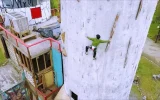
Let’s play “imagine this”. You are climbing the exterior of a 101-story skyscraper in Taipei, Taiwan. Without ropes. (The photo actually shows a climber in Santiago, Chile, with ropes). One slip – and you are plastered on the pavement below.
How do you keep cool, keep your heart rate down, and keep the enormous fear welling inside you from paralyzing you or from igniting a fatal panic?
In a Science Friday podcast, stellar climber Alex Honnold explains, to Flora Lichtman (host) and sports psychologist Jessica Bartley, how he does it – how he conquers fear. Since all of us, in life, face fear, big or small, we can learn a lot from Honnold, 40-year-old climber who famously “free solo” climbed El Capitan peak in Yosemite in June 2017 (without ropes, alone).
“Untangling when ..fear is well-founded and when it’s actually helping you stay safe is one of the big lessons…from climbing. ..as a climber, you kind of develop all the things that you’re used to using. … you get scared, and then you take a deep breath. You compose yourself. You… pull it back together. There is a high degree of rationalism that goes into it. Am I actually in danger, is it appropriate to be scared right now, should I be scared or not? Often, in climbing, you are actually in danger. So there are times when you should back down. You should ‘bail’. So you should act on your fear. Then there are times where your fear is unfounded and you should ignore it and just achieve….
Jessica: “Alex is saying, is this a danger or is it not?”
Alex: “There are a few sports where you definitely don’t want to try your hardest sometimes, because you will die or you will be grievously injured. Climbing is always scary at some level… ideally you make a sort of well-informed decision as to whether or not you want to push forward through your fear, or not.”.
What do we draw from this, for our lives?
Much of human behavior is driven by right-brain emotion. It is where fear originates. Fear is very useful. It warns us of danger. Sometimes fear is justified. Sometimes, it is paralyzing and harmful. At those times, we enlist our left brain, our logic and reason, to evaluate the fear. As he climbs a 101-story building, Honnold is doing this every moment.
It is easy to describe and put in words. And very, very hard to do in life. It takes practice. Honnold is alive today, I believe, because he has honed this key skill to a level beyond what most of us attain.
General George Patton once said, “Take calculated risks”. His go-for-broke attack against the Nazis, after D-Day in 1944, was a calculated risk.
Fear of risk is driven by emotion. Calculated risks are driven by reason. Knowing how to employ these rather hostile demons and get them to collaborate is a highly valuable life skill.