
Senior Research Fellow, S. Neaman Institute Technion
From Lab to Life: Cyclotrons’ Protons Cure Cancer
From Lab to Life: Cyclotrons Blast Protons, Treat Cancer
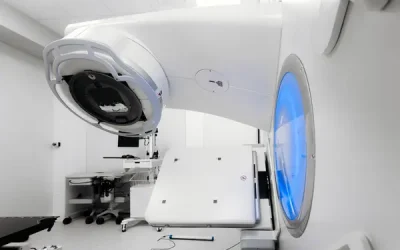
Here is a ‘from lab to life’ example, par excellence! A device for experimental physicists, that accelerates protons and smashes them into other particles, to see what emerges, and to map the inner structure of nuclei – becomes a lifesaving tool for treating cancer.
Some 94 years ago, US physicist Ernest Lawrence’s cyclotron became operational. The cyclotron was a circular arrangement of huge magnets, a kind of race track. Each time a proton inserted at the start went around the track, it got a jolt of electromagnetic energy, speeding it up. After say 100 times around, the proton was moving really fast, fast enough to smash apart an atom’s nucleus. Physicists learned a lot using it. Lawrence won a Nobel.
Fast forward. Israel’s National Oncology Center in Haifa, at Rambam Hospital, has a state of the art accelerator, used to direct high-powered beams at cancer tumors, with 100% spot-on accuracy, to avoid ‘collateral damage’. Israel’s full-cure rate of breast cancer is among the highest in the world, owing to early detection (mammography and ultrasound), along with high-tech treatment when tumors are detected. In general, cyclotrons generate proton beams that target tumors without destroying healthy tissue, especially for hard-to-treat tumors.
There is an obvious, important lesson here. Money is invested in lab research, that focuses on pure science. But emerging from it, often, are methods, drugs, technologies and advances that save lives. And you never know in advance when a pure science breakthrough can lead to a lifesaving innovation. Biologists studied mRNA (messenger RNA) because they were curious. It became the basis of a life-saving COVID vaccine.
Related Posts