


Senior Research Fellow, S. Neaman Institute Technion
From Lab to Life: Did Life Begin with HCN?
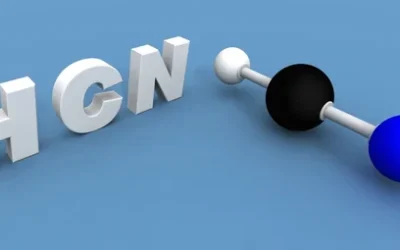
How did life on earth begin? How did the complex DNA-based life forms emerge from a warm sea and a batch of basic chemicals? This article by Martin Rahm and colleagues gives us a clue – and it is very strange. Because — life on earth may have begun with the help of a highly poisonous compound, HCN, hydrogen cyanide, a molecule composed of one atom each of hydrogen (element #1), Carbon (element #6) and Nitrogen (element #7) — very basic elements, three of the first seven in the periodic table of elements.
Here is a summary of what they found:
“Hydrogen cyanide (HCN) is present in many astrochemical environments, including interstellar clouds and comets. On Saturn’s moon Titan, large amounts of HCN ice are present in the atmosphere and, following surface deposition, may influence both chemical and geological evolution. However, despite HCN’s relevance to origin of life chemistry, the physiochemical properties of its solid state remain poorly characterized.
“We use quantum chemical methods to predict HCN crystal surface energies, from which we derive the needle-like, high-aspect-ratio morphology of HCN nanocrystals.We suggest that the combination of tips of opposite polarity helps to explain the cobweb-structure of solid HCN, and that fracture can transiently expose energetic surfaces, capable of catalysis at low temperature.”
Translation: HCN hydrogen cyanide can serve as a catalyst for other, complex chemical reactions, even in very very cold temperatures – as on Saturn’s moon Titan.
Did life on Earth begin with this virulent poison? Did HCN help catalyze the way basic compounds (carbon, oxygen, nitrogen, hydrogen) combined, to ultimately create living organisms? It’s an intriguing thought!
- “Electric Fields Can Assist Prebiotic Reactivity on Hydrogen Cyanide Surfaces”. Marco Cappelletti, Hilda Sandström, Martin Rahm. American Chemical Society Central Science, January 14 2026.