


Senior Research Fellow, S. Neaman Institute Technion
From Lab to Life: Fruit Fly Four AI Zero
depositphotos.com
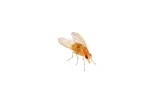
The Swedish Academy’s rules won’t allow it – but I suggest giving the next Nobel Prize for Medicine and Physiology to….Drosophila melanogaster – the tiny fruit fly.
Here is why.
Fruit flies are born, mate, have babies, and die, in a matter of weeks. This short life cycle enables biologists to research their genetics, neurology, and explore the impact of environment, etc., on their genes, over several generations. I’ve written a lot about this.
Yesterday, June 10, Science Daily reports: “Scientists have mapped every neural connection in a fruit fly and found a surprise….!” “…brain-to-body wiring map behavior may be driven more by local neural teamwork than by a central brain command center….complex behaviors emerge from distributed local circuits, rather than a single controller.”
The surprise: Much of our human behavior may be driven not by our brains, but by neurons distributed throughout our body (for example, our gut and our hearts). Think about, say, driving, jogging, or brushing your teeth. Is your brain controlling it? Or is it a kind of autopilot, driven by muscle memory and neurons outside the brain? Think about mindfulness. If we have to remind ourselves to ‘pay attention’ – to be mindful of what is going on around us and what we are doing – maybe it is not our brains that our running things? Otherwise, why do we need to jog it and remind it?
Back to those little fruit flies. Helen Yang, co-first author of the Nature article describing this result, from Princeton’s Wilson Lab, notes: “…this tiny little fly does a hell of a lot, even our best AI agents and robots can’t do everything a fly does.” *
* Bates, A. S., Phelps, J. S., Kim, M., Yang, H. H., Matsliah, A., Ajabi, Z., … & Lee, W. C. A. (2026). Distributed control circuits across a brain-and-cord connectome. Nature, 1-4.
Like what? Flies adapt quickly to changes in their environment, walk upside down on ceilings, without any ‘training’, with extreme energy efficiency to perform complex computations, with pre-programming, and, self-replication (reproduction).
Scientists have found and documented changes in over 60% of the fruit fly genome (!) as the flies adapt to seasonal shifts in the environment, in only four months! Imagine if humans were as adaptable.
Fruit flies do all this with only 100,000 neurons – while we humans have 86 billion neurons in our brains, or 86,000 times more than the tiny fly. Yet we still engage in insane wars, in which everyone loses. I doubt the little flies even know what a war is. But they do know what a ripe peach is.
Fruit flies make love, not war. Here is how: “They engage in an elaborate, multi-step courtship ritual before mating. Males use pheromones, and complex wing vibrations to create a “courtship song,” and leg-tapping to woo females. If receptive, the female stops and spreads her wings, allowing the male to mount for copulation, which lasts roughly 15 to 20 minutes.”
Much of the world is fearful of AI. Next time you swat a fly, think about how much smarter it is than Claude.