


Senior Research Fellow, S. Neaman Institute Technion
From Lab to Life: High School Reject to Nobel?
From Lab to Life: High School Reject to…Nobel? Yifat Merbl
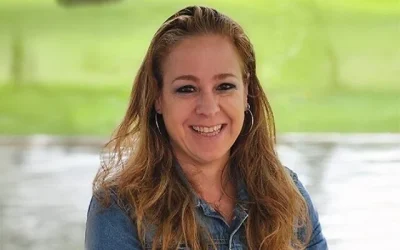
The Times of Israel has just reported that Weizmann Institute scientist Prof. Yifat Merbl has been named one of the top 10 most influential scientists of 2025 by the prestigious Nature journal. Her story is remarkable.
She was thrown out of her high school before finishing her Bagrut (high school completion) exams. In hindsight, she had serious ADHD attention deficit hyperactivity disorder. Today we know how to recognize, diagnose and treat it. But back then — we did not.
Supported by her mother, who knew she was brilliant, Merbel applied to Harvard, and with astronomical psychometric scores, was accepted. The rest is history.
Mrbel is driven by innate insatiable curiosity. Like many breakthrough pioneers, she zeroed in on a key question (what happens to proteins when the body rejects and discards them?), that others found of no importance. According to the Weizmann Institute, “she has found a new facet of the human immune system by studying proteasomes that normally break down old or damaged cells. Merbl found that under some circumstances, proteasomes cut up proteins to create antimicrobial peptides that help to fight infections.”
In other words: Merbl’s lab, in the systems immunology department, developed an innovative technology to enable them to “dive into the dumpster” where proteins are destroyed, to discover a previously unknown immune mechanism. The cut up proteins, actually ‘shredded’ like a shredding machine does, have anti-bacterial properties! This could create an entirely new field of antibiotics and disease treatment. It is the reason she was chosen as one of the top 10 influential scientists of 2025.
This reminds me of the discovery by Technion Nobel laureates Moshe Hershko and Aaron Ciechanover, who discovered ubiquitin – the compound that kills and discards cells when they are no longer useful. Nobody thought that was an interesting problem in biochemistry. But it is! Because there are cells that refuse to die – and they are called cancer. Cancer drugs emerged from their research.
It is ironic that Merbel’s Weizmann lab was destroyed last July by a direct hit from an Iranian ballistic missile. She rushed into the ruined building to save what she could of her equipment and specimens. And her lab continues to function, in smaller, cramped spaces elsewhere at Weizmann.
What could contrast human values more than the Abrahamic command to Jews to “be a blessing” – and the Iranian obsession with killing Israelis and blowing up their labs that benefit humanity?