


Senior Research Fellow, S. Neaman Institute Technion
From Lab to Life: Humans Have Regenerative Powers
Depositphotos.co
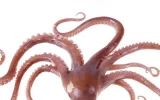
Envy the lowly octopus!
According to Scientific American: An octopus can fully regenerate a lost arm.
“The process restores the limb’s muscles, nerves, and intricate suckers, leaving it as good as new. The regeneration process follows a clear timeline and distinct phases:
- Immediate Wound Sealing: Within hours of an injury, the wound contracts and seals to prevent infection in the ocean water.
- Regrowth: Molecular signals kick off immediately, with visible nerve regeneration starting within a couple of weeks.
- Timeline: Depending on the species and the size of the lost limb, a fully functional arm can regrow in 2 to 4 months
Now – imagine if we humans had the same regenerative powers that an octopus or a salamander has.
A report in Science Daily, June 17, has the intriguing headline: “Humans may have hidden regenerative powers. Scientists may have uncovered a hidden regenerative switch in mammals, opening the door to healing that goes far beyond scar tissue.”
Here is the summary: “Scientists have taken a surprising step toward unlocking regeneration in mammals, showing that the ability to rebuild complex body parts may not be lost after all—it may simply be switched off. Using a two-stage treatment, researchers redirected the body’s normal healing response away from scar formation and toward regrowth, successfully restoring bone, joints, ligaments, and tendons after amputation in animal studies.”
The research was done at Texas A&M College of Veterinary Medicine and Biomedical Sciences (VMBS), [1]
“Why some animals can regenerate and others, particularly humans, can’t is a big question that has been asked since Aristotle,” said Dr. Ken Muneoka, a professor in the VMBS’ Department of Veterinary Physiology & Pharmacology (VTPP). “I’ve spent my career trying to understand that.” In a study published in Nature Communications, Muneoka and colleagues describe a new two-step treatment that enabled the regeneration of bone, joint structures, and ligaments. Although the regrown tissues were not perfect replicas of the originals, the researchers believe the approach could eventually help reduce scarring and improve tissue repair after amputations.
According to Science Daily: “When mammals are injured, the body usually responds with fibrosis. During this process, fibroblast cells quickly close the wound and create scar tissue. While this response helps prevent infection and further damage, it also limits the body’s ability to rebuild what was lost.
Animals capable of regeneration follow a different path. In salamanders, for example, similar cells gather into a structure called a blastema, which serves as a foundation for new tissue growth.
“It’s as if these cells can move in two different directions,” Muneoka said. “They could either make a scar or make a blastema. Our research focused on redirecting the behavior of fibroblasts already present at the injury site.” To explore whether mammalian healing could be pushed toward regeneration, the research team developed a treatment that uses two well-known growth factors in sequence.
The first step involved applying fibroblast growth factor 2 (FGF2) after the wound had already healed over. By waiting until the initial healing process was complete, the researchers allowed the body to respond normally before intervening. According to Muneoka, the team then “changed what happens next.” FGF2 encouraged the formation of a blastema-like structure, something that does not typically occur in mammals after this type of injury. Several days later, the researchers applied a second growth factor, bone morphogenetic protein 2 (BMP2), which prompted those cells to begin building new tissues.
“This is really a two-step process,” Muneoka said. “You first shift the cells away from scarring, and then you provide the signals that tell them what to build.”
One of the study’s most important findings is that regeneration may not require adding stem cells from outside the body, an approach commonly explored in regenerative medicine.
“You don’t have to actually get stem cells and put them back in,” Muneoka said. “They’re already there – you just need to learn how to get them to behave the way you want.”
I note that the research was done at a unique faculty, which combines veterinary medicine and biomedical sciences. We humans can indeed learn from animals – and octopi and salamanders – whose bodies can perform miracles we can only dream of. But if we understand how they work, perhaps humans too can benefit.
[1] Ling Yu, Mingquan Yan, Katherine Zimmel Scaturro, Osama Qureshi, Yu-Lieh Lin, Benjamin B. Bartelle, C. Addison Smith, Daniel Osorio Hurtado, James J. Cai, Lindsay A. Dawson, Regina Brunauer, Larry J. Suva, Manjong Han, Connor P. Dolan, Ken Muneoka. Digit regeneration in mice is stimulated by sequential treatment with FGF2 and BMP2. Nature Communications, 2026; 17 (1) DOI: 10.1038/s41467-026-72066-8