
Senior Research Fellow, S. Neaman Institute Technion
From Lab to Life: Our Amazing Neurons
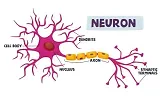
New research reveals some surprising counter-factual results about our brain’s neurons – those amazing 86 billion brain cells that are so crucial for life and for health. Science Daily reports: “By analyzing recordings from 43 regions of the mouse brain, researchers discovered that although some neurons are dedicated to specific functions, most respond to a wide variety of information in remarkably distinct ways.”
“The research addresses one of the oldest and most hotly debated questions in neuroscience: how specialized are the individual cells that make up the brain?
Do neurons operate like individual tools, such as hammers and saws, each designed for a particular job? Or are they more like Swiss Army knives, capable of handling many different tasks?”
Answer: Surprisingly – Swiss Army knives.
“We have to move away from this image of the brain as a machine made of gears, with every gear having an exact purpose that we can attach a label to,” said Stefano Fusi, PhD, a principal investigator at Columbia’s Zuckerman Institute, a member of the Kavli Institute for Brain Science and the paper’s co-senior author. “The brain doesn’t work like that. Instead, most neurons can display a huge diversity of responses, and this can help the brain solve a huge number of different tasks.”
“The discovery could help explain how the brain achieves its remarkable ability to perform complex tasks. It could also provide a foundation for understanding what happens when brain function is disrupted and identifying ways to restore it.”
The study has already been widely downloaded, even before publication.
Science Daily continues: “Neurons in primary sensory regions, including areas responsible for processing visual information, tended to exhibit more specialized responses. Across other regions, however, individual neurons displayed a considerably wider range of activity. The overall findings suggest that generalists, rather than specialists, dominate much of the cortex.”
The data “captured the activity of individual neurons across 43 regions of the mouse cerebral cortex.”
The paper, “Rarely categorical and highly separable: how neural representations change along the cortical hierarchy,” was published in Nature.
Posani, L., Wang, S., Muscinelli, S., Paninski, L., & Fusi, S. (2024). Rarely categorical and highly separable: how neural representations change along the cortical hierarchy. NATURE.
Related Topics
Related Posts