


Senior Research Fellow, S. Neaman Institute Technion
From Labs to Life: Another Alzheimers Breakthrough
My previous blog (June 21) spoke of a possible breakthrough in Alzheimer’s Research. Now, today, June 22, comes another! From Science Daily:
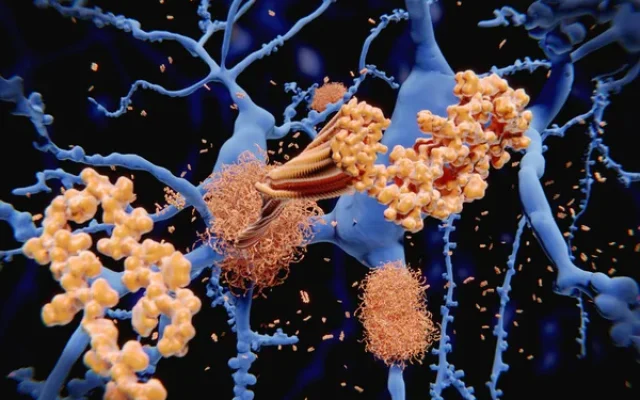
“Scientists at Baylor College of Medicine have identified a potential new approach for tackling Alzheimer’s and Parkinson’s diseases. Both conditions are associated with the buildup of harmful clumps formed by the proteins Tau and alpha-synuclein in the brain. In a study published in Nature Communications, the researchers found that tubulin, a protein that serves as the building block of microtubules, may help prevent these toxic accumulations. Microtubules act as the cell’s internal ‘railway tracks,’ helping transport materials and maintain structure. According to the findings, tubulin can keep Tau and alpha-synuclein from forming damaging aggregates and instead encourage them to perform their normal functions inside healthy neurons.
Dr. Lathan Lucas offered an analogy to explain the concept.
“I think of Tau and alpha synuclein as troublemaker kids in school. You can keep them in the classroom with little to do but to act out or keep them engaged with schoolwork, sports or theater so they do not get in trouble,” Lucas said. “We found that tubulin can drive Tau and alpha synuclein troublemakers down a healthy path.”
The dual role of Tau and alpha synuclein reminds us of LDL and HDL (the ‘good’ and ‘bad’ cholesterol). We need cholesterol to help carry oxygen around the body – but do not want it to gum up our arteries.
[In brackets: Kudos to Dr. Lucas for his skill in explaining a complicated idea, with a brilliant, simple metaphor! Not all scientists are good at this!]
“When tubulin levels are low, as it has been found in Alzheimer’s disease, microtubules are less abundant and Tau and alpha-synuclein (similar in effect to amyloid-beta) can form toxic aggregates,” Lucas said.
“But when tubulin is present, Tau and alpha-synuclein shift away from harmful aggregates and instead promote the assembly of healthy microtubules,” Lucas said. “Tubulin redirects the activity of these proteins by giving them something productive to do.”
The findings suggest that tubulin may play a much more active role in protecting the brain than previously recognized.
Can tubulin-based drugs help battle Alzheimer’s? Stay tuned!
Lathan Lucas, Phoebe S. Tsoi, My Diem Quan, Kyoung-Jae Choi, Josephine C. Ferreon, Allan Chris M. Ferreon. Tubulin transforms Tau and α-synuclein condensates from pathological to physiological. Nature Communications, 2026; 17 (1) DOI: 10.1038/s41467-026-69618-3