From Rabbi Moshe Hauer zt”l: Our True Legacy
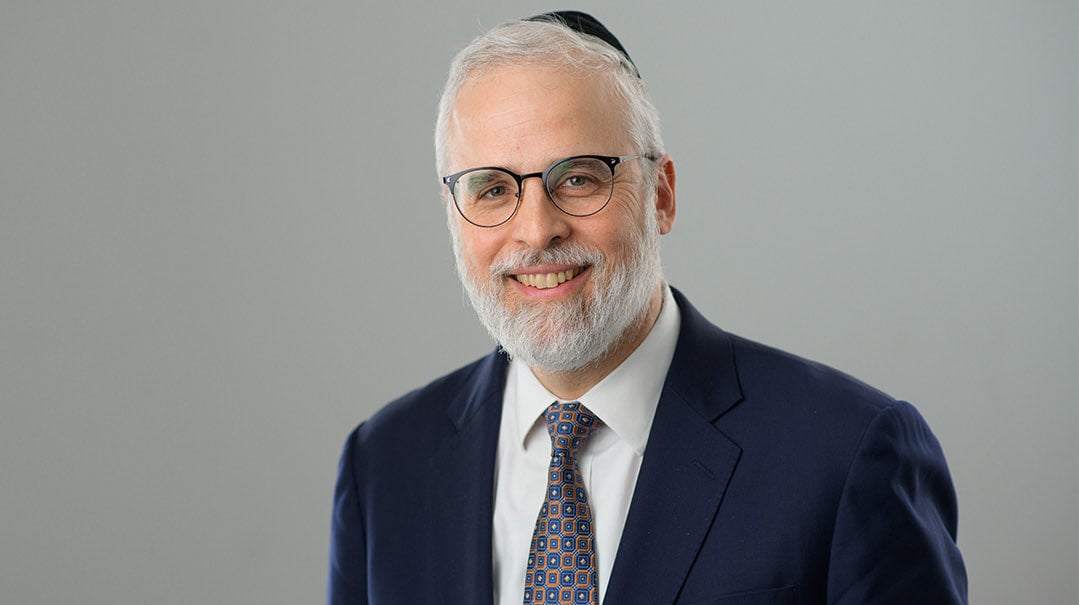
[This essay is adapted from a teaching by Rabbi Moshe Hauer zt”l, whose sudden passing last week on Shmini Atzeret 5786 was mourned across the Jewish world. Rabbi Hauer left behind a treasure trove of thousands of hours of recorded Torah lessons with his trademark depth, clarity, and relevance far beyond immediate circles. As a grieving student who trained closely under Rabbi Hauer, I am adapting this teaching to written form in a first effort to share his wisdom with broader audiences. The subject of legacy explored here speaks powerfully to Rabbi Hauer’s own enduring impact. May his memory be a blessing. -MR]
What is our legacy?
It is perhaps the most important question a person can ask. Not in the abstract sense of philosophy or theology, but in the concrete reality of how we spend our days, where we direct our energy, what we hope will remain when we are gone. What is the point of it all? What are we trying to create?
How we respond to this question shapes everything—our choices, our sacrifices, our sense of whether we have lived well or lived in vain. And yet, for all its importance, we rarely pause to examine the subject directly. We assume we know the answer, or we blissfully ignore the question.
The opening verse of Parashat Noach offers a surprising possibility—but only if we first notice something strange about how it’s written.
“These are the offspring of Noah. Noah was a righteous man, perfect in his generations; Noah walked with God.” (Genesis 6:9)
The phrase eileh toldot—”these are the offspring”—functions throughout Genesis as an episodic marker, introducing major figures and their lineages.
Indeed, it is worth noting that earlier, in Parashat Bereishit (Genesis 5:1), the Torah refers to itself as sefer toldot adam—the book of the toldot of humanity. It is a rich phrase, one that has generated many interpretations among our Sages.
As we move through the book of Genesis, we find eileh toldot—”these are the offspring”—appearing again and again: the toldot of Adam, of Noah’s sons, of Terach, of Isaac and Ishmael, of Jacob and Esau.
The Torah, in a sense, is the book of toldot—of generations, of what these foundational personalities produced and passed forward.
So when the verse begins “These are the offspring of Noah,” we expect a genealogy, actual offspring. Instead, we get a portrait of the man: Noah was righteous, Noah was perfect in his generations, Noah walked with God. Only in the next verse does the Torah circle back to what it promised: “Noah fathered three sons: Shem, Ham, and Japheth.”
What is the Torah hinting at by interrupting the flow of generations to describe the man himself?
Rashi, sensitive to every wrinkle in the Torah’s language, addresses the question immediately. His first answer is straightforward.
“Once the text mentions [Noah], it sings his praises, in accordance with what is said, (Proverbs 10:7), ‘The memory of the righteous is for a blessing.'” (Rashi on Genesis 6:9)
The verse Rashi quotes from Proverbs—zecher tzaddik livracha—is familiar to us. It is one we typically attach to those who have passed from this world. But here it operates differently. Whenever a righteous person is mentioned, respect must be paid. The Torah cannot simply move past Noah’s name without acknowledgment. So yes, the verse ultimately refers to his biological offspring, which will be detailed momentarily. But the mention of the man demands the pause.
This is a beautiful reading. An ethical reading. But Rashi is not finished.
“Another explanation: to teach you that the main (ikar) offspring of the righteous are good deeds.” (ibid.)
This second interpretation does not refine the first. It overturns it. The verse is not about biological children at all. “These are the offspring of Noah” refers to what directly follows; that Noah was righteous, that Noah was perfect in his generation. The real toldot, the real offspring, are his good deeds.
Let us reveal a profound insight into this Rashi.
Notice the word our Sages use here: ikar. The main offspring. The primary product.
This is not a consolation prize. It is not as one would tell someone who has not been blessed with children, rather insensitively: “Don’t worry, you have your good deeds. They’re left after you. They are in place of children.” That’s all very nice, but it would still be second best.
No—this teaching is far more incisive. The main product of the righteous is their good deeds. Not also important. Not equally significant. The main event.
And where do our Sages choose to teach us this principle? Of all the figures in the Torah where the phrase eileh toldot appears, where does the text point us to this interpretation? With Noah.
The irony is breathtaking.
If there is any human being in history whose legacy is unquestionably biological, it is Noah. Every person alive today—every reader of these words, every stranger on the street, every human being across every continent—is a direct descendant of Noah. His genealogical impact is not merely significant; it is total. To speak of Noah’s toldot in the literal sense refers to nothing less than the entirety of humanity.
And precisely here, the Torah chooses to teach us that this is not his main legacy.
Not the billions of descendants. Not the fact that there is any population on this earth. But his good deeds. His righteousness. That he walked with God.
The Kotzker Rebbe, Rabbi Menachem Mendel Morgenstern (1787-1895), that great Hasidic master known for his acerbic wit and unflinching honesty, once quipped that he had spent his entire life waiting to meet “that child.”
“Which child?” his students asked.
“I don’t know,” he replied. “But I meet people and I see them working extraordinarily hard. I ask them, ‘You seem to be working so much. Don’t you have enough? Don’t you have what you need?’ And they tell me, ‘I’m working for my children.’ Years later, I see those very children, and they too are working themselves to exhaustion. When I ask them why, they give me the same answer: ‘I’m working for my children.’
Everyone is working for their children’s… children’s… children. I’m waiting to meet that child who this was all for.”
We dedicate ourselves completely, and rightly so, to the well-being of our children. The Kotzker certainly does not mean to diminish the importance of providing for the next generation. What he does is expose how easily purpose can be endlessly deferred, always projected into a future that never quite arrives.
Through Noah the entire world was rebuilt. But his primary legacy was not the world. It was himself.
Each one of us has to view ourselves as “that child,” the one who it was all for. Our main product, our true legacy, is not the next generation, but the righteousness and the good deeds that we create in and of ourselves, today.