
From Reagan to Trump, the return of raw realism
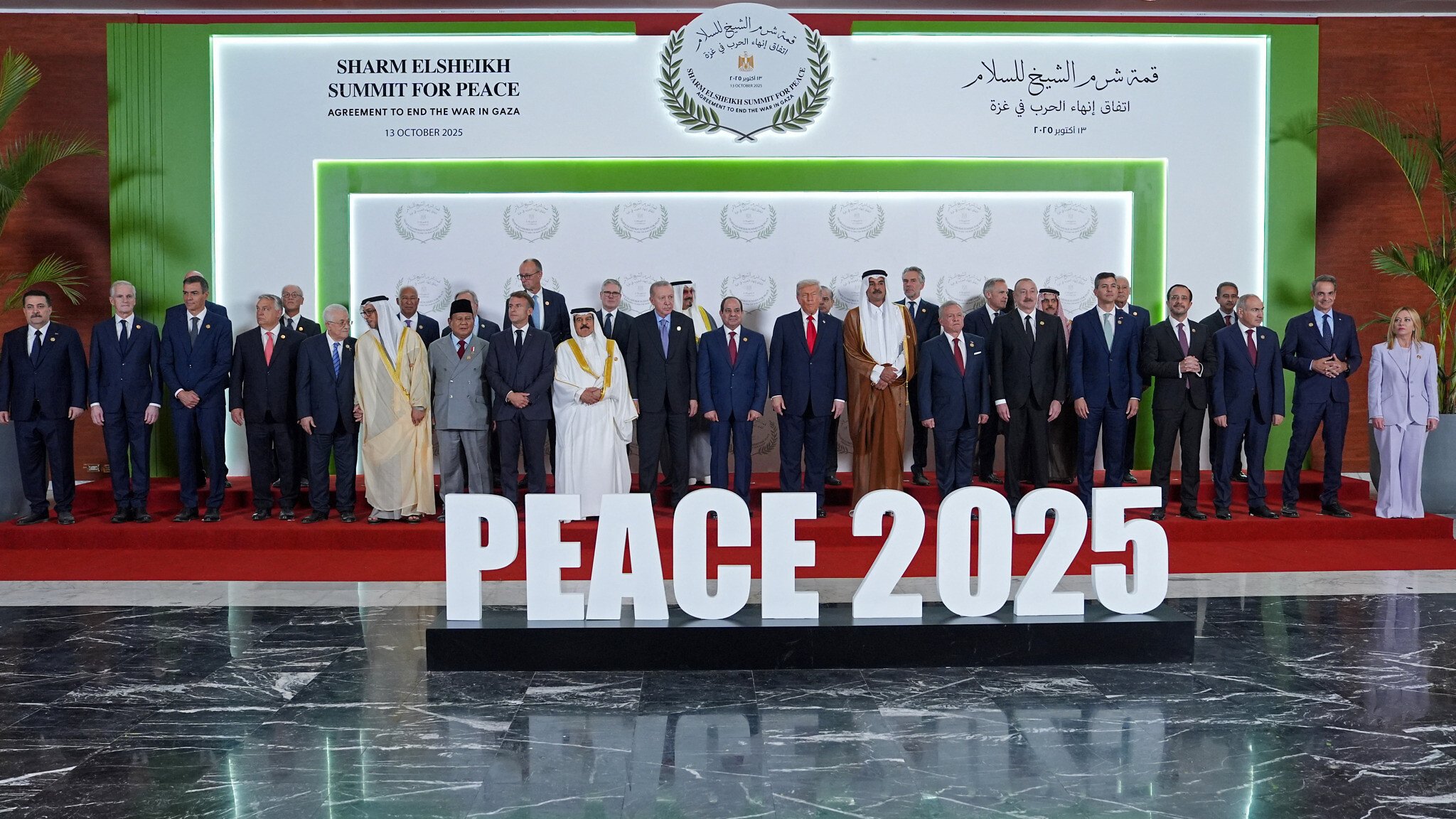
“One only negotiates effectively when speaking from a position of strength.” This maxim, inherited from the Cold War, seems to be gaining relevance today. Diplomacy by Force—the idea that military, economic, or political power is the prerequisite for any lasting peace—is not an invention of Donald Trump, but he made the most uninhibited and, above all, the most transactional version that international relations have known recently.
An ancient principle, reinvented by every era.
In the American tradition, it was Ronald Reagan who, in the 1980s, rehabilitated this idea in the face of the Soviet Union: “Peace through strength”—peace by force. In his eyes, only an indisputable military superiority could contain the adversary. This doctrine, based on deterrence and a massive increase in military spending, paradoxically paved the way for dialogue with Moscow at the end of the Cold War.
Since then, each American president has adopted this idea in their own way. George H. W. Bush applied it in Kuwait, Bill Clinton in Kosovo, George W. Bush in Iraq, and Barack Obama in Libya. All have integrated force as a diplomatic parameter. But they still covered it with a moral or humanitarian veneer: democracy, human rights, and regional stability.
With Donald Trump, this varnish has faded. His diplomacy no longer embodies an ideal; it instrumentalizes power to derive immediate benefit. The world is no longer divided between “good and bad” but between “winners and losers.” This diplomacy treats each balance of power as a transaction.
The elimination of Iranian General Qassem Soleimani in January 2020 illustrates this diplomacy through demonstration: a military act with geopolitical implications, designed to restore American credibility without getting bogged down in conflict. President Trump does not seek the international order there, but respect. He wants American power to inspire fear rather than admiration.
This assumed return to the balance of power marks a cultural break. Since 1945, American diplomacy has embraced values such as the defense of the ‘free world,’ the promotion of law, and multilateralism. Trump completely dismantles this moral and institutional framework, emphasizing “America first.” His realism is not that of H. Kissinger, based on “complex balances,” but that of a businessman: diplomacy becomes a contract, each alliance a line of profit or loss.
The unilateralism of Washington under Trump has unsettled its partners. However, he also revealed a disturbing truth: in a world that has become multipolar again, the balance of power is once again structuring diplomacy. China in the China Sea, Russia in Ukraine, Turkey in the Middle East, and Israel vis-à-vis Gaza practice each in their own way.
The question is, should we therefore reject this approach? Some remind us that no treaty has ever stood without an underlying power relationship. Ideals are only maintained when they are protected by power. In this sense, Trump has only dusted off a brutal but constant foundation of global politics.
His supporters think he has put the United States back at the center of the game.
His critics reproach him, on the contrary, for having destroyed trust in alliances and weakened multilateralism.
But one thing is certain: the Trump style has contaminated the international scene. The return of ‘hard power’ is no longer a taboo. The states assume again that diplomacy can be the continuation of war by other means—to take up and reverse Clausewitz’s formula.
Donald Trump did not invent diplomacy by force; he only brought it back to its essence: the projection of power in the service of direct national interests.
After him, the United States will no longer seek to convince but to impose. 21st-century diplomacy will not be that of consensus, but that of realism.