

From Resistance to The Birth of Modern Education in British Somaliland
From Resistance to Renaissance: The Birth of Modern Education in British Somaliland
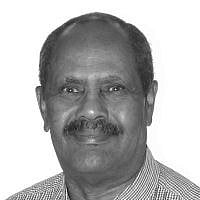
A Brief History of Formal Education in British Somaliland Protectorate (1884–1960), published in 2023 by Lost Coin Books, is Dr. Abdullahi Deria’s historical account and personal memoir of the rise of Western-style formal education in British Somaliland. Deria’s perspective is especially valuable because he was among the first thirty-two boys admitted to the Sheikh boarding school when it opened on October 6, 1944. His work combines archival research with lived experience to show how education moved from suspicion and resistance to becoming a foundation of public service and national leadership.
Delayed Beginnings
For five decades after the protectorate was established in 1884, British Somaliland had almost no formal colonial education policy. Unlike colonies such as Kenya or Uganda, it was not treated as a major development project. Its value to Britain was strategic: it supplied livestock to Aden and helped protect routes toward the Suez Canal. This produced a policy of “care and maintenance,” meaning the territory was administered at minimal cost, with little investment in education, health, or other social services.
Cultural and Religious Resistance
The greatest obstacle was local opposition. Somali communities already had a strong indigenous education system based on Quranic schools, Arabic literacy, and Islamic learning. Because Western schooling in East Africa was often associated with Christian missions, many elders and religious leaders feared that British schools would weaken Islam and disrupt Somali society. This fear was reinforced by memories of anti-colonial resistance, especially the Dervish movement led by Sayyid Mohamed Abdulle Hassan between 1899 and 1920. The 1939 Burao riots became a turning point. When Major R. E. Ellison proposed a taxation scheme to fund government schools, violent protests erupted and several people died. British officials then retreated from assertive education policy, fearing another broader uprising. Formal schooling advanced only when local leaders requested or supported it.
Pastoral Life and Practical Barriers
Geography and livelihood also slowed educational development. Much of the population was pastoral and mobile, moving seasonally with camels, sheep, and goats. Fixed classrooms, regular terms, and daily attendance did not fit easily with pastoral life. Children were also important to household labour, making many families reluctant to send them away to town schools or boarding institutions.
Mahmoud Ahmed Ali and the Path to Acceptance
Mahmoud Ahmed Ali, widely remembered as the “Father of Somaliland Education,” was central to overcoming these barriers. Unlike colonial administrators, who often relied on taxation and directives, Mahmoud worked through persuasion, community dialogue, and cultural compromise. He met with clan elders, religious leaders, merchants, and pastoral families, arguing that modern literacy and administrative skills were essential if Somalis were to avoid political marginalization and prepare for self-government.
A Hybrid Educational Model
Mahmoud’s key innovation was to present modern schooling not as a replacement for Islam, but as a companion to it. He insisted that Arabic and Quranic instruction remain central while English, arithmetic, science, hygiene, and practical subjects were added. By bringing respected Islamic scholars into government schools, he helped prove that formal education could strengthen, rather than threaten, Somali identity.
The opening of Sheikh School in 1944 demonstrated this innovative approach. Located in a cooler area and organized as a boarding school, Sheikh helped solve some problems created by pastoral mobility. Its first cohort, including Deria, showed that Somali boys could gain modern knowledge while remaining culturally rooted and religiously observant. The school became a model for later elementary, intermediate, secondary, and vocational institutions.
Mahmoud also helped organize local contributions when official funding was limited, drawing on merchants, reform-minded families, and even personal sacrifice. In the 1950s, he extended his efforts to girls’ education, supporting female literacy and the establishment of early government schooling for Somali girls despite strong social hesitation.
Legacy and Significance
By the late 1940s and 1950s, post-war colonial development funds and growing local demand allowed education to expand more rapidly. Still, British Somaliland reached independence in June 1960 with only a small number of secondary graduates and trained professionals. That small group, however, became disproportionately important. Early students became teachers, clerks, legal officers, civil servants, and political leaders who helped staff the new state.
Deria’s book is significant because it treats education not merely as a colonial administrative project, but as a contested social transformation shaped by Somali agency. It shows how elders, teachers, students, religious scholars, and reformers negotiated a path between tradition and modernity. The story of education in British Somaliland is therefore not simply one of delay, but one of adaptation: a movement from resistance to renaissance, in which formal schooling became a vehicle for dignity, faith, public service, and eventual self-rule.