

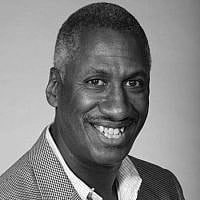
From Selma to the Dinner Table: The Effort to Rebuild the Black–Jewish Alliance
PROLOGUE
I am starting this new series on Black Jewish relations because the recent efforts of Van Jones, a CNN commentator and the person who received $100 million from McKinsey and Bezos, have caught my attention and imagination. What he is trying to do could be game-changing. He has had one meeting of Blacks and Jews in Miami, and another is scheduled for Chicago. I am trying to get an invite as either a participant or a journalist. Van Jones’s work is not the only one. The Black Jewish Black Christian Leadership Council on Israel Relations (BCLCIR) is another group planning to take 500 Black Christians to the Holy Land in Nov. They have another 400 on the waiting list. More trips are planned. The group describes itself as a Black Christian, pro-Zionist group. Those who came up with it and those who funded the trip came up with a brilliant idea, as Black Christians love Jesus, Holy Land tours, and probably haven’t translated the love for Jesus into support for Israel. What follows is a series on Blacks and Jews.
From Selma to the Dinner Table: The Long Effort to Rebuild the Black–Jewish Alliance
How Black–Jewish reconciliation evolved from coalition to dialogue, memory, Rekindle and EXODUS
The newest efforts to rebuild Black–Jewish relations have caught my attention because they are trying to solve an old problem in a new way. In May 2026, more than one hundred Black, Jewish and Black-Jewish clergy, organizers, educators, philanthropists, artists and civic leaders gathered in Miami for a national convening associated with Van Jones’s EXODUS Leadership Forum and the Redstone Family Foundation. Rekindle, which began in Cleveland in 2021, has meanwhile expanded a model built around sustained education, structured dialogue and relationships that continue after the formal program ends. A separate Black Christian initiative, the Black Christian Leadership Council on Israel Relations, is planning an “Unfinished Business” pilgrimage to Israel in November 2026 for hundreds of Black American and African Christian leaders. None of these projects is identical, and they should not be collapsed into one movement, but together they show how much energy has returned to a relationship that many people assumed belonged mainly to history.
I come to this work from both sides of the doorway. I spent roughly twenty-five years in Black Baptist ministry and served in leadership roles in the Black Ministerial Alliance and the Boston Ten Point Coalition. In recent years I also became a member of Temple Beth Elohim in Wellesley, began attending Shabbat with unusual regularity, and participated in Rekindle, SEA Change and an EXODUS dinner. Those experiences have changed the question for me. I am less interested in whether Blacks and Jews can say gracious things about one another than in whether we can understand why two communities with so much shared history can experience the same event so differently and still remain in relationship.
The famous photographs make it easy to imagine that Black–Jewish cooperation began with Martin Luther King Jr. and Rabbi Abraham Joshua Heschel marching from Selma to Montgomery. It did not. Nor did efforts to preserve or rebuild the relationship end when the civil-rights alliance began to fracture in the late 1960s. The more useful history is a chronology of repeated attempts to answer the same question: whether communities with overlapping interests, different memories and increasingly serious disagreements can build institutions strong enough to survive conflict.
First Came Coalition
Black and Jewish cooperation existed well before Selma. Jewish figures participated in the founding and early development of the NAACP; Jewish civil-rights organizations filed briefs in desegregation cases; and Black and Jewish organizations collaborated on employment discrimination, housing, education and voting rights. During the civil-rights movement, Jewish participation was far greater than the Jewish share of the American population. More than half of the white Freedom Riders were Jewish, nearly two-thirds of the white volunteers in Mississippi Freedom Summer were Jews, and about half of the white civil-rights lawyers working in the South were Jewish. Andrew Goodman and Michael Schwerner died alongside James Chaney in Mississippi.
The alliance nevertheless was never as uncomplicated as later memory sometimes made it appear. Black and Jewish organizations differed over affirmative action, community control, Black nationalism and the meaning of integration. In northern cities, Jews and Blacks could meet not simply as fellow minorities but as landlord and tenant, merchant and customer, teacher and parent, employer and worker. The conflict at Ocean Hill–Brownsville in 1968 became one of the most painful examples. Black and Puerto Rican parents demanded greater control over schools they believed had failed their children, while a predominantly Jewish teachers’ union defended contracts, professional rights and due process. What one side experienced as community empowerment could look to the other like discriminatory treatment.
The civil-rights movement had succeeded enough that the next disputes increasingly concerned who exercised power, how opportunity should be distributed and what equality required once formal segregation was prohibited. That was not simply the collapse of a friendship. It was a transition from fighting a clearly visible legal order to negotiating competing interests inside institutions that both communities now had some power to influence.
The First Repair Organizations
One response was to create institutions specifically devoted to Black–Jewish understanding. The Black/Jewish Forum of Baltimore, usually known as BLEWS, emerged in the late 1970s to promote cooperation around racism, religious discrimination, social justice and economic issues. In 1982, the American Jewish Committee’s Atlanta chapter created the Atlanta Black/Jewish Coalition. It first mobilized around reauthorization of the Voting Rights Act, but participants continued the coalition because they concluded that the relationship itself required sustained attention rather than occasional cooperation when a crisis arose.
Another model tried to begin earlier in life. Operation Understanding developed in Philadelphia in the 1980s under the influence of Congressman William H. Gray III and others, while Operation Understanding DC later created a year-long youth leadership program in which Black and Jewish students studied racism and antisemitism, visited historical sites, entered one another’s communities and then became educators themselves. The premise was simple but demanding: a coalition cannot remain healthy if the people inheriting it know one another mainly through stereotypes.
Dialogue Became a Field
By the late 1980s and 1990s, Black–Jewish dialogue had become an institutional and intellectual field of its own. The Foundation for Ethnic Understanding, founded in 1989 by Rabbi Marc Schneier and Joseph Papp, treated face-to-face dialogue as a way to address mistrust that public statements alone could not repair. That work became more urgent as Crown Heights, Louis Farrakhan, Jesse Jackson’s earlier “Hymietown” controversy, affirmative action and Israel intensified suspicion.
Cornel West and Michael Lerner offered another model in their 1995 book, Jews and Blacks: Let the Healing Begin. They took their disagreements on the road rather than manufacturing consensus, demonstrating that friendship did not require silence about Zionism, Farrakhan, Black nationalism, Jewish fear or Black resentment. Two years later, Jack Salzman and West edited Struggles in the Promised Land, a sweeping collection on slavery, civil rights, affirmative action, education, Black nationalism, Israel, Hollywood, urban conflict and dialogue itself. The underlying insight was that nostalgia and name-calling were both inadequate substitutes for serious historical argument.
Memory Became a Form of Reconciliation
By the twenty-first century, another problem had become visible: younger Blacks and Jews often did not know the history that older generations assumed everyone remembered. Shari Rogers’s documentary Shared Legacies: The African-American Jewish Civil Rights Alliance responded by recovering the people and relationships that had made the alliance possible. That work matters because people cannot rebuild a partnership they no longer know existed. Yet memory cannot resolve disagreements over AIPAC, Gaza, DEI, Jewish whiteness, Black antisemitism or Palestinian political rights. Remembering King and Heschel gives us a reason to stay at the table; it does not tell us what to say once the hardest subjects arrive.
From Dialogue to Relationship and Action
Rekindle represents one contemporary attempt to move beyond episodic dialogue. Founded in 2021 by Charmaine Rice and Matt Fieldman, it combines education, repeated conversation and joint action. Participants study Black and Jewish writers, discuss race, antisemitism, whiteness and identity, and in some cohorts address Israel and Palestine. The point is not simply that participants learn more about one another. Repeated contact creates enough relational history that disagreement does not automatically become rupture.
Terrence Johnson and Jacques Berlinerblau’s 2022 book Blacks and Jews in America: An Invitation to Dialogue pushes the analysis further. Their work asks why communities threatened by some of the same forms of white supremacy do not always understand themselves as natural allies. Answering that question requires confronting Jewish whiteness, Farrakhan, Israel and Palestine, liberalism and the existence of Black Jews, who expose the weakness of imagining “Blacks” on one side of the table and “Jews” on the other.
Boston-based educator Yavilah McCoy has spent decades refusing that binary. Raised as an Orthodox Black Jew, she has worked inside Jewish institutions and racial-justice movements while insisting that relationship requires proximity rather than comfortable agreement. Her life makes visible something our language often obscures: the communities we keep trying to reconnect were never completely separate. Black Jews should not be treated merely as intermediaries between two other groups; they belong within both histories and can experience anti-Black racism in Jewish spaces and antisemitism in Black spaces at the same time.
EXODUS and the Search for Infrastructure
Van Jones’s EXODUS Leadership Forum represents the newest stage in this longer story. Its dinner model places Black, Jewish and Black-Jewish leaders around small tables designed to create enough trust for difficult conversations. The May 2026 Miami convening brought more than one hundred leaders together and produced work around historical understanding, relationships, public narrative, organizational coordination and collective advocacy. Participants are expected to reconvene in Chicago to move from conversation toward implementation.
The important development is not dinner itself. Earlier generations created coalitions, youth programs, dialogue groups, books and historical-recovery projects. EXODUS and Rekindle are trying to combine those lessons into a more durable infrastructure of relationship. That matters because every reconciliation movement eventually faces the temptation to settle for warmth: music, food, stories, King and Heschel, and the reassuring discovery that people who expected not to like one another can become friends.
What the Next Stage Requires
Warmth is necessary, but it is not repair. Nearly half a century of Black–Jewish reconciliation efforts shows that relationships built only around common ground eventually encounter the disagreements they postponed. Ocean Hill–Brownsville did not disappear. Affirmative action did not disappear. Farrakhan did not disappear. Israel and Palestine did not disappear. Today’s table must also be able to hold October 7, Gaza, AIPAC, DEI, Jewish whiteness, Black antisemitism, Christian Zionism, Palestinian self-determination and Jewish vulnerability without treating the presence of disagreement as proof that the relationship has failed.
That is why the history matters. Black–Jewish reconciliation has become increasingly skilled at getting people back into the same room. The challenge for this generation is different: to build relationships, institutions and habits of historical literacy strong enough that people can stay in the room when the difficult conversation begins.
Selected Sources and Research Notes
- Interfaith America, “A Seat at the Table: On Pluralism, Memory, and the Rebirth of a Black–Jewish Alliance” (July 2, 2026) — https://www.interfaithamerica.org/article/seat-table-pluralism-memory-rebirth-black-jewish-alliance/
- Black Christian Leadership Council on Israel Relations, “Unfinished Business” tour — https://bclcir.org/landing-page/
- Library of Congress, NAACP founding and early years — https://www.loc.gov/exhibits/naacp/founding-and-early-years.html
- My Jewish Learning, “Blacks and Jews in America, 1960s–1980s” — https://www.myjewishlearning.com/article/blacks-and-jews-in-america-1960s-1980s/
- Jewish Museum of Maryland, BLEWS archive — https://jewishmuseummd.org/ms-189-the-blackjewish-forum-of-baltimore-blews-archive/
- Operation Understanding DC — https://oudc.org/who-we-are/
- Oxford Academic, Struggles in the Promised Land — https://academic.oup.com/book/47878
- Georgetown University Press, Blacks and Jews in America — https://press.georgetown.edu/Book/Blacks-and-Jews-in-America
- ARQ, interview with Yavilah McCoy — https://thisisarq.com/read/yavilah-mccoy