

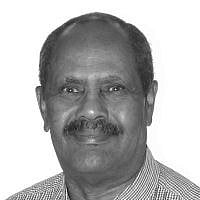
From Survival to Statecraft: The Bulhan Blueprint for Somaliland
Dr. Hussein Abdilahi Bulhan stands as one of Somaliland’s most consequential intellectuals, uniquely bridging Western academia and post‑conflict nation‑building in the Horn of Africa. Trained as a clinical psychologist and public health scholar, Bulhan relinquished a tenured U.S. academic career to help construct Somaliland’s social, educational, and psychological foundations. His work reframes state‑building not merely as a legal or political process, but as a public health and psychological imperative.
Bulhan’s worldview is inseparable from his early life. Born in what is now Somaliland, he was orphaned young and witnessed public executions during periods of violence. These experiences shaped his lifelong focus on trauma, resilience, and what he terms the “Art of Survival.” For Bulhan, colonialism and state collapse inflict psychological wounds that persist long after formal occupation ends. Liberation, therefore, must occur both institutionally and mentally.
His academic credentials reflect this dual focus. He earned undergraduate degrees from Wesleyan University, an MA and PhD in Clinical Psychology from Boston University, and a Master of Public Health from Harvard University. This blend of clinical, structural, and population‑level training later underpinned his approach to governance and health security.
Between the 1970s and 1995, Bulhan established himself as a leading scholar in the United States. He became one of the youngest tenured professors at Boston University and its School of Medicine, teaching for over a decade and supervising more than forty doctoral dissertations. Clinically, he served as Director of Clinical Education at the Dr. Solomon C. Fuller Mental Health Center and practiced at Boston City Hospital. His 1985 book, Frantz Fanon and the Psychology of Oppression, remains a foundational text in liberation psychology, challenging Western claims of psychological “universalism” and exposing how systemic violence shapes individual and collective behavior.
At the height of this career, Bulhan returned to Somaliland in 1995—then emerging from civil war—to help build its intellectual and social infrastructure. His first contribution was peacebuilding. During the internal conflicts of 1994–1997, he helped initiate an independent Peace Committee that operated outside formal government channels. Emphasizing bottom‑up reconciliation, he promoted the traditional shir system, grounding political settlement in clan elders and civil society rather than elite or externally imposed solutions.
In 1997, Bulhan co‑founded the Academy for Peace and Development (APD) in Hargeisa and served as its first Executive Director. Under his leadership, the APD became Somaliland’s premier think tank, conducting participatory research that produced a comprehensive “Self‑Portrait” of the nation. The institution functioned as neutral ground where political leaders, elders, and citizens could debate the transition from clan‑based governance to multiparty democracy.
Education became another pillar of his state‑building strategy. As President of the University of Hargeisa (2008–2010), Bulhan professionalized the institution during a period of crisis, expanding curricula in public health and governance to meet the state’s administrative needs. Later, he founded Frantz Fanon University, specializing in medicine, nursing, and psychology. The goal was intellectual sovereignty: training professionals locally to stem brain drain and align education with Somaliland’s social realities.
Bulhan’s most distinctive contribution lies in mental health. He argues that no state can function effectively while its population remains collectively traumatized. In 2004, he founded the Maandhaye Clinic, Somaliland’s first major center for psychological and psychiatric care, addressing widespread PTSD stemming from decades of violence. In his book Politics of Cain (2008), Bulhan extended this analysis to governance, arguing that Somali political fragmentation reflects an unresolved psychology of oppression—what he describes as the “occupation of the mind.”
In recent years, Bulhan has remained an influential public intellectual and advisor. He has advocated for institutionalized health security, including public health laboratories and a national CDC, viewing these as core expressions of sovereignty. He has also defended the integrity of Somaliland’s electoral cycles, framing democratic participation as the modern extension of traditional reconciliation councils. Throughout his work, he draws on Somali oral culture and proverbs to anchor modern governance in indigenous epistemology.
Bulhan’s framework offers a powerful alternative diplomatic narrative for Somaliland’s quest for international recognition. Rather than relying solely on legal arguments, Bulhan’s Psychology of Oppression reframes sovereignty as an already‑achieved psychological and institutional condition. Independence, in this view, is not a gift to be granted by external actors but a reality produced through resilience, peacebuilding, and self‑institutionalization.
Applied diplomatically, this approach highlights Somaliland’s indigenous peace model as evidence of epistemological sovereignty. It reframes health infrastructure—clinics, universities, laboratories—as performances of statehood, demonstrating the state’s ability to fulfill the most basic social contract: protecting life. This makes continued international treatment of Somaliland as a “sub‑national” entity increasingly untenable.
Within a broader “Turn for Somaliland” narrative, Bulhan’s framework supplies the philosophical engine. It recasts external engagement not as dependence but as partnership between self‑liberated societies. Ultimately, Bulhan’s life work advances a simple but radical claim: a nation is built twice—once through laws and institutions, and once through the psychological liberation and health of its people.