


From the Cry for Vengeance to the Echo of the Shofar: Returning to Compassion
Rabbi Yoḥanan said in the name of Rabbi Yosei: From where do we know that the Holy One, Blessed be He, prays? As it is said: “I will bring them to My holy mountain, and make them joyful in My house of prayer” (Isaiah 56:7). It does not say: “their prayer,” but rather “My prayer.” From here we learn that the Holy One, Blessed be He, prays. And what does God pray? Rav Zutra bar Toviya said in the name of Rav: “May it be My will that My mercy will overcome My anger, and that My mercy will prevail over My other attributes, so that I may conduct Myself with My children through the attribute of mercy, and that I may deal with them beyond the measure of strict justice.” (b. Brachot 7a)
Almost two years have passed. Twenty-four months. Seven hundred and thirty days since that black Shabbat of October 7. From now on, every Rosh Hashanah will carry its shadow in our collective memory. That day, which should have crowned three weeks of spiritual ascent, became instead a day of horror. As the Psalmist once wrote, “You turned my mourning into dancing”—but on that day Hamas turned our day of dance into mourning. We all sit Shivah starting on October 7. A National Shivah.
Like many, I remember exactly where I was when I received the news. On that Shabbat, disconnected from screens, I walked to synagogue unaware, until my executive director stopped me at the door. “You need to know what’s happening,” he said, before I entered to lead the morning prayers. At that point, reports spoke of “only” a hundred dead and a dozen kidnapped. Already unimaginable. Soon after, the images arrived—the first forty-eight hours of unbearable revelation, the massacre that still burns in memory.
And I remember what I felt: fury. Anger. I wanted vengeance, not just justice. I wanted more than the return of the captives or the end of Hamas as a threat. I wanted Gaza erased. In Israel I heard others echo the same words. For days I repeated them, as if they captured the only possible truth. But with time, the feeling began to trouble me. That wasn’t me. That wasn’t the Judaism I breathe.
Then I recalled the teaching of the Talmud that I quoted at the beginning of this editorial: God prays every day that His attribute of mercy overcome his anger, God prays for compassion. From that night on, I added my own prayer to the Shema: “May it be Your will, O God, that my mercy overcome my urge for vengeance.”
I know I am not alone. Many felt the same: the blood boiling, then the slow recognition that this cannot be where we remain. It is human—perhaps even divine—that outrage rises when we see innocent blood spilled. Pinchas felt it; Elijah embodied it. But our tradition insists that anger and vengeance cannot define us.
And yet, two years later, I still hear voices—loud ones—saying otherwise. Voices claiming that “there are no innocents in Gaza” (former Minister Galit Distel-Atbaryan, MK Meirav Ben-Ari). The Defense Minister himself, Yoav Gallant, declared: “We are fighting human animals, and we act accordingly.” National Security Minister Itamar Ben-Gvir has suggested that Gaza must be “flattened,” while Minister Amichay Eliyahu said it should be “erased from the face of the earth.” Deputy Speaker of the Knesset Nissim Vaturi spoke of turning Gaza into ruins. And recently, former Military Intelligence chief Aharon Haliva was recorded saying that for every Israeli killed on October 7, fifty Palestinians must die, “children or not.”
These are not fringe mutterings. They are words spoken by officials, amplified in media, shaping a climate where dehumanization becomes normalized. But Judaism does not permit us to become what we abhor. Antisemitism itself was built on the claim that “all Jews are the same.” We cannot repeat that error. The Torah set limits on warfare over 3,000 years ago: not everything is permitted, even when the cause is just. The prophets proclaimed that repentance—Teshuvah—is always possible, even for our enemies. Jonah was sent to Nineveh, the capital of the very empire that destroyed Israel’s northern kingdom. God refused to close the gates of repentance. How can we?
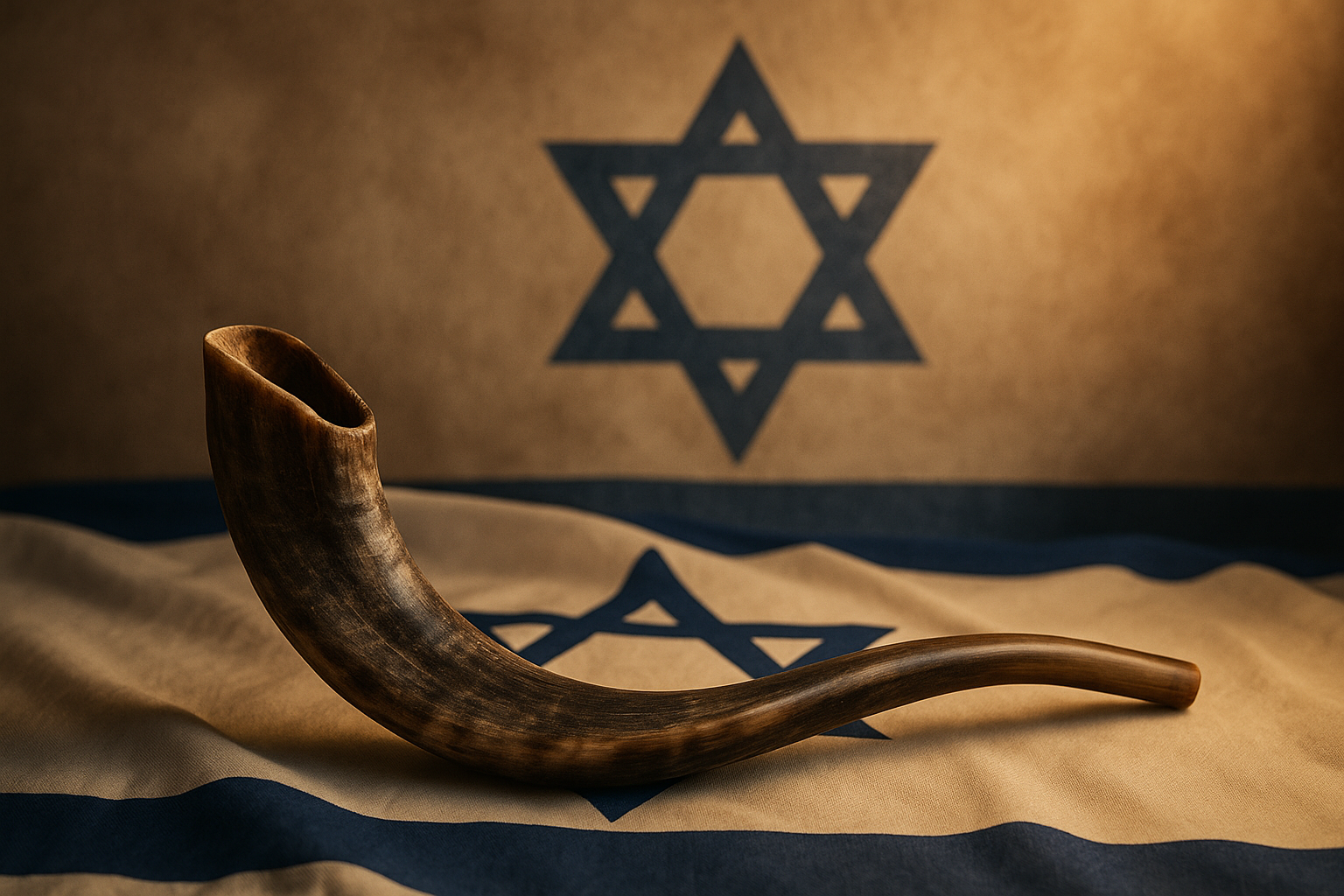
Yes, it is natural to defend our own. Tribal loyalty runs deep in our cultural DNA. But Jewish tradition challenges us to break the cycle, to recognize humanity even in the face of our foes. In a few days, the Shofar will sound. Maimonides wrote that its meaning is ultimately beyond us, a divine decree. Yet the Midrash teaches: “when Israel blows the Shofar, the Holy One rises from His throne of justice and takes His seat upon the throne of mercy.” (Pesikta deRav Kahana 23:3). What awakens God’s prayer as we saw in the Talmud in tractate Berachot? The sounding of the Shofar.
That is my prayer this year: that the echo of the Shofar restores us to ourselves. That it should remind us that we are “compassionate, children of the compassionate” (b. Yevamot 79a), that we are not defined by arrogance but by the humility to admit our errors, and that we extend kindness even when we think it undeserved. Because that, ultimately, is our greatest triumph: to preserve our humanity in a world that tried to strip it away.
Let us continue to fight for the return of every hostage, for the defeat of terror, and for peace in our land—but let us not lose our humanity in the process. May the Shofar pierce the arrogance of our hearts, softening them. May it transform our anger and thirst for vengeance into mercy, compassion, and the courage to remain human even in times of war.