From the Golem to AI: A Decalogue for Our Times
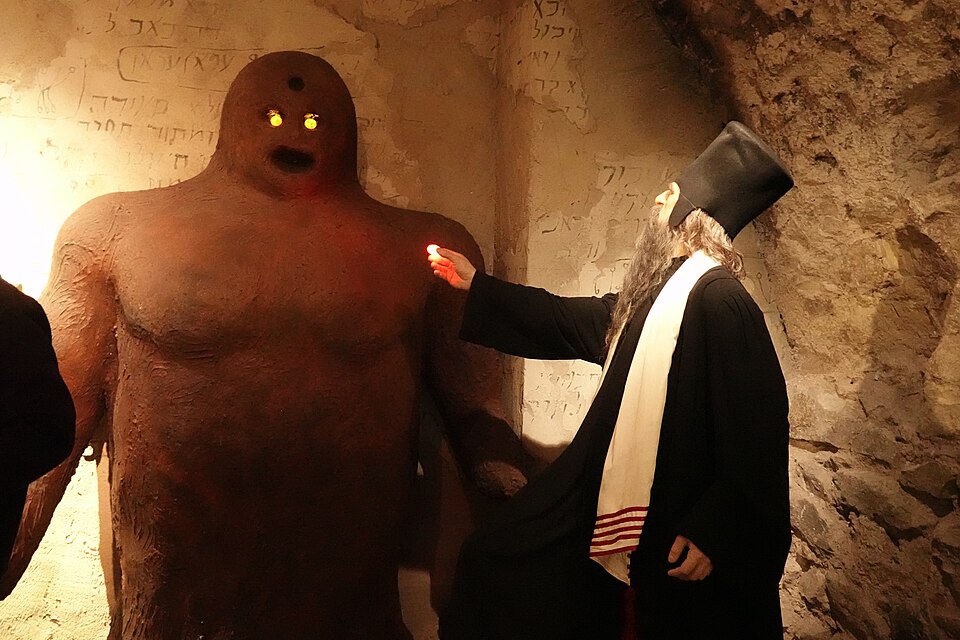
I once went looking for the Golem of Prague. Naturally, my search started at the Old-New Synagogue where legend has it that Rabbi Judah Loew created the Golem from clay on the banks of the Vlata River in the late 16th century. The Golem performed for his master, protecting the Jews from antisemitic attacks. While some say that the Golem is still in the attic of that synagogue, I could not find it and had to settle for a cheap imitation being sold to gullible tourists. Lately, I’ve been wondering if we need a new Golem for our troubled times.
The Golem looms large in the imagination as the prototype of Artificial Intelligence. For example, in 1965, the Weizmann Institute in Rehovot built a new computer and Gershom Scholem, the renowned scholar of Jewish mysticism, suggested that it should be named Golem Number One. At the dedication ceremony, Scholem drew parallels between Prague’s Golem and the Golem of Rehovot: both were created by human intelligence, both were controlled by their creators and performed tasks set by them, and both have the potential to outgrow their masters and develop destructive potentialities.
As Shavuot approaches and we reflect on the Ten Commandments of the biblical period, what might be some contemporary commandments of the digital period to guide us in taming the ‘destructive potentialities’ of AI as it becomes increasingly integrated into Jewish life?
Here’s something imperfect I’ve been working on to start the ball rolling – Notes towards a New Decalogue: A Jewish Conceptual Framework for AI. Unlike Moses’ 10 Commandments set in stone, these ones are evolving and up for discussion in cyberspace.
- צדק ומשפט – Tzedek v’ Mishpat – Justice and Fairness
AI should promote fairness and equality, striving to correct and not perpetuate social inequalities or biases. AI models should combat biases to ensure they serve all groups justly and fairly, without discrimination. AI must not oppress the widow or orphan found in the Book of Exodus – rather should be used to protect and enhance the lives of vulnerable people.
2. פיקוח נפש – Pikuach Nefesh – Preservation of Life
AI should not be deployed in a way that endangers human life or well-being, hence in any conflict between technological advancement and human safety, preserving human life takes precedence. AI systems should be carefully evaluated to prevent them from causing physical, emotional, or societal harm, and safeguards should be in place to minimize risks.
3. תיקון עולם – Tikkun Olam – Repairing the World
AI should contribute positively to the world, addressing issues such as medical advancements, and environmental conservation. As AI creates new economic opportunities, it should also be a tool for social good, and the wealth generated by AI advancements should contribute to alleviating poverty and inequality.
4. שומרי אדמה – Shomrei Adamah – Stewardship and Responsibility
Humanity has a duty to protect and preserve the Earth and its resources, so AI should be used in environmentally conscious ways, promoting sustainability and reducing harm to our planet. Developers should also take responsibility for AI systems’ long-term impacts.
5. אחריות – Achrayut – Accountability
Honest and truthful communication about AI’s capabilities, risks, and limitations is essential. Those who design, deploy, and use AI systems should be held responsible for the outcomes of these technologies and there must be clear lines of accountability to prevent harm and address any ethical breaches.
6. תורה ומדע – Torah u’Madda – Promotion of Learning and Wisdom
AI should be developed to advance human understanding, knowledge sharing, education and self-reflection, rather than merely technical progress. While Judaism places a high value on study and the pursuit of wisdom, our increasing reliance on machines might undermine our belief in human knowledge.
7. אמת – Emet – Truthfulness
AI should be designed to provide accurate and truthful information, and the use of AI for deceitful or manipulative purposes should be avoided. When AI is driving all our communication, developers must stop it from spreading lashon hara – misinformation and harmful content.
8. ענוה – Anavah – Humility and Awareness of Limitations
An awareness of AI’s potential dangers and limitations means a constant humility about what technology can and cannot achieve. Building safeguards, avoiding overconfidence in AI systems, and continuously learning from mistakes are crucial. AI must handle data ethically and protect individuals’ privacy, avoiding unauthorized surveillance or misuse of personal information.
9. בחירה חופשית – Bechira Chofshit – Free will
The concept of ‘free will’ and moral agency in Judaism is central to understanding human nature and behaviour. In contrast, AI is based on algorithms and programming rather than autonomous moral decision-making. While AI may simulate aspects of human intelligence or behaviour, it fundamentally lacks the moral essence that defines human beings. Therefore, the responsibility lies entirely with human developers to ensure AI systems align with ethical values such as justice, compassion and fairness.
10. קהילה – Kehila – Community
The well-being of individuals is tied to the community – as such, AI should serve the community as a whole and not isolate or marginalize individuals. The value of community is deeply rooted in Jewish life so that as AI changes the fabric of society, it is essential to ensure that these changes strengthen communal ties rather than erode them.
But what about the counterfactual?
What might contemporary Jewish life be like if AI technology had not evolved to service Jewish life? There are many examples: without AI, Jewish educational resources including apps for Torah study, digital Talmud platforms, or automated Hebrew language tutors would be less accessible; without AI, matchmaking algorithms enabling Jewish couples to meet would not have happened, and without AI, the preservation and teaching of Yiddish, Ladino, and other Jewish languages through sophisticated translation and learning software would have been less likely. Ditto for the preservation of oral histories, archival materials or the virtual reconstruction of historical Jewish buildings.
Echoing Rambam’s pursuit of the shvil hazahav – the golden mean – AI enhances Jewish life if we know how to use it well.
The Yeshiva of Rabbi Google
Perhaps those most threatened by AI are the rabbis entrusted with interpreting Jewish law and guiding their communities on matters of ethics and practice. AI can be trained on vast datasets of rabbinic writings, responsa (legal answers), and Jewish texts to assist [or even replace] rabbis in issuing Halachic rulings. AI does not (yet) have nuance or the contextual understanding that rabbis should bring to their decisions, but with the rise of smart homes, voice assistants and automated devices, could AI be used to perform certain prohibited tasks on Shabbat?
This Digital Decalogue is merely an effort to articulate a ‘Jewish lens’ for thinking about the impact of AI on Jewish communities, institutions and individuals. After all, if robots powered by AI are going to replace rabbis, we have to ensure that the robot knows the difference between Kiddush and Kaddish.