


From the Pogrom of Simchat Torah to the Great Salvation of Hoshanah Rabbah
In Jewish tradition, our festivals and rituals are constantly reinterpreted through the centuries, shaped by the events our people experience. Today, we have witnessed a historic day — “Atem eidai, neum Adonai” — “You are My witnesses, says the Lord” (Isaiah 43:10). You and I are witnesses to one of those days that will remain engraved forever in our collective memory.
Two years ago, we were also witnesses — to tragedy. A day that struck us like an earthquake and continues to echo within us. That day was Simchat Torah. Two years ago, we could not dance with the Torah on that Saturday night; our festival turned into mourning. From that moment, we swore: “We will dance again.” And today, we truly can — with more strength than ever: for the fallen soldiers, for those who were murdered, and for those who have now returned to embrace their loved ones.
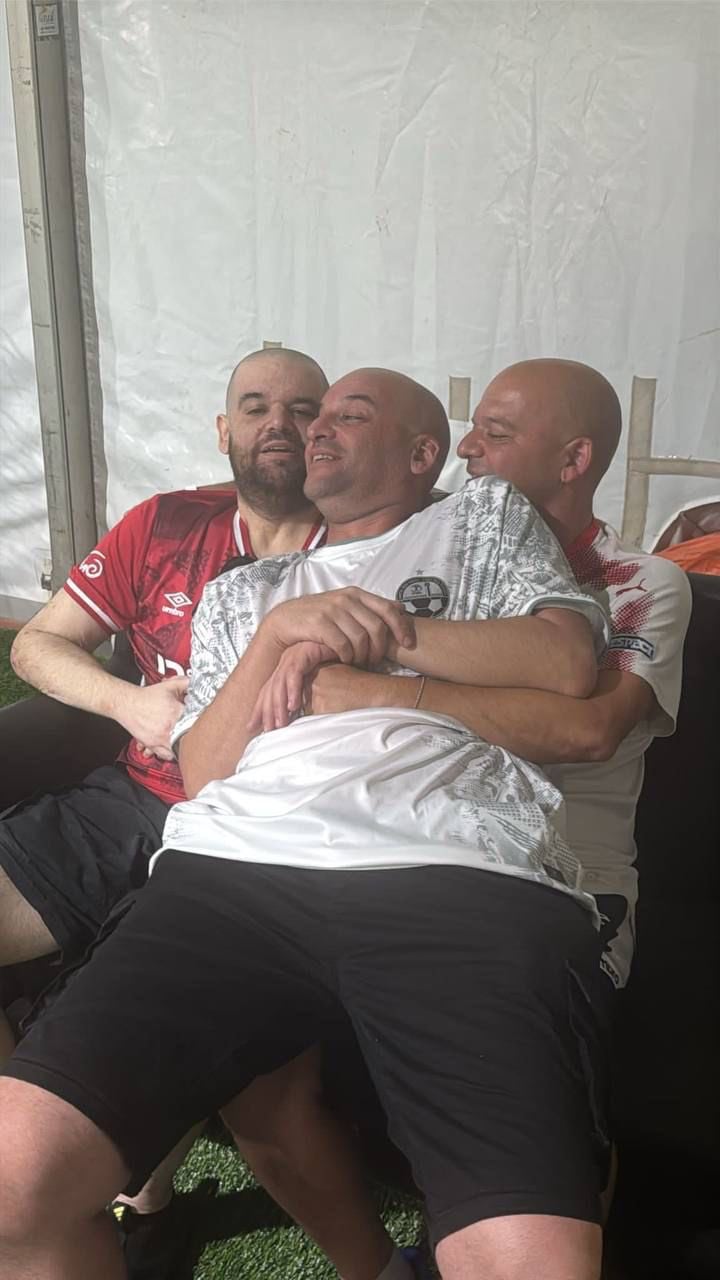
Last night, we all wept as we saw the embraces of the families reunited after two long years of captivity. Tomorrow night, as we embrace our Torah once again, we will also embrace every hostage, and embrace one another as one people.
As Chaim Nachman Bialik wrote in his poem “After My Death”: “Say this when you eulogize me: There was a man — and look, he is no more. He died before his time. The music of his life suddenly stopped.”
On Simchat Torah 2023, 1,200 young souls died before their time — many while dancing, celebrating life through music. From now on, every year — especially now, with the return of the last hostages — Simchat Torah will not only mark the conclusion of the Torah cycle but also the closing of two years defined by pain and tears. With this Simchat Torah, we end that chapter and begin a new Bereshit, a new beginning for our people. The words “We will dance again,” tattooed on the arm of Mia Schem, will forever be the new motto of Simchat Torah for generations to come.
If this tragedy began on Simchat Torah, it began to heal on Hoshanah Rabbah, the last day of Sukkot 5785 (2025). Literally, Hoshanah Rabbah means “The Great Salvation,” and that is exactly what our people are feeling today. This “festival within the festival” took on a new meaning in the 7th century CE. After centuries during which Christians forbade Jews from entering Jerusalem, the new rulers — the Muslims — allowed Jews to “purchase the right” to enter the city once a year, on the seventh day of Sukkot, Hoshanah Rabbah. Delegations of Jews from around the world would then come to the Mount of Olives at dawn, holding Aravot (willow branches) in their hands, praying to God for “a great salvation for the people of Israel.” Afterward, they would descend into the city of Jerusalem, circling the Temple Mount in Hakafot (processions) of hope and devotion.
On this last day of Sukkot, we strike the Aravot against the ground — as our ancestors did centuries ago — to “beat away” the harsh decrees against us. From now on, we will strike these willow branches, the tree of tears, for every tear shed over the past two years — for the fallen and the murdered. We strike the Aravot so that we will weep no more, so that God may absorb our tears, as it is written: “You have kept count of my wanderings; put my tears in Your flask” (Psalm 56:9). The Aravot thus take on a new meaning — not only as symbols of nature’s prayer for rain, but as vessels of human pain transformed into hope.
Today is also the last day we lift and wave the Arba’at Haminim — the Four Species. This ancient ritual’s original meaning is uncertain, and so over time, countless interpretations have been given to it. One of the most powerful appears in Vayikra Rabbah 30:2: “Just as two men come before the judge and we do not know who was victorious, so too Israel and the nations of the world come before the Holy One on the Day of Atonement. When Israel emerges from before God holding its lulav and etrog in its hands, we know that Israel was victorious.”
The sages teach that we raise the Arba’at Haminim like a trophy of victory after the divine judgment of Yom Kippur. But from now on, when we lift the Lulav each Hoshanah Rabbah, victory will have a different flavor — bittersweet, in memory of the fallen and the suffering — yet still the eternal symbol of our people’s resilience, the power to rise again, to shine again, and to dream again. This war had no clear image of triumph — no Motta Gur declaring “The Temple Mount is in our hands,” no flag planted like in Operation Uvda at Eilat. But the fulfillment of the promise in Jeremiah 31:17 — “There is hope for your future, says the Lord, and your children shall return to their borders” — is the greatest victory we could ever hope for: a people in Israel and throughout the diaspora who did not rest for two years until the very last hostage came home.
Two and a half millennia ago, after Jerusalem was destroyed and the people exiled, they cried out: “Avdah Tikvateinu” — “Our hope is lost” (Ezekiel 37:11). At the end of the nineteenth century, Naftali Herz Imber wrote a poem titled Tikvateinu — “Our Hope” — later to become Israel’s national anthem, Hatikvah, by adding one single word: “Lo Avdah Tikvateinu” — “Our hope is not lost.” Zionism restored that hope to our people. It made the dry bones live again, and filled our hearts and land with life.
From this year on, Hoshanah Rabbah and Simchat Torah will never be the same. They will forever be linked — the beginning and the end of two years of darkness and redemption. What began with the pogrom of Simchat Torah now concludes with the Great Salvation of Hoshanah Rabbah.