


From the River to the Sea
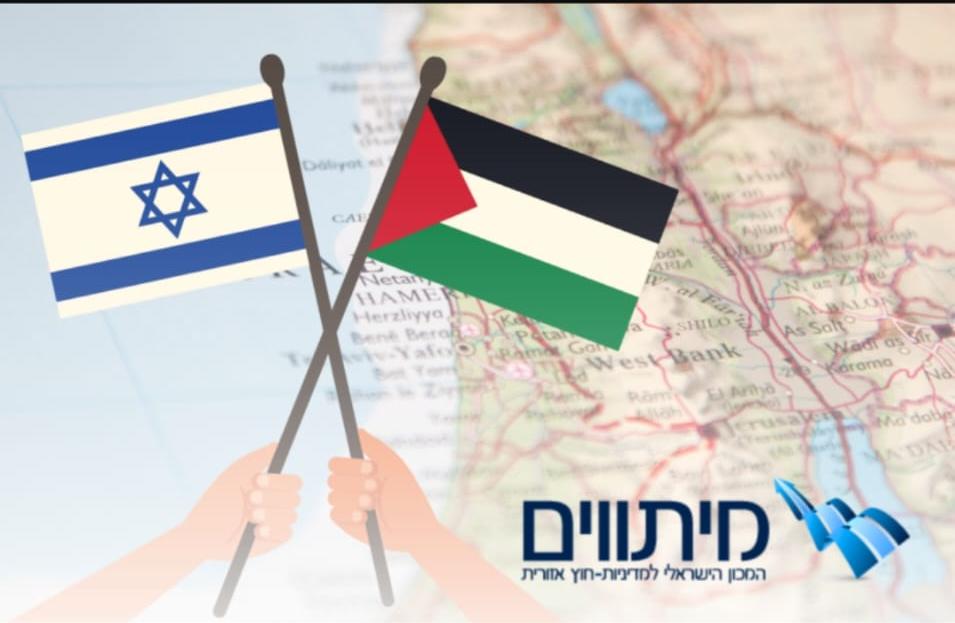
At many of the protest demonstrations following October 7, people chanted, “From the River to the Sea, Palestine will be free. ” Many people in Israel view this slogan as an expression of antisemitism because, for them, it represents a call for the destruction of the only Jewish state in the world.
I am sure that among those who chant this slogan, some would indeed be happy about the physical destruction of Israel, but others favor eliminating Israel as a political entity—including anti-Zionist Jews and ultra-Orthodox Satmar sect members, who are clearly not anti-Semites, even if they oppose political Zionism.
As a liberal Zionist, I believe that between the Jordan River and the Mediterranean Sea, there should be two political entities—one, the national home of the Jewish people, and the other, the national home of the Palestinian people. Of course, I oppose the “River to Sea” slogan, but it is important to understand that there are different and diverse motivations for those who chant it, and it does not necessarily convey a message of hatred.
It should also be remembered that, in practice, Israeli governments have been controlling the land “from the River to the Sea” for 59 years and are going to great lengths to maintain this control.
Those who oppose the slogan and also oppose any negotiated partition of the land should recognize the glaring contradiction. The current Israeli government is the main opponent of the division of the land between the river and the sea and seeks to control the entire territory. Support for the division of the land and the two-state solution is accepted by the Palestinian leadership, except for Hamas and Islamic Jihad, and it is accepted by all Arab countries, which have reaffirmed the Arab Peace Initiative year after year since 2002.
From the perspective of some of our government ministers, it is not just about Israeli control from the Mediterranean to the Jordan, but rather much broader aspirations for regional domination. Even the former leaders of the Revisionist Zionist movement, who used to shout at their events, “Two banks of the Jordan, this one is ours and this one is also ours,” have largely come to their senses and therefore no longer vote for this government.
In the peace movement, there are quite a few who support a single state for both peoples between the river and the sea, with equality under the law. They are misguided because this outcome would be a recipe for unending bloodshed. Proponents of this one-state model do not, however, intend to promote the extermination of Jews or Palestinians. Their aspiration is to eliminate Jewish and Palestinian nationalism in the region as separate political frameworks, an idea that I believe is flawed in its utopianism and naivety but is not a call for our annihilation or the annihilation of the Palestinians.
In the two-state camp that I am part of, there is another spectrum of solutions to the conflict. There are organizations that oppose a physical border separation between the river and the sea and support an open territory that serves both peoples. For example, the organization “Land For All” includes some of the most thoughtful and impressive Israelis and Palestinians that I know. Similarly, the confederation plan of my mentor Dr. Yossi Beilin and Hiba Husseini promotes two political entities on the land, where Palestinians in Israel can belong politically to a Palestinian state, and Jews in Palestinian territory can belong politically to the State of Israel.
I hope their vision is possible, but I am skeptical that there is a way to maintain harmony and functioning states in a shared territory given the current levels of hatred and distrust. Therefore, I believe that before it is possible to seriously consider a successful marriage with the Palestinians, we must start with a successful divorce.
The issue of dividing the land should be agreed upon between a Palestinian state, recognized by the international community, and the State of Israel in negotiations that will determine the final status arrangement. If in the future we reach an agreement on a confederation, I would be delighted to embrace it.
But the most urgent thing for now is to end the occupation and establish a Palestinian state with which Israel can negotiate a permanent settlement.
I strongly support international recognition of a Palestinian state. The issue is about saving Israel itself from a permanent regime of occupation and control over millions of people without rights.
Contrary to the perception of most Israelis today, a Palestinian state is in Israel’s interest and is in no way a reward for Hamas. It is a reward for Israelis, a reward for Palestinian peace supporters, and a devastating blow to Hamas and the Jewish messianists who claim “all of it is theirs.”
For Palestinian statehood recognition to have real significance on the ground, it needs the backing of the UN Security Council. Currently, there remains one country among the permanent members of the Security Council with veto power that has not yet recognized a Palestinian state: the United States of America.
I am convinced that the next Democratic administration will recognize a Palestinian state. A future US administration, more likely to be a Democratic one, could pass a resolution in the Security Council that will seize the historic regional opportunity for a 23-state solution, namely Israel, Palestine, and 21 Arab states.
I oppose anyone who calls for “Palestine from the River to the Sea” and oppose anyone who, in practice, supports continued Israeli control over the West Bank and Gaza. A free and demilitarized Palestinian state, residing between the Mediterranean and Jordan, will not threaten Israel; on the contrary, it is the necessary condition for Israel to be safe and free as the democratic nation-state of the Jewish people.