

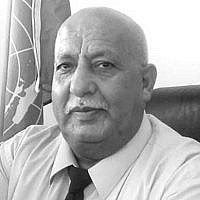
From the rubble of my home, I still choose peace

With the opening of the Rafah crossing this month, we are finally starting to see the incremental results of the Trump peace plan after years of siege and denial of our basic freedom of movement. While limited in number (only 150 trucks per day in each direction) and under indirect Israeli control, the Rafah crossing point opened under the direct control of European and Palestinian personnel in accordance with the US-sponsored ceasefire
This small but important act could not have happened without the direct involvement of US President Donald Trump, whose efforts and those of his aides I deeply appreciate.
I am a Palestinian from northern Gaza, a place that has known much loss and little mercy. I spent much of my life working for the United Nations as a senior staff member, believing that international cooperation, human rights, and dialogue could protect ordinary people from the horrors of war. I dedicated my career to the idea that human dignity is universal, and that no child, anywhere, should grow up under the shadow of violence.

After completing my UN service, I built my home. It was not just a building; it was the reward of a lifetime of work and sacrifice. A four-story house, strong and full of life, where I lived with my three sons, their wives, and their children. Inside its walls were memories of birthdays, shared meals, prayers, laughter, and dreams for the future. I believed this home would protect my family long after I was gone.
As a father and a grandfather, I have always spoken to my children about the importance of peace. I told them that hatred destroys the one who carries it before it ever harms the enemy. I taught them that real strength lies in reconciliation, not revenge. I dreamed that their children would grow up knowing books, schools, and playgrounds, not fear, sirens, and rubble. I deeply believed in comprehensive peace for our region, so that all children could live in safety and dignity.

My belief in peace was not theoretical. I participated in building a human rights curriculum and insisted that it include a section on the Holocaust. I did so with conviction, because history must be faced honestly, even when it is painful. The Holocaust is a tragic reminder of how far humanity can fall when hatred is allowed to rule. Recognizing the suffering of others does not weaken our cause; it strengthens our humanity. That curriculum was later presented to US President Jimmy Carter, a man whose commitment to peace left a lasting mark on my life.
Then came October 7. Once again, violence swallowed reason, and war returned with brutal force. Even then, especially then, I raised my voice, I publicly rejected what Hamas had done and called for a comprehensive ceasefire and real peace. I knew what war would bring, because Gaza has learned this lesson repeatedly: war does not distinguish between combatants and children, between fighters and homes. It only destroys.
And it destroyed my home.
The house that took decades to build was erased in moments. Walls that once protected my grandchildren collapsed into dust. Rooms that held our memories became piles of stone. My family was scattered, torn apart by displacement. My sons and their families now live in tents, thin, fragile shelters that cannot protect their children from the cold of winter or the unbearable heat of summer. I watch my grandchildren suffer conditions no child should ever experience, and my heart breaks every day.
I sit on the rubble of my home. I sit where my living room once stood, where my grandchildren once played. Around me is devastation, silence mixed with grief. Yet even here, among the ruins, I refuse to surrender my belief in peace.
I could choose anger. I could allow bitterness to consume me. But I know where that road leads. Hatred will not rebuild my home. Revenge will not shelter my grandchildren. Violence will not bring security to this land; it will only create new graves and new ruins.
So I choose peace.
I choose to speak of peace even when my voice trembles with loss. I choose to call for an end to war even when war has taken everything from me. Because peace is not a luxury; it is a necessity. It is the only path that can save our children, from Gaza, from Israel, and from every land torn apart by conflict.
Despite my pain, I remain grateful to those leaders who show the courage to challenge endless wars. I have written several letters and posted online messages to President Donald Trump, expressing my appreciation for his efforts to pursue peace and to confront the cycle of ongoing conflicts, not only in Gaza, but in many regions around the world. Seeking peace requires bravery, especially in a world that profits from war.
I do not speak as a politician. I speak as a man sitting on the ruins of his life’s work. I speak as a father watching his children struggle to protect their own children. I speak as a grandfather who wants his grandchildren to remember childhood, not displacement.
From the rubble of my home in northern Gaza, and as the second phase of the ceasefire begins, I say this with absolute clarity: comprehensive peace is the only way forward. Without it, destruction will continue, generation after generation. With it, there is still hope, fragile, wounded, but alive.
Even after my home was destroyed, I still chose peace. Because if we lose our belief in peace, then we lose everything.