


CEO, Sabra Ventures Ranch
From the Temple Mount to the Alamo: Leadership Across 7,000 Miles
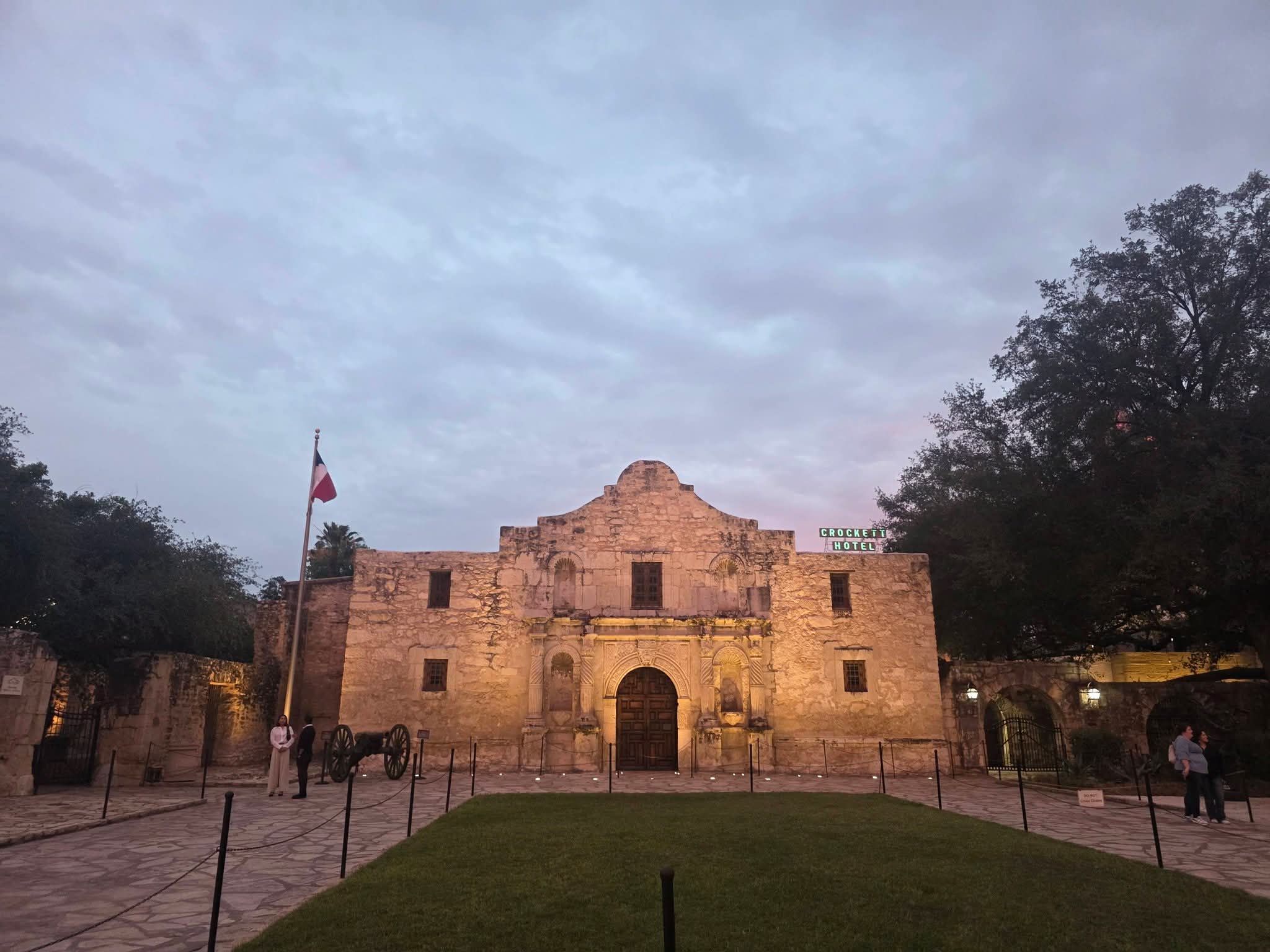
The historic Alamo - Mision San Antonio de Valero - established in 1718 by "anusim" empresarios/conversos having fled the Spanish Inquisition and settle the new world - Mexico y Tejas (Photo by Winslow Swart)
Last week, a new leadership cohort of 55 gathered at The Alamo in San Antonio to begin their journeys devoted to civic and community leadership. The Alexander Briseño Leadership Development Program launched its 25th cohort year, a major milestone in igniting the next generation of thought leaders, entrepreneurs, elected officials, and C-Suite leaders from an already proven cadre of emerging leaders. For 10 of those 25 years, I served as curriculum architect and facilitator of this program. So that sense of “skin in the game” is a given.
Just prior to the event, I stood in Jerusalem recording their key-note welcome message at the Western Wall near the Temple Mount. Almost 7,000 miles separated us.
Yet the moment felt strangely unified — two places shaped by history, identity, and contested narratives connected through a single conversation about leadership.
Increasingly, this kind of connection matters not only for communities and nations, but for how we link global innovation ecosystems and organizations. The breakthroughs shaping our future now emerge from collaboration across borders, cultures, and perspectives that do not naturally think alike. The challenge is no longer simply technological innovation, but human alignment.
Over the past two decades, I have had the privilege of helping design and facilitate leadership development initiatives across Asia, Latin America, Europe, the United States, and the Middle East. The contexts differ profoundly — political systems, economic realities, cultural expectations, and historical narratives vary widely — yet the underlying leadership challenges remain remarkably consistent. Leaders everywhere wrestle with trust, identity, uncertainty, and the responsibility of guiding communities through change. What shifts is not the essence of leadership, but the language through which it is expressed. Again and again, I have seen that the core principles of effective leadership — listening before directing, building shared purpose, and creating environments where diverse perspectives can collaborate productively — translate across borders more reliably than any strategy or model. Geography changes; human dynamics do not.
Jerusalem and the Alamo do not appear to share much in common.
One sits at the crossroads of civilizations, sacred to billions and debated by many more. The other stands as a defining symbol of regional identity and collective memory in Texas. Both, however, remind us that history is never neutral. Places carry stories, and those stories shape how communities understand themselves and each other.
Standing in Jerusalem while speaking to leaders gathered at the Alamo, I was struck less by distance than by similarity. Both places ask difficult questions of past, present, and future. We live in an era increasingly defined by dividing narratives.
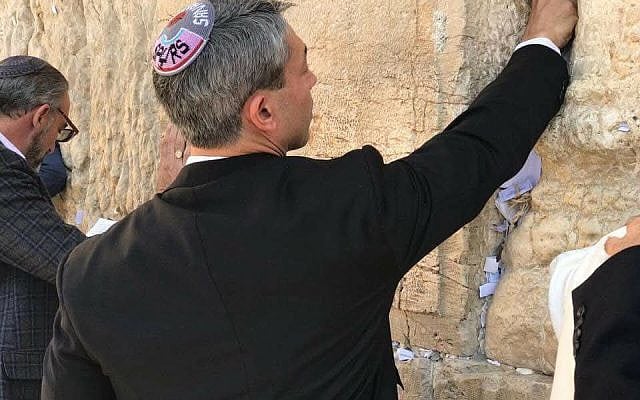
Writers note: While it took a moment of courage to record from a location that would appear controversial or even inflammatory to some in this audience – an epicenter of global focus and conflict – at least two things compelled this decision. One: a core leadership principle – to value and even embrace conflict as a means to seek understanding and build high-performing teams. Two: I refuse to apologize for who I am and the reality I am currently living, here, now. And one my people have been living for 100 generations.
Public discourse often rewards certainty over curiosity. Complex realities are compressed into slogans audiences go for. So do many Americans. And unfortunately, so does much of the world.
Leadership today is no longer only about directing organizations or managing economies. It is about understanding audiences whose experiences shape fundamentally different interpretations of reality.
The essential leadership skill of our era may be neither authority nor persuasion but understanding. Jerusalem offers a daily education in that discipline.
Within a few blocks, overlapping histories exist, sacred meanings, political tensions, and deep human aspirations. The city resists simplification. It demands humility from anyone attempting to explain it.
Perhaps this is also why Israel has become an unexpected laboratory for global innovation. Innovation here rarely emerges from comfort or uniform thinking. It grows instead from friction — from diverse populations, urgent challenges, constrained resources, and constant dialogue between differing perspectives. Innovation, in this context, is not only technological. It is relational.
The ability to collaborate across differences — cultural, linguistic, religious, and political — becomes a prerequisite for solving complex problems. The same capability increasingly defines successful innovation ecosystems worldwide. Technology may scale quickly. Trust requires a little more effort. The social science of building high-performing teams is rooted in trust.
Standing beneath the Temple Mount while welcoming leaders gathered at the Alamo, I was reminded that leadership across distance has become the new normal in a connected world. We can now speak instantly across continents. Ideas travel faster than ever.
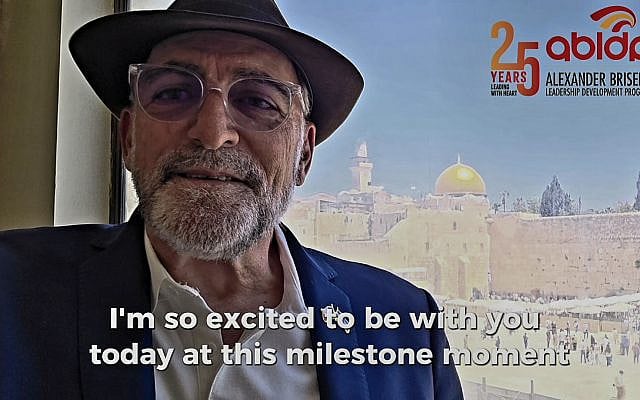
However, connection alone does not produce understanding. Shared purpose does.
The leaders beginning their journey in San Antonio inherit a world where innovation depends less on isolated brilliance and more on networks of cooperation linking cities, countries, and cultures. Economic development, entrepreneurship, and civic leadership now operate within global ecosystems rather than local silos.
And those ecosystems function best when leaders learn to translate between communities that do not naturally speak the same language — culturally or intellectually.
Today, these lessons are unavoidable. Every statement carries context. Every listener hears through a different history. The same is true now in business, technology, governance, and civic life around the world.
Historic places endure because generations choose to add meaning rather than erase what came before. Leadership works the same way.
Each generation inherits institutions, tensions, and opportunities shaped by those who preceded them. The responsibility of leadership is not to resolve every disagreement, but to ensure continuity — to strengthen the connective tissue that allows societies and systems to evolve without fracturing.
Perhaps the defining leadership question of our time is not “Who is right?” but “How do we remain connected despite disagreement?”
Jerusalem does not offer easy answers. Neither does the Alamo.
But both remind us that identity and history can either divide communities or deepen responsibility toward one another.
Across 7,000 miles, a welcome message became something more than an introduction to a leadership program. It became a reminder that the future — whether civic, economic, or technological — will be shaped by leaders capable of building bridges between narratives rather than reinforcing their separation.
In a world increasingly organized around difference, leadership may ultimately be measured not by the strength of our positions, but by our capacity to remain connected to one another while carrying them forward.
From Jerusalem to San Antonio, the lesson felt clear: The work of leadership today is not only to innovate, govern, or persuade.
It is to connect.
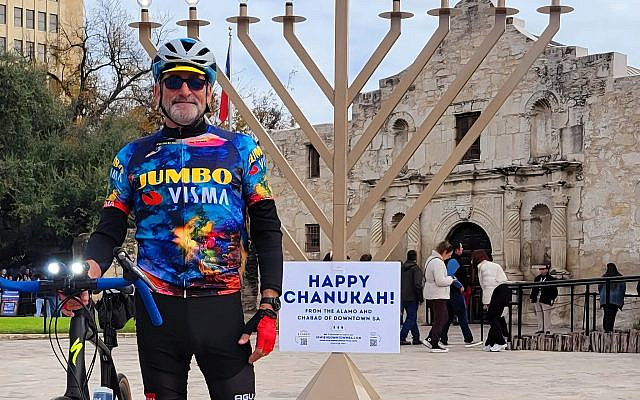
Note: on my leadership site blog www.winslow-consulting.com there will be a story with very cool captures of the cohort at the Alamo event, however – use permissions for those images have not yet been attained.