CFO | Empower Society for Good I Author
From War Room to Pickleball Court
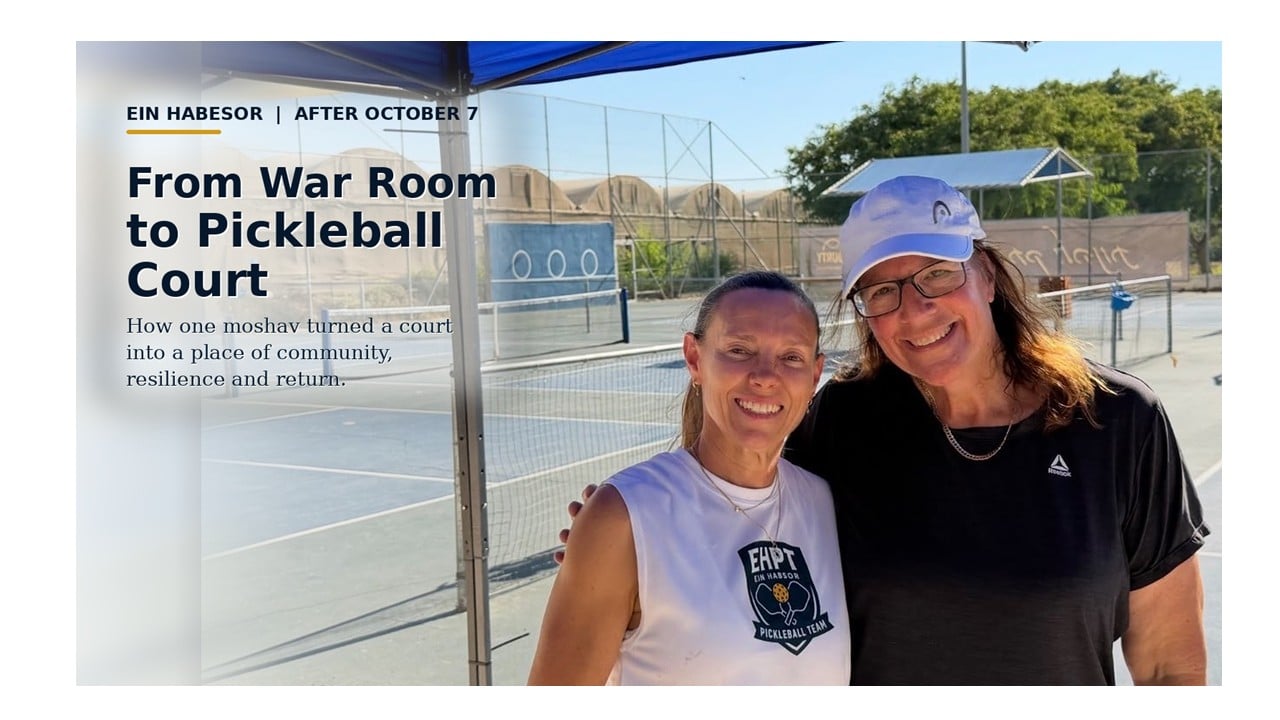
On the morning of October 7, Regev and Lee Harlap woke up in Moshav Ein HaBesor, a community in the Eshkol region near the Gaza border.
Like so many Israelis that morning, they first heard the rockets. But very quickly, they understood that this was not another “round.” The fire was different. Heavier. More continuous. More ominous.
Then their children began showing them what they were seeing on Instagram. Terrorists were filming themselves entering Israel, driving through roads their children knew, near communities where their friends lived. It was not theory anymore. It was happening live, on their children’s phones.
Regev looked at Lee and said, in effect: we are opening a war room in our house.
Lee tells the story with pride and disbelief. Regev is modest about it, but she is not. She says he understood something before most people had processed what was happening. He called people. He brought in those who could help. Maps, phones, screens, contacts, logistics, information. Their home became a command center.
Outside, the local security team protected the moshav. Inside, Regev and others coordinated food, guards, information, calls, who was where, what was happening, what was needed.
For three days, they largely had to manage themselves.
That sentence is hard to write and harder to absorb.
The terrorists tried to enter Ein HaBesor. They were stopped. There was fighting at the gate. People were injured. But the moshav was not overrun. No one in Ein HaBesor was murdered that day.
That is a miracle. It is also the result of human beings who acted.
But survival was only the first stage.
After those first days, around 70 percent of the moshav evacuated to Eilat. The community found itself living in a hotel, trying to preserve some kind of order after the world had cracked open. Children needed school. Families needed food. People needed routine. People needed one another.
The question was not only when to return home. It was how to return home without losing the community.
We often speak about rebuilding houses, roads and security fences. Those things are essential. But communities are not rebuilt only with cement and budgets. A community is rebuilt when people begin showing up again. When the old and young meet in the same place. When laughter returns without anyone accusing it of betrayal.
In Ein HaBesor, strangely enough, one of the places where that happened was a pickleball court.
Ein HaBesor itself was born out of displacement. In 1982, after the peace treaty with Egypt and Israel’s withdrawal from Sinai, families who had built lives in Sinai had to leave. Some of those families, including people from Moshav Sadot and other Sinai communities, became part of the founding story of Ein HaBesor.
So this was not the first time the community had to ask what it means to leave a place, begin again, and create a shared life from disruption.
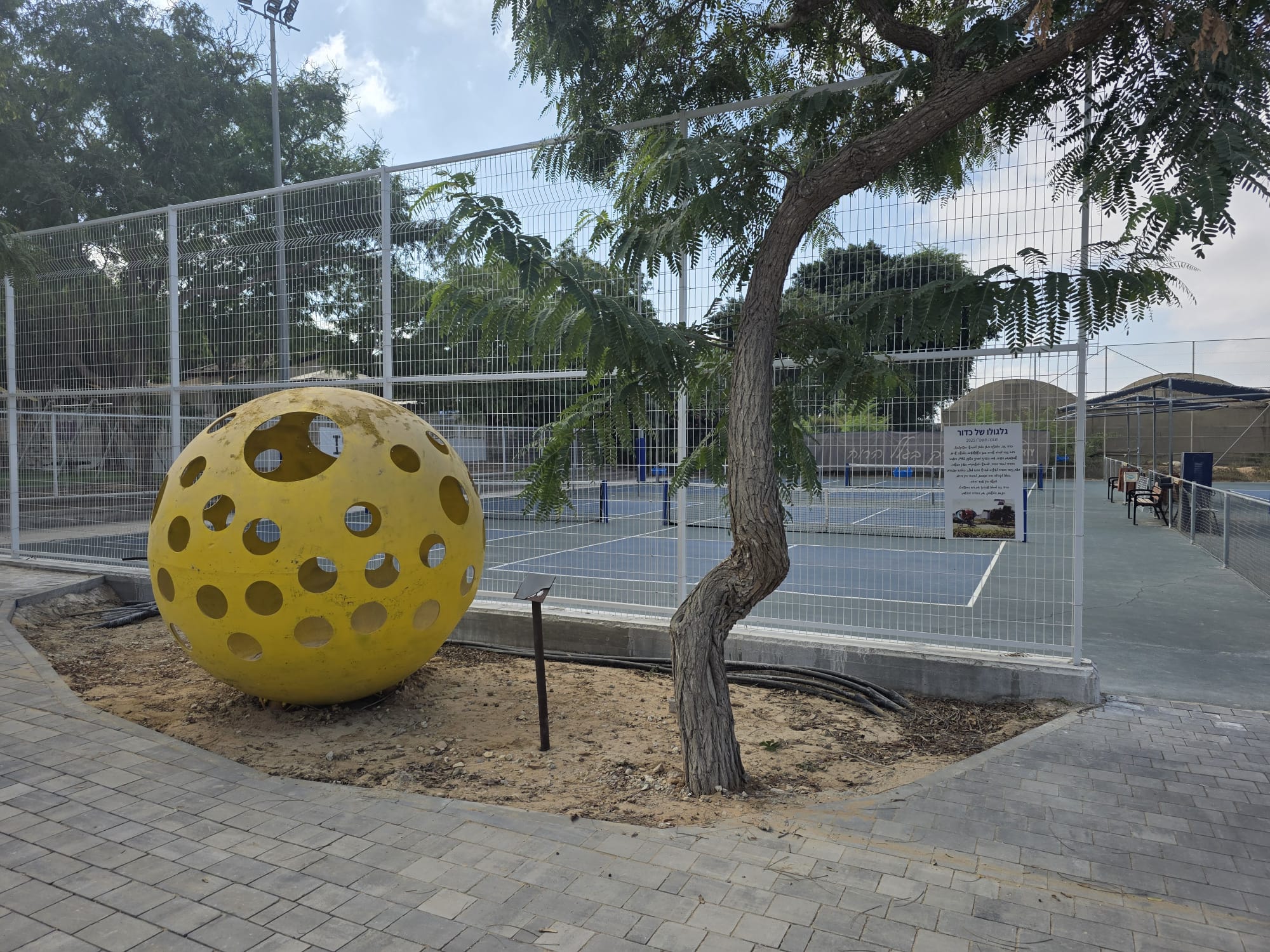 Near the pickleball courts stands an unusual ball. The original ball stood in the playground of Moshav Sadot, near the entrance to Rafah in Sinai. When the community was evacuated from Sinai in 1982, the ball was brought with the families and given a new home in Ein HaBesor.
More than four decades later, it has been redesigned and placed near the pickleball courts.
A ball that travelled with a displaced community from Sinai now stands beside courts that helped bring another displaced community back together after October 7. It connects Sadot with Ein HaBesor. It connects 1982 with 2023. It connects founders with children and grandchildren.
And it reminds us that rebuilding does not mean forgetting where you came from.
With the help of CityServe, a US-based Christian humanitarian organization that had already mobilized around Ein HaBesor after October 7, existing basketball and tennis courts were converted into pickleball courts. At first, it was just a facility. A useful project. Something constructive.
But Regev and Lee began playing. Then they began learning. Then they began teaching themselves seriously, almost obsessively. Rules, videos, technique, practice. What began as curiosity became a mission.
And then they started inviting others.
Come play. Come try. No judgment. No pressure. Just come.
At first, it was one evening. Then more people came. Then one evening was not enough. Another evening was added. Then more people joined. The whole thing became not just a game, but a meeting place.
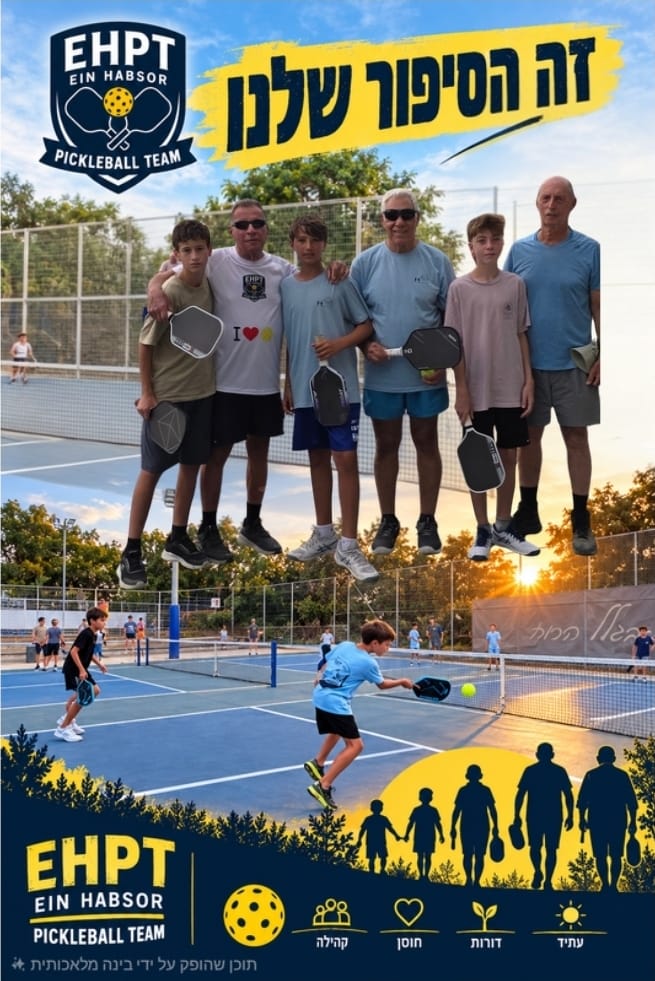
Today, Ein HaBesor has built one of the strongest pickleball communities in Israel. Around 200 people are in the group, with dozens of regular players. Ages range from children to people in their eighties. Founders of the moshav play with teenagers. Parents play with children. Serious players come. Beginners come. People who thought they were not sporty come.
That may sound like a small thing.
It is not a small thing.
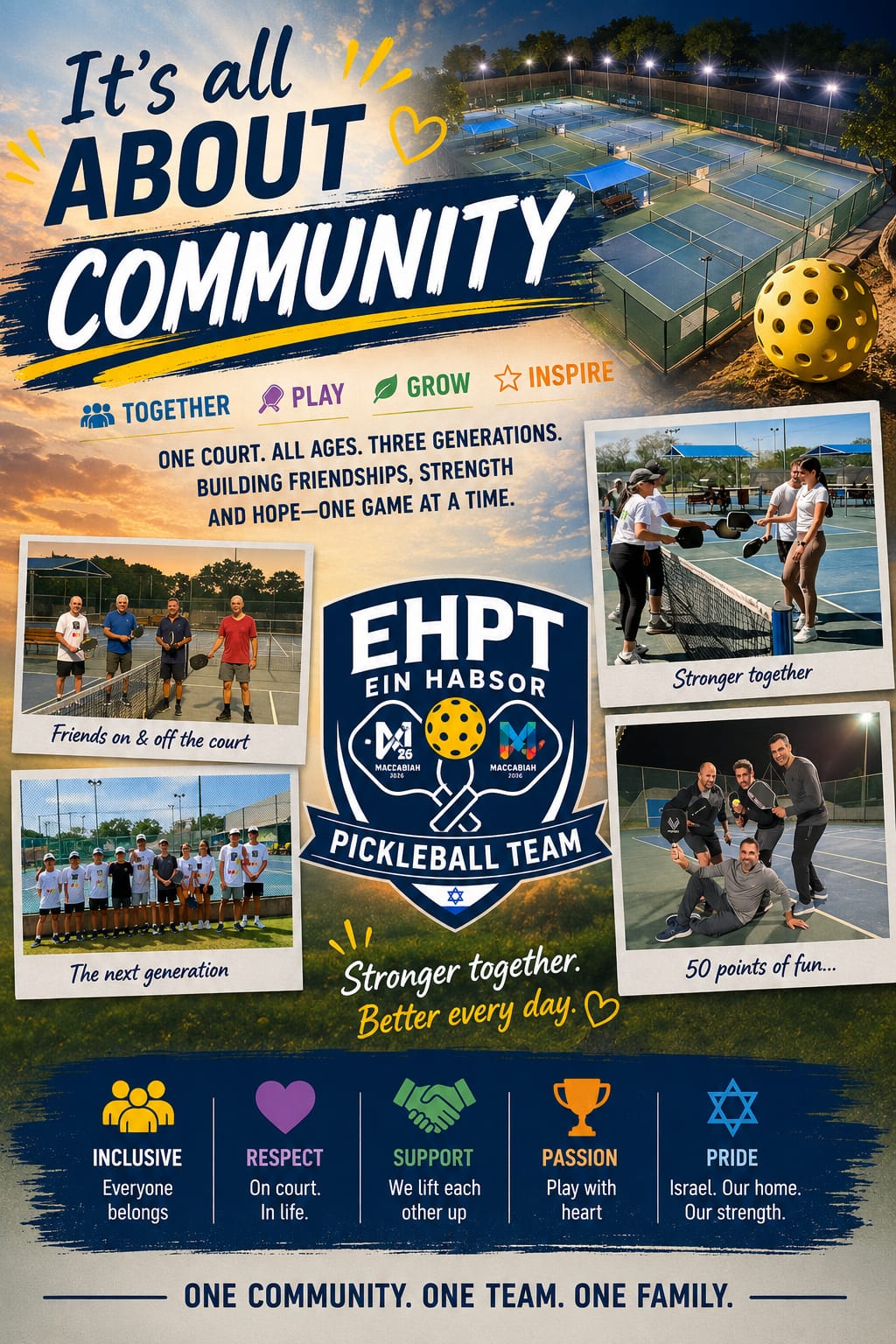 There are not many sports where an 82-year-old and a 13-year-old can genuinely share a court. There are not many places where a traumatized community can gather without sitting in a circle and being asked to speak about trauma.
Sometimes healing does not begin with words.
Sometimes it begins when someone hands you a paddle and says, “Just try.”
My own connection to this story began through pickleball as well. I started playing about a year and a half ago, and quickly understood why people become addicted to it. It is competitive, but not brutal; social, but not shallow; physical, but also strangely mindful.
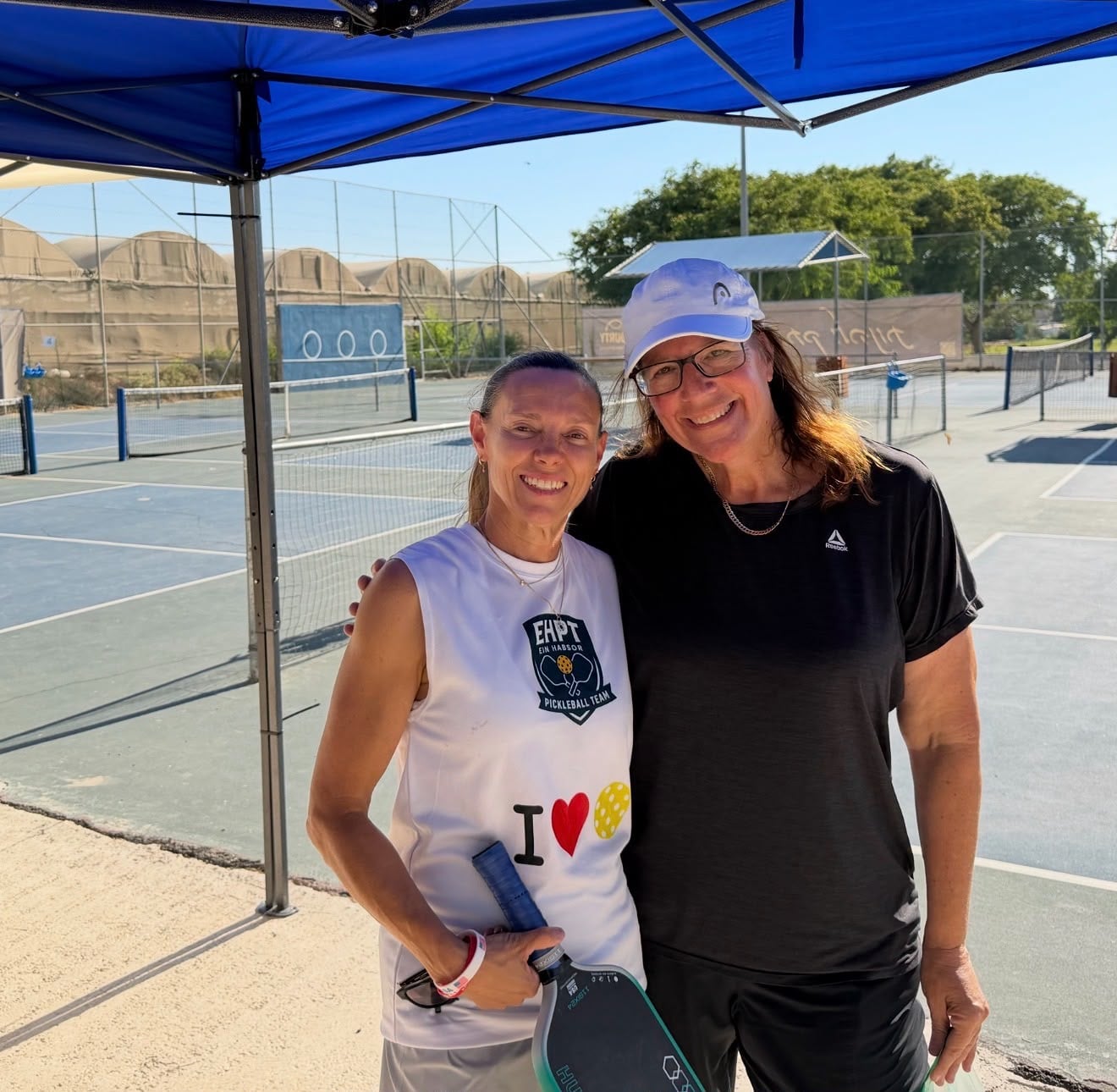 Through the game, I reconnected with Mandy Harnoy, an old friend from Cape Town. Mandy moved to America, adapted her tennis skills to pickleball, won medals at the Maccabiah, and now makes a full-time living from the sport.
At the Maccabiah Games, Mandy met Lee, whose family also came from South Africa. Mandy immediately understood that there was a story here: not just about a new sport, but about a wounded community finding a way back to life.
She was right.
I am careful with the word healing. October 7 is not healed. The families of the murdered are not healed. The hostages and their families are not healed. The soldiers who fought and are still fighting are not healed. The children who saw things no child should see are not healed.
And yet, if we are honest, we must also speak about life.
Not as a slogan. Not as hasbara. Not as denial.
Life.
Because the enemies who attacked on October 7 did not only want to kill Jews. They wanted to destroy the possibility of ordinary Jewish life in our land. They wanted people near the border to feel they could never come home. They wanted communities to break apart. They wanted fear to become stronger than belonging.
 In Ein HaBesor, the answer was not grand speeches. It was a court full of people playing under the lights.
From 6:30 in the evening, beginners can come and learn. For free. Regev and Lee volunteer their time. Later, the play continues. People rotate in. People wait. People talk. People laugh. People compete. People stay late.
That is also a form of resistance.
There is a tendency, especially around anniversaries of October 7, to retell only the horror. We must tell the horror. But if the only story we tell is horror, then we leave out the Jews who got up the next morning.
We leave out the people who guarded gates, the mothers who fed volunteers, the teenagers who returned to school, the communities that evacuated and came back, the people who said: we are still here.
Regev and Lee are now thinking beyond Ein HaBesor.
That, too, feels natural. Once something has helped your own community breathe again, you begin to wonder whether it could help someone else.
They speak about other communities in the Otef. They speak about schools in the South, where children need not only buildings and classrooms, but routines, friendships and shared spaces that help life feel normal again.
They also speak about the North.
That matters. The trauma of this war has not been limited to the Gaza border. Communities along Israel’s northern border have also been emptied, damaged, displaced and forced to live for months with uncertainty.
If pickleball helped bring people in Ein HaBesor back onto the same court, perhaps it can help other communities do something similar.
The idea is simple and practical: find existing courts, bring them back to life, teach the game, train local volunteers, introduce it into schools, and create regular evenings where people know they can come, learn, play, meet and belong.
Let children play with parents. Let grandparents play with teenagers. Let visitors play with residents. Let communities in the South and North discover that rebuilding is not only about returning to houses, but also about returning to one another.
There is also another layer.
People from Israel and abroad can come first to play, but leave with a deeper understanding of the people and places behind the headlines.
This is not trauma tourism. It is connection tourism.
Visitors can play with the community, hear its story, stay locally, eat locally, visit farms, meet families, use local guides, support guesthouses, zimmers, restaurants, agriculture and small businesses. They can tour the wider region and see not only where terrible things happened, but where ordinary Israeli life is being rebuilt.
That is not fundraising in the narrow sense. It is something more human: a way of helping the local economy, strengthening relationships, and allowing people from outside Israel to connect with the country through living communities rather than only through news reports or memorial visits.
For overseas Jewish communities, Maccabiah players, pickleball clubs, visiting delegations, bar mitzvah families and friends of Israel, the invitation is not simply to give. It is to come closer. Come play. Come meet the people. Come understand. Come support life as it is being lived.
Regev and Lee can be contacted at regev.harlap@gmail.com or by WhatsApp at +972 52-323-7624.
That may be the quiet power of this project.
It does not ask people to choose a political camp. It does not ask them to solve the Middle East. It asks them to come closer. To see. To listen. To play. To help communities stand together again.
October 7 shattered the illusion of safety.
Pickleball did not erase the trauma.
But in Ein HaBesor, it gave people a reason to come outside again.
And sometimes, after everything, that is where rebuilding begins.
–
Photos courtesy of Lee and Regev
Related Topics
Related Posts