


From “We Will Destroy You” to “Let’s Make a Deal”: Trump’s Dance with the Evil
There is an old saying: a man spent years warning others not to dig a dangerous pit, calling it an act of stupidity. Yet one day, he picked up a shovel himself and began digging that very same pit. He knew what awaited him, but he still chose to walk down the same path. It is the story of someone who knows full well that something is wrong, yet proceeds to do precisely that same wrong thing himself. This is exactly what Donald Trump’s conduct toward the Islamic Republic has come to represent.
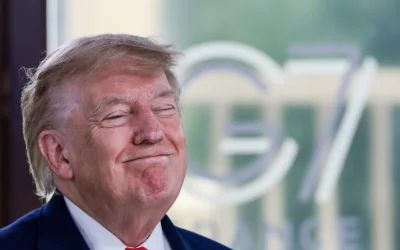
Trump, who before entering the White House described the Islamic Republic and the Islamic Revolutionary Guard Corps as an “evil empire” and a force of absolute evil, and who spoke of the necessity of destroying it, has now, in practice, chosen the path of risky diplomacy and sat down at the negotiating table with the very same mullahs.
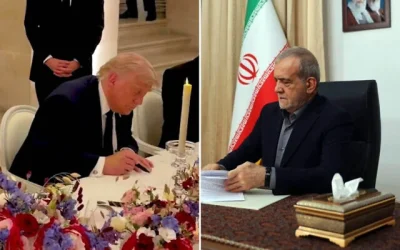
Over the past 120 days, Trump has changed his position 42 times. Where firmness was expected of him, he hesitated and retreated. Time and again, using pretexts such as a call from Shehbaz Sharif, intervention by the Qataris, or appeals from Arab leaders, he avoided delivering the final blow to the IRGC. At moments of deadlock, instead of applying maximum pressure, he handed the enemy a winning card by praising its courage and resilience.
Obama’s Path?
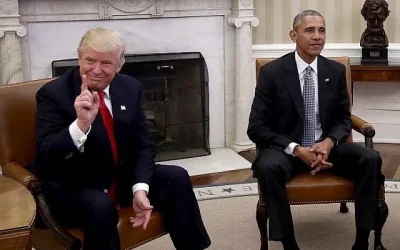
Trump’s diplomacy of pleading is precisely the same approach for which he spent years harshly attacking Biden and Obama. Now, however, he himself has fallen into the same trap. This diplomacy has given Tehran a precious opportunity to catch its breath, rebuild its military capacity, and rise again.
For the Islamic Republic, however, these negotiations serve a purpose beyond any agreement: the survival of the regime. A government that has always relied on domestic repression and the IRGC’s military machine to preserve its power is now using this compromise merely to buy time and protect its authoritarian structure.
Trump imagined that he could implement a version of Venezuela-style leadership change in Iran. But Iran, ruled by an ideological mafia, has a structure entirely different from Venezuela’s. The death of Ali Khamenei and the succession of his son — even if such a figure were alive and politically viable — together with the rise of IRGC-linked figures such as Mohammad Bagher Ghalibaf and Abbas Araghchi, would not amount to the “regime change” in Iran that Trump has claimed.
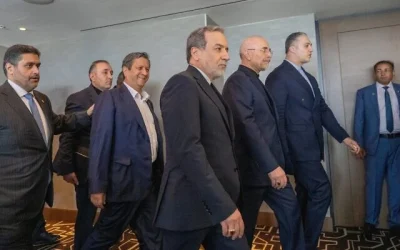
The important point is that realistic Republican figures such as Secretary of State Rubio and Defense Secretary Hegseth understand very well that Trump’s calculation is wrong. Worse than any war is the continued rule of this crisis-generating regime; a regime that can challenge regional stability whenever it chooses. Unfortunately, Trump proved vulnerable to falling into the trap set by J.D. Vance and Steve Witkoff, and moved toward a deal with Tehran.
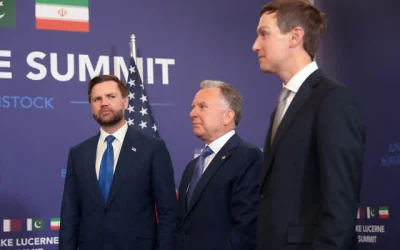
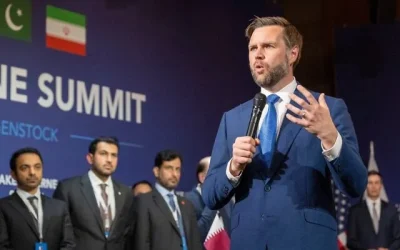
Turning His Back on Iranian Freedom-Seekers After Promising That “Help Is on the Way”
Donald Trump’s agreement with the Islamic Republic has triggered a wave of criticism among opponents of the Iranian regime and among sections of the maximum-pressure camp in the United States. Critics see this approach as a retreat from the promises Trump had previously made about supporting the people of Iran. They argue that such an agreement may be interpreted as ignoring the democratic demands of Iranian society and disregarding Republican voices inside the United States.
From the perspective of these critics, negotiating with Tehran at a time when significant sections of Iranian society are seeking fundamental political change amounts to turning one’s back on a movement fighting for freedom and civil rights. Yet amid these developments, one powerful message continues to be repeated by opponents of the Iranian regime: the course of internal developments in Iran does not depend on decisions made in the White House or by any other foreign power. The people of Iran, with Trump or without Trump, will continue their path based on their own demands and their own domestic will.
In my view, through a policy of contradiction and double standards, Trump not only turned his back on Netanyahu and Israel, but also left the war against the Islamic Republic’s axis of evil unfinished, placing Israel in a complex and vulnerable position.
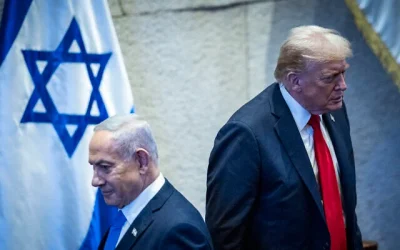
Many Israelis see this agreement as an open betrayal of Israel and America’s allies. They believe Trump’s retreat has diminished Netanyahu’s major achievements in the war and has sharply reduced his chances of victory in the next election.
Prince Reza Pahlavi, the leader of Iran’s opposition, also described these negotiations as a “betrayal of the Iranian people” and stressed that tens of thousands of protesters did not sacrifice their lives merely so that the Strait of Hormuz could remain open.
Dancing with Wolves
Inside Iran, state media have not stopped mocking Trump and the United States for a single moment. The mullahs are elated by this 180-degree turn and are using the Strait of Hormuz as a winning card to pressure America.
This agreement could become a historic disgrace for the American Republican Party. The man who spent years ridiculing Democrats for their policy of appeasement toward the mullahs is now pursuing that very same path himself — and with even greater intensity. Karma, at times, is bitter, and closer than one’s jugular vein.
The Swiss agreement represents the peak of Trump’s weakness. It is the point at which the United States not only gave Iran permission to sell oil freely, but also compromised on Israel’s security in relation to Lebanon. The mullahs, clinging to this agreement as a lifeline, will now be able to catch their breath and place even greater hope in their own survival.
An agreement that was supposed to demonstrate American power has ultimately become a symbol of retreat and diplomatic pleading. It has exposed precisely the same weakness that Trump once condemned in the Democrats.
The people of Iran and Israel will not forget these days. Nor will the people of Ukraine, or America’s other allies, forget Trump’s abandonment of them.