


Fuentes and Carlson have no place in the conservative movement
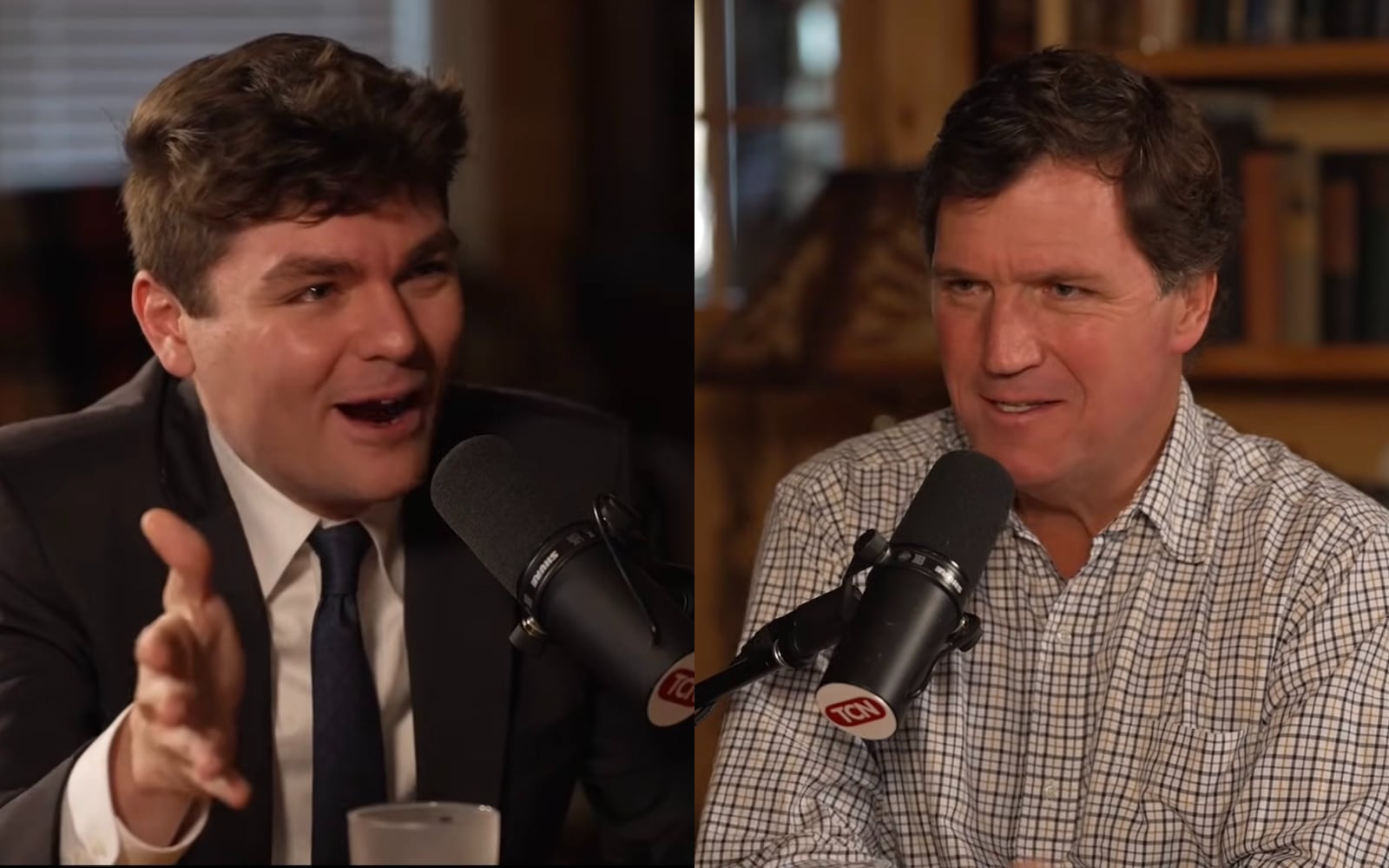
The conservative movement is at a crossroads. Once again, we face the challenge of distinguishing genuine conservatism from its toxic imitations. The recent controversy surrounding figures like Nick Fuentes and Tucker Carlson, and the reactions from some conservative leaders, suggest that we have lost sight of an essential lesson William F. Buckley Jr. once taught us: if we fail to police our own ranks, others will define us by our worst voices.
Some prominent voices on the right have argued that conservatives should resist “canceling” anyone, even those whose views they find objectionable. The instinct behind this argument is understandable. Conservatives rightly oppose the left’s culture of blacklisting and deplatforming. However, this defense often confuses two very different things: censorship by coercion and moral self-discipline within a movement.
To “cancel” someone, in the sense conservatives rightly reject, is to use the power of the state or corporations to silence dissent, to deny individuals the ability to speak freely or participate in civic life because their views are unpopular. However, the issue at hand is not free speech. This is about moral stewardship. Every movement must decide who represents its ideas and what it stands for.
Drawing boundaries around antisemitism, conspiracy and demagoguery is not an act of censorship; it is self-definition.
Buckley understood this distinction with exceptional clarity and precision. As Matthew Continetti of the American Enterprise Institute notes, Buckley regarded one of his greatest achievements as the “absolute exclusion of anything antisemitic or kooky” from the conservative movement. In 1957, when the once-prestigious literary monthly The American Mercury drifted into open antisemitism, Buckley drew a strong line. “When it became clear that the direction The American Mercury was headed was anti-Semitic,” he later wrote, “I ruled, with the enthusiastic approval of my colleagues, that no writer appearing on the Mercury’s masthead, notwithstanding his own innocence on the subject, could also appear on National Review’s.”
That was not “cancel culture.” This was moral clarity in action. Buckley recognized that the credibility of conservatism, grounded in ordered liberty, individual dignity and the moral law, depended on clear boundaries. A movement that tolerates bigotry cannot credibly defend the permanent things it claims to conserve.
Nick Fuentes is not a misunderstood provocateur. He is an explicit antisemite who praises Adolf Hitler, denies the Holocaust and delights in mocking Jews. He has been denied a mainstream platform by conservative voices for years. However, his presence, even at the fringes of the right, represents a moral contagion. While Tucker Carlson has not gone so far, his growing sympathy for those who indulge in antisemitic rhetoric has moved him away from the moral seriousness that once defined his interview style and commentary.
If conservative institutions cannot bring themselves to draw a strong line here – to say clearly that antisemitism and its apologists have no place in our ranks – then we risk forfeiting our moral authority. We are not “canceling” anyone by saying so. We are preserving principled conservatism.
To refuse to distinguish between legitimate debate and moral corruption is to abandon the intellectual heritage of conservatism. A movement without boundaries becomes mob-like. Buckley’s example reminds us that self-policing is not about purity tests or holding grudges. It is about fidelity to principles and the courage to protect the integrity of our cause.
Populist energy can be a valuable corrective to elite arrogance, but it is dangerous when it drifts from principle into resentment. That drift is what Buckley worked so hard to prevent, and what today’s conservative leaders risk enabling if they mistake self-discipline for censorship.
The future of conservatism depends on recovering our seriousness and integrity. We must once again affirm that our movement stands for truth, justice and human dignity, and that antisemitism, in any form, is incompatible with those ideals.
The conservative movement is not a free-for-all process. It is a cause grounded in truth and in ordered liberty. To conserve those things requires judgment: the willingness to say “no” to voices that betray our deepest principles. That is not censorship. That is leadership.