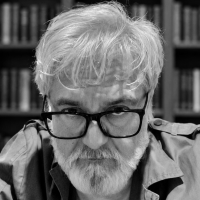
Gadi Eisenkot: The reassuring man with the troubling doctrine

As Israel approaches the October 27, 2026 elections, Gadi Eisenkot possesses an advantage that few of his rivals can match: he is reassuring.
A former IDF chief of staff, sober in manner and largely averse to political theatrics and grandstanding, he projects a down-to-earth decency that naturally inspires sympathy and trust. Added to this is a family tragedy that has deeply touched Israelis: his son Gal was killed in Gaza in December 2023, his nephew Maor Cohen Eisenkot the following day, and another nephew, Yogev Pazy, in November 2024.
Such personal loss, combined with a lifetime of service to the country, commands respect.
But an election is not a contest of personal virtues. Israel will be choosing a prime minister. It is therefore necessary to look beyond the reassuring man and examine the doctrine he represents.
When several episodes from Eisenkot’s career are considered together, a pattern emerges: he has often seemed to approach Israel’s security primarily in terms of managing, limiting and accommodating threats rather than fundamentally altering the balance of power.
What may be presented as realism can, under certain circumstances, become a doctrine of resignation. And that is where the problem begins.
The gamble of a smaller army
The first issue concerns Eisenkot’s tenure as IDF chief of staff from 2015 to 2019.
The multi-year Gideon Plan reduced personnel, restructured units and significantly cut the number of reservists as part of a concept favoring a smaller, more technological and more precise military.
It was during this period that reserve Maj.-Gen. Yitzhak Brik issued some of his gravest warnings. He criticized the state of logistics, emergency stockpiles, maintenance, technical manpower and, above all, the actual ability of Israel’s ground forces to sustain a prolonged war.
Eisenkot challenged Brik’s assessment and had his findings examined by an internal committee. Brik, for his part, argued that the General Staff was refusing to confront the army’s true condition.
After October 7, that controversy inevitably takes on a different significance.
Brik may not have been right about everything, and Eisenkot cannot be held solely responsible for a doctrine that had developed over many years throughout Israel’s security establishment. Yet the question remains: did he contribute to building an army that was too small and too dependent on intelligence, technology and air power to cope with a prolonged regional war?
The gamble on economic moderation
Even more revealing is Eisenkot’s approach to relations with the Palestinians.
At the height of a terrorist wave in 2016, Eisenkot was already defending the employment in Israel of some 120,000 Palestinians from Judea and Samaria. His reasoning was explicit: their salaries supported several hundred thousand people and therefore constituted, in his view, a moderating factor.
He later argued that allowing roughly 150,000 Palestinian workers into Israel helped contain violence. Even after October 7, he has continued to contemplate the large-scale return of Palestinian workers to Israel. In July 2026, Eisenkot spoke in favor of eventually allowing between 100,000 and 150,000 Palestinian workers into Israel, based on the same underlying rationale.
This is not merely an economic policy. It is a doctrine: according to this approach, giving the Palestinian population more to lose economically should reduce the appeal of terrorism.
In a different form, this was also one of the elements of the conceptzia applied to Gaza before October 7: work permits, improved living standards and economic interests were expected to contribute to preserving calm.
We know how that concept ended.
The strategic question is therefore unavoidable: can Israel still base its security on the assumption that economic prosperity will neutralize a radical nationalist, religious or Islamist ideology?
Eisenkot appears to continue believing that it can.
From Lebanon to security zones
This philosophy is not new.
Eisenkot served as Ehud Barak’s military secretary when Barak decided on Israel’s unilateral withdrawal from southern Lebanon in May 2000. Eisenkot has since repeatedly expressed pride in having supported that decision.
The withdrawal ended a costly war of attrition. But Hezbollah Secretary General Hassan Nasrallah also interpreted it as proof that Israeli society, subjected to sufficient pressure, could eventually be forced to retreat. Hezbollah was subsequently able to establish itself directly along Israel’s border and spend two decades constructing an enormous military infrastructure.
Even today, Eisenkot tends to view the security zones established in Gaza, Lebanon or Syria primarily as “means” or “levers” for obtaining future arrangements, rather than necessarily as strategic depth worth retaining.
After October 7, such confidence in security arrangements deserves serious scrutiny.
Nasrallah and the limits of operational morality
An older presentation by Eisenkot about the Second Lebanon War is equally revealing.
He recounted that the IDF had identified buildings in Beirut associated with Hassan Nasrallah. Rather than striking immediately, the army warned the civilian population, dropped leaflets and waited before attacking. Eisenkot concluded: “I think this demonstrates the morality of the IDF.” The statement appears in an INSS publication dealing with the military and strategy.
The episode raises a question that can no longer be avoided after seeing what Hezbollah eventually became: should military morality be measured solely in terms of the immediate risk to enemy civilians, or must it also take into account the future cost of allowing an enemy leader to survive and spend years building a massive army on Israel’s border?
It is legitimate to ask whether restraint that appears morally admirable in the short term can sometimes produce a far greater human cost in the long term.
Nasrallah survived for another eighteen years. Under his leadership, Hezbollah built a gigantic military force designed to fight Israel.
The hostages: Prudence or an underestimation of military power?
The same tendency reappeared during the Gaza war.
In January 2024, Eisenkot argued that it was impossible to bring the hostages home alive quickly without reaching an agreement and described as an “illusion” the hope that they could be recovered primarily through military pressure.
After leaving the war cabinet, he advocated what could reasonably be described as “capitulation” to Hamas’s demands in order to guarantee the hostages’ survival.
Subsequent events, driven by massive IDF military pressure, showed that his assessment was mistaken and that he had underestimated the necessity and potential effectiveness of force.
The chronology is also striking. Eisenkot left the war cabinet on June 9, 2024. In the months that followed, Israel eliminated Mohammed Deif, Fuad Shukr, Ibrahim Aqil, Hassan Nasrallah and Yahya Sinwar, severely disrupted Hezbollah and dared to strike military targets directly inside Iran.
In light of the caution Eisenkot had consistently advocated while serving in the cabinet, the question deserves to be asked: would he have approved the same succession of high-risk initiatives?
Criticism of Eisenkot therefore often begins with his understanding of the limits of Israeli power. Prudence can certainly be a virtue. But it can also become a weakness when it leads a leader to regard as impossible what boldness and sustained military pressure may ultimately make possible.
Kaplan, Brothers in Arms and Eisenkot’s real political position
The crisis of 2023 also provides a clearer picture of Eisenkot’s ideological position.
He personally participated in protests against the judicial reform and marched alongside Brothers in Arms, describing its members as “patriots who love the country.”
The problem is that Brothers in Arms was not merely a civilian protest movement. A significant element of its strategy involved announcements by volunteer reservists — including pilots, intelligence personnel and members of elite units — that they would stop volunteering for reserve duty if the government continued with its reform.
Eisenkot refused to describe those individual decisions as “refusal to serve.” He emphasized the legal right of volunteers to terminate their voluntary reserve service and described such a choice as a “personal and moral” decision, while warning that collective action could cross the line into rebellion.
Yet when a pilot or member of an indispensable military unit announces that he will no longer serve if a democratically elected government pursues a policy he opposes, the IDF’s operational readiness becomes an instrument of political pressure.
And that is precisely what a former chief of staff should have rejected without ambiguity.
This episode therefore also helps clarify Eisenkot’s supposed “centrism.”
When his closeness to the Kaplan protest camp and Brothers in Arms is considered alongside his approach to the Palestinian issue, his preference for territorial arrangements and the alliances he is now contemplating, his political position appears considerably less neutral.
The political future
His extreme caution is accompanied by a troubling degree of political ambiguity.
Eisenkot is currently working to coordinate what he calls the “Zionist majority” with Bennett, Lapid and Liberman, but also with Yair Golan — a highly controversial political figure in Israel — and his far-left party.
There is no basis for claiming that Eisenkot has promised Golan a major ministry; doing so would go beyond the facts. But a government dependent on the Democrats would inevitably have to take their political weight into account.
A similar question arises regarding Mansour Abbas, leader of the Islamist Ra’am party. The current campaign has made clear that Eisenkot refuses to treat Ra’am as an inherently unacceptable political partner, even as he seeks to secure an independent Zionist majority.
Even more revealing was Eisenkot’s comparison with Arab influencer Yoseph Haddad when defending his attitude toward Abbas.
But what, politically, do Haddad — an Israeli Christian Arab and former Golani soldier wounded while serving Israel — and Mansour Abbas, leader of a party originating in the Islamic Movement, actually share other than their Arab background?
Conflating ethnic identity with political ideology in this way is, to say the least, surprising, and raises questions about Eisenkot’s political judgment.
His choices are entirely legitimate in democratic terms. But right-wing and center-right voters who see Eisenkot simply as a “reasonable” former chief of staff should understand what kind of coalition his candidacy might ultimately produce.
Conclusion
This, ultimately, is the central ambiguity surrounding Gadi Eisenkot.
The man inspires respect, confidence and sympathy. But a prime minister should not be chosen for his affability or his personal story.
He must be judged by his discernment, strategic vision, authority, alliances and ability to make decisions when circumstances demand something more than caution.
On each of these fronts, Eisenkot leaves serious questions unanswered.
His security doctrine remains marked by a culture of managing threats rather than decisively transforming them. His political positioning now places him clearly closer to the left and the Kaplan protest camp. Several of his past assessments have proved questionable, and in some cases profoundly mistaken. And his temperament may prove inadequate when what is required is the ability to impose a clear direction on a country at war.
The problem with Eisenkot, therefore, is not that he is a frightening man.
It is almost the opposite: he is reassuring enough that voters may fail to notice, until it is too late, what his ideas, alliances and weaknesses could mean once he is in power.