Gaza as a model for a special international zone
After several influential regional and global powers accepted President Donald Trump’s proposal to create an international council for managing post-war Gaza, discussion has moved beyond debris clearance and initial reconstruction funds.
Attention now focuses on the governance model that will take shape.
The initiative, as adopted, suggests a long term political, security and economic arrangement that would redefine the Strip’s function, authority and administration. This raises a central question: what kind of entity will Gaza become over the next two decades?
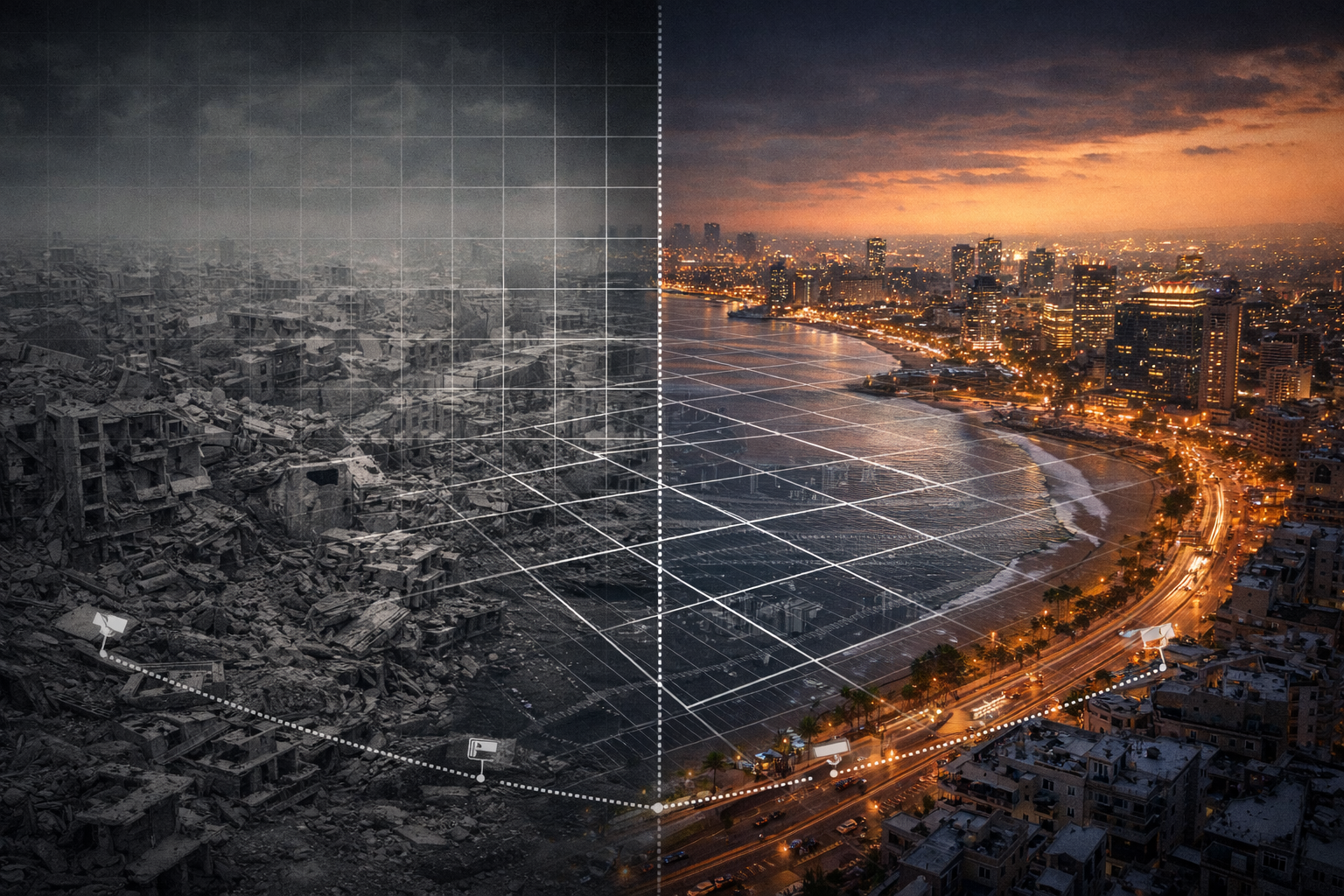
The change begins with material reality. United Nations reports indicate rubble in Gaza grew from approximately 23 million tons at the start of 2024 to more than 53 million tons by spring 2025, with some estimates approaching 61 million tons. This volume represents more than an engineering problem; it demands an exceptional management approach. Rubble removal alone could require seven to twenty years and cost nearly $900 million before infrastructure, housing or regular economic activity can resume.
Within this context, shifting from a contested territory to an internationally administered area with a special status appears increasingly likely, not merely theoretical. This direction has taken practical form through the establishment of an international council, led by the United States and including several politically and financially influential states, to oversee Gaza’s post war phase.
The essence of this arrangement lies not in its formal structure but in transferring decision making from a local armed group to an international framework focused on stability and long-term risk management.
No arrangement of this kind can function while an armed militant organization operates inside the Strip. Therefore, the strategy aims to diminish and ultimately eliminate Hamas as an armed entity.
The first phase involves breaking its monopoly on force through transitional local security arrangements that prevent reconstitution of a centralized military structure. The second phase moves into the legal domain by cutting funding streams, closing organizational networks, criminalizing symbols and slogans, and reducing the group to a limited security concern.
This approach targets more than a single organization; it seeks to redefine the relationship between arms and politics in the Strip. A territory designed to operate under a special legal and investment framework cannot accommodate an armed group capable of disrupting economic activity or imposing an ideological agenda outside regulated boundaries.
In this context, the so-called Yellow Line emerges as a structural feature of the new arrangement rather than a temporary field measure. It functions as a permanent separation and control zone within and around the Strip, regulating movement of people, materials and goods through layered security protocols. Given the projected timeline for rubble removal and reconstruction, this security zone will likely remain in place for many years as a prerequisite for large scale investment, not merely as a transitional military tool.
Israel’s role therefore becomes a permanent component of the project’s architecture. Stability in the new arrangement requires a party capable of securing borders, monitoring strategic material flows, managing crossings, preventing rearmament and blocking attempts by regional armed actors to impose their influence inside the Strip. This concern occupies a central place in Israeli security planning, as any competing military presence is seen as a factor that could reproduce instability and undermine efforts to make Gaza a secure, cosmopolitan zone integrated into Mediterranean economic and tourism networks.
Consequently, the concept of redesigning Gaza as a special investment zone with legal rules distinct from its surroundings gains momentum. The closest parallels are not regional states but territories like Hong Kong before 1997 or Macau, which operated with open economic systems and exceptional legal frameworks within a broader sovereign structure. Yet the deeper transformation involves remaking society’s cultural foundations.
The project aims not only to eliminate a militant organization but to dismantle an ideological system built around perpetual conflict and mobilization. This initiates what might be termed engineering collective consciousness: redirecting education, media and public space toward values centered on work, openness, functional coexistence and integration into a Mediterranean lifestyle resembling southern European cities or territories like Macau and Singapore. Identity would become defined by urban life, economic opportunity and services rather than ideological or political affiliation.
In summary, this vision positions Gaza not merely in a post war phase but in a phase beyond armed factions and confrontational extremism. It envisions evolution into a territory managed through compliance, investment and identity reconstruction. Governance becomes redefined as long-term economic security administration rather than ideological expression or an arena for open conflict.