Gaza is haunting me
A newly released video showed the hostage Guy Gilboa-Dalal being driven around in what reporters believe to be Gaza City. I cannot stop thinking about it. There was a look in his eyes that said more than his mouth could. A longing. A sadness. A bit of defeat. His pale face and the trace of sweat showed his great distress. I am fully aware that he cannot say everything he wants and must follow orders because his invisible captors are sitting right next to him.
As I mentioned in earlier posts, I am not a Gaza-Israel expert, and I am not a member of any political party. I am primarily a freelance art critic. Maybe I should remain silent. Maybe I am making things worse by saying anything. That, I know for sure, is not my intention. I truly mean well. I am writing as someone who feels deeply impacted by this video and refuses to be pulled in the wrong direction. From the very beginning, there was never any question in my mind that the massacre on October 7, 2023, was inexcusable.
Whatever happened before, and whether it contributed to the radicalization of people in Gaza, and whether it is called resistance or terrorism, is completely out of my field of expertise.
What I can say is that a situation like that is not one of self-defense in a moment of threat. It was preplanned and carefully executed. There were people who enjoyed watching the attack on screen, and thus they enjoyed watching pain being inflicted on civilians. Civilians were also shot yesterday without warning at a bus stop in Jerusalem’s Ramot Junction. That resulted in injuries and fatalities. There was no mourning and no empathy, only praise from the same group that conducted the massacre on October 7, 2023.
I understand that the militant group of Hamas acts in pursuit of power and an independent state so that Palestinians would have the same status and rights as other nations. And I understand that wish. However, the way it tries to achieve its goal does not align with my values. I am concerned about what might happen next if it achieves its goal through such acts. Is it okay to say that? Is it okay to be concerned? I am a woman. If anyone, we are the ones who are oppressed, since among the twenty-five major world leaders, twenty-four are men and only one is a woman. That is Claudia Sheinbaum, the President of Mexico.
Today, I understand much more about the Gaza-Israel conflict than I did when I first started blogging at the Times of Israel. Today, I see things slightly differently because I have gained more knowledge. I regret a few things I said along the way, but one thing has been consistent. The killing of innocent civilians is wrong, and whoever uses unarmed civilians to push a political or other agenda is a coward in my eyes. That is not a fair battle.
Looking back from October 7, 2023, to today, I feel the situation has spun out of control, partly because of how the media has presented it. Now the Jewish community itself is divided. Some empathize more with Gazans than with Israelis and the hostages. Others support Israel’s heavy military response. Many fall somewhere in between. Within the community, one group calls Israel’s actions genocide, while others reject that label, which carries serious consequences for generations to come. Part of me feels this is exactly what Hamas hoped for. It wanted to create chaos, confusion, and weaken empathy for the Jewish people, while innocent hostages have been trapped for more than seven hundred days.
When I researched the hostage Guy Gilboa-Dalal after the latest video, I noticed how differently media outlets covered the same story. CNN, BBC, and German networks presented their versions, each framed in a slightly different way. Yet the one that truly stood out to me was by the Hindustan Times. It showed a far longer version in which Guy sympathized with Gaza’s civilians, criticized Prime Minister Netanyahu for making him feel abandoned while his son is in Miami, and hugged fellow hostage and pianist Alon Ohel, the childhood friend of Evyatar David. All of this was accompanied by dramatic, heroic music. The differences were striking, and the version by the Hindustan Times was the most disturbing to me. How could such a serious situation be turned into a form of entertainment?
I also read Jewish, Israeli, Arab, Australian, and other international media, and I listened to rabbis, ambassadors, and political leaders. And I watched many YouTube videos by non-journalists conducting interviews. At some point, I thought that if even the experts are fighting and cannot agree on what terrorism is, what resistance is, what could create peace, or what genocide is, then I will hold on to my humanity.
I want to keep feeling for the people who were brutally attacked at the Nova Music Festival, a celebration of music, art, and community. That festival, with its beats, lights, and psychedelic installations about love, freedom, and friendship, became the site of terrible loss on October 7, 2023, during the Jewish holidays of Sukkot and Simchat Torah. It was part of a global circuit of similar festivals, like Universo Paralello in Brazil. The group responsible was the Al-Qassam Brigade, a militant group associated with Hamas.
The word kibbutz, or kibbutzim in the plural, means grouping or gathering in Hebrew. It is a community where people live and work together on a non-competitive basis. I had applied to Kibbutz Yakum on November 2, 2022, to experience life in one, just as I once practiced yoga with Bryan Kest in California for many years. I feel that nobody who tries out a kibbutz just for personal experience should be punished. Just as I should not be punished for having rented from Muslim apartment owners, lived with Muslim people, and received services handled by Muslim people. This is personal freedom and learning about other cultures and lifestyles. It should never be punished. It is our willingness to learn and our desire to grow that turn us into better people.
Traumatized Childhood
I also reflected again about all the footage I had seen from the Gaza War, all these children living in such dire circumstances. Suddenly, my own childhood seemed rosy in comparison, even though it was not easy. From five years old, I saw my younger brother fall into unconsciousness day in and day out due to his epileptic seizures. When you learn at a young age about segregation and witness someone being rejected by society for something completely out of his control, childhood ends early. Hence, any child in the world whose childhood ends too soon will always receive my empathy. We only have one, and it should be free from violence, poverty, illness, societal rejection, and from parents who use their children to fulfill their own unfulfilled needs. Some children cope with a lost childhood by having children of their own later, while others choose different paths. I consider myself lucky to live in a country where I have the freedom to make my own choices.
Returning to the Arts
And then I reflected on photography in general, thinking about Eddy Adams, Nick Ut, Lee Miller, and Raymond Depardon. From an art-critical perspective, I noticed a very different approach to war coverage in Gaza. Visually, there is no connection between the IDF and the civilians they are accused of killing intentionally. Most of the photos I recall show primarily victims, patients, or dead civilians in Gaza, either wrapped in white linen, revealing their living conditions, or in brief funeral scenes, and children reaching for food and patients being treated in chaotic hospitals. Those responsible for the deaths or inhumane conditions remain invisible in the photos. This is similar to Hamas videos, which show only hostages and never their captors, displaying only the consequences of the attack. I do not wish for or call for photos like this, but my point is that with visual evidence, the connection between actors and consequences becomes clear.
This contrast made me think of Nick Ut’s Napalm Girl, where soldiers are visible in the background while the girl runs. The photograph earned him a Pulitzer Prize in 1973. It shows Phan Thị Kim Phúc, a nine-year-old girl, running on the road after tearing off her burning clothes. Her skin was severely burned by napalm, and South Vietnamese soldiers can be seen in the background as part of the military operation.
Eddy Adams’ famous photo Saigon Execution, taken in 1968, shows Brigadier General Nguyễn Ngọc Loan shooting Nguyễn Văn Lém. The photograph earned Adams a Pulitzer Prize a year later and captures the exact act of killing, making the general the central figure. Adams later regretted the photograph because, while it captured the moment of execution, it oversimplified the story and harmed Loan’s reputation. The photo made him appear as a cold-blooded killer, and many judged him without understanding the context. In reality, Loan was fighting to save Saigon, and Lém had been involved in killing South Vietnamese officials and their families. Adams said the image captured the act of killing but failed to convey the broader circumstances, and he felt it unfairly condemned Loan in the eyes of the world.
When I look at Lee Miller’s war photography during World War II, I notice a similar attention to context that sets her work apart from much Gaza war coverage. Miller photographed not only victims of Nazi atrocities but also Nazi soldiers, doctors, nurses, and liberated civilians, showing both the perpetrators and those working to save lives. Her images reveal the complexity of war, the suffering, the human responses, and the agents of violence, rather than focusing solely on the aftermath of each bombing. Like Adams and Ut, Miller’s photographs give viewers a sense of both cause and effect, making it clear who is responsible for the suffering. This contrasts sharply with Gaza war photography, where the ones carrying out the violent acts remain largely invisible, and viewers see only the consequences of violence.
This made me think of people accusing Israel of genocide without seeing any photos that show the IDF engaged in the acts they are accused of. Although I just discovered that The Guardian published an article reporting that Israeli snipers, one from Chicago and one from Munich, allegedly killed four members of a Palestinian family in Gaza and injured others. The victims were unarmed, including people who were attempting to recover bodies. The snipers were reportedly part of a team called Refaim, and investigators have said these actions may violate international law.
The images accompanying the article came from YouTube and lacked credited photographers. One of the snipers was shown, but the act itself was not captured with the victim in a single frame. The only professional image in the article came from a freelance Gaza photographer, showing nine men moving through rubble. These images did not include women or children and were taken in November 2023, presenting a composed, journalistic perspective. The men look concerned but not overly distressed.
The Gaza family torn apart by IDF snipers from Chicago and Munich | Israel-Gaza war | The Guardian
I looked up the definition of genocide again. According to the United Nations, the term was first coined by Polish lawyer Raphael Lemkin in 1944 in his book Axis Rule in Occupied Europe. It combines the Greek prefix genos, meaning race or tribe, and the Latin suffix cide, meaning killing. Lemkin developed the term partly in response to the Nazi policies of systematic murder of Jewish people during the Holocaust, and also in response to previous instances in history of targeted actions aimed at destroying particular groups.
Genocide, according to the United Nations Convention on the Prevention and Punishment of the Crime of Genocide, is any act committed with the intent to destroy, in whole or in part, a national, ethnic, racial, or religious group. The convention identifies five acts that constitute genocide: killing members of the group, causing serious bodily or mental harm, deliberately creating living conditions calculated to destroy the group, imposing measures to prevent births, and forcibly transferring children to another group. The defining element is the intent to target the group itself, not just individuals. Cultural destruction or dispersal alone does not qualify; there must be a deliberate plan to physically eliminate the group, in whole or in part.
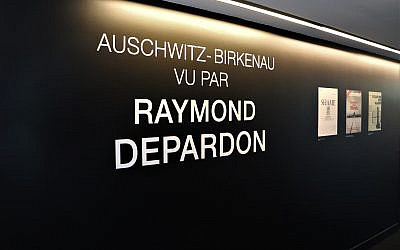
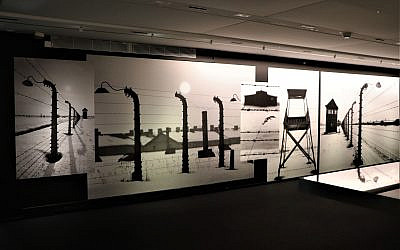
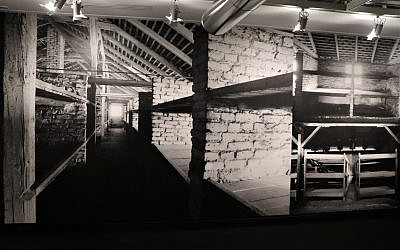
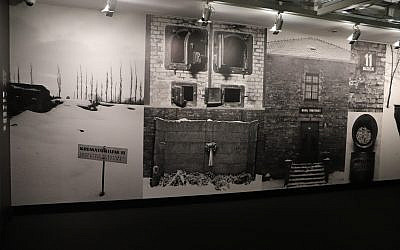
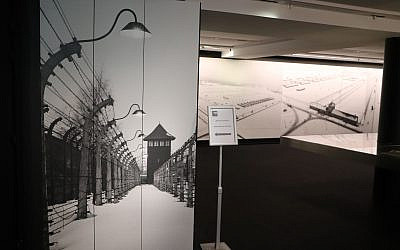
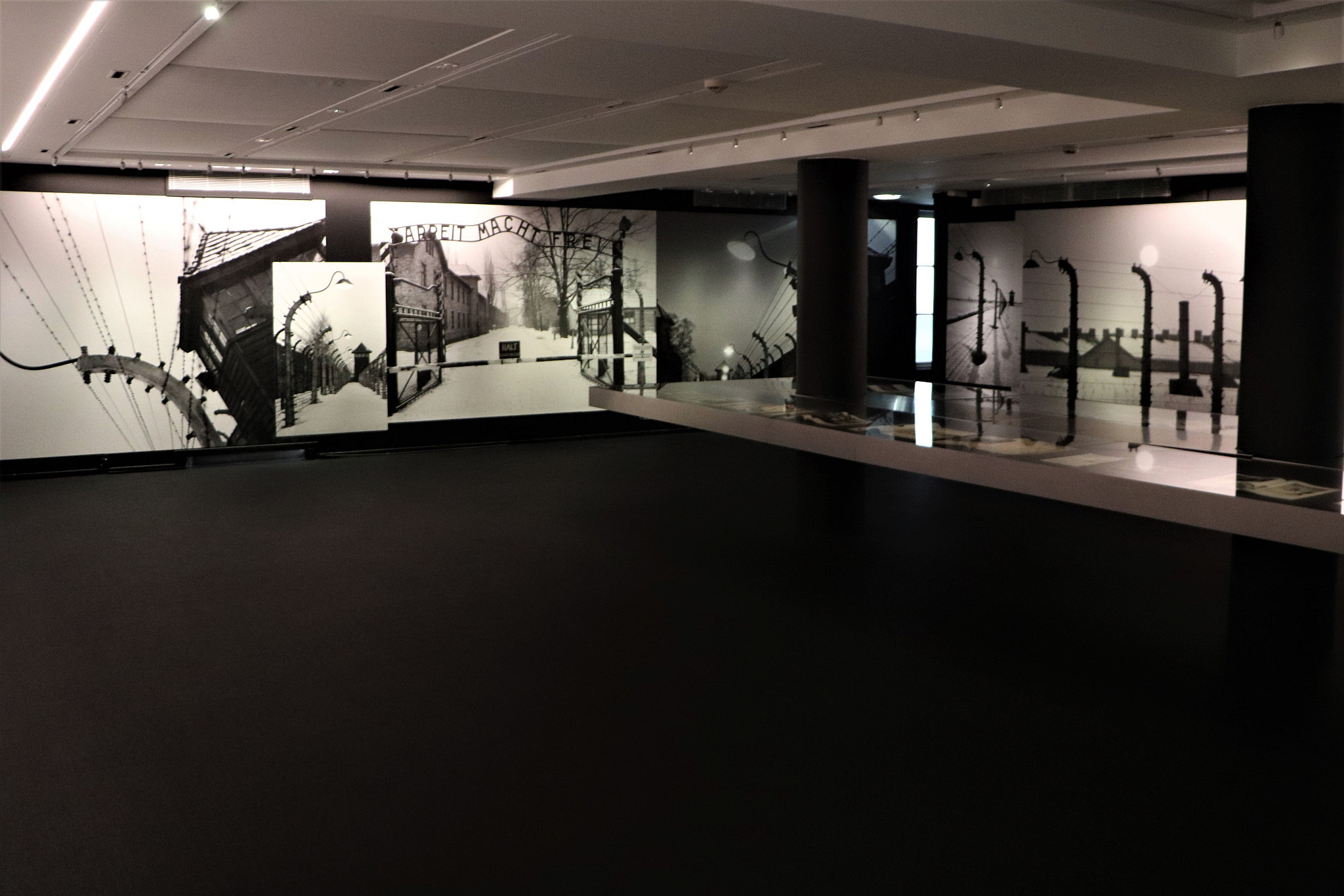
I then visited the Shoah Memorial in Paris to see “Auschwitz-Birkenau as seen by Raymond Depardon” on the third floor. The black-and-white images, shot in 1979, twenty-four years after the liberation of Auschwitz-Birkenau by the Red Army, offer a haunting visual expression of the extermination camp built to annihilate the Jewish people. The snow in the images evokes the harsh, cold conditions and the void left by absence, abandonment, and death. Here intent of a genocide received a clear visual.
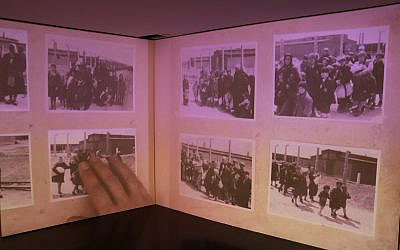
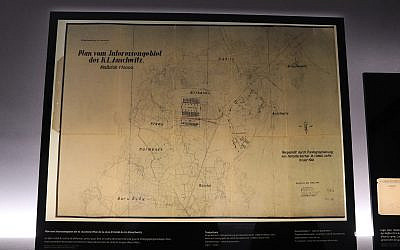
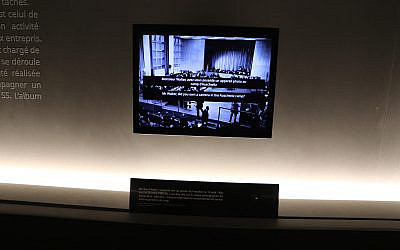
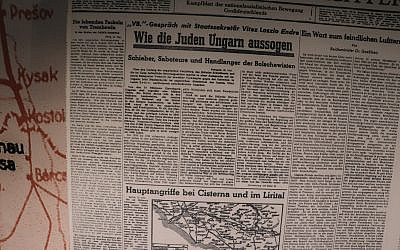
The first-floor exhibit reminded me again how systematically the genocide of the Jewish people was planned and carried out by the Nazis. There was the antisemitic newspaper Der Stürmer, created in 1923, Hitler’s worldview laid out in Mein Kampf written during his imprisonment and published about two years later, laws that disempowered and dehumanized Jewish people starting in 1933 right after Hitler became chancellor, then the Nuremberg laws in 1935, the planning of deportations at the Wannsee Conference in 1942, and the construction of extermination camps. The first floor did not show all of this directly. Instead, it presented photographs of deportations, maps including Auschwitz I and Auschwitz II, and a caricature of Ernst Hofmann, Hitler’s photographer. There were also newspaper clips with war propaganda. With this in mind, genocide looks very different to me. The intent during the Nazi regime was clear.
What I see is that Prime Minister Benjamin Netanyahu’s response in self-defense is extremely harsh, with many casualties and collapsed buildings. This is deeply sad and concerning, as are the lives of the hostages who truly suffer. My hope is that they all return home safely, that the children of Gaza receive the care they need for their injuries and trauma, that Israel continues to treat prisoners according to international law so there can be no accusations of mistreatment later, and that it provides humanitarian aid and food to Gazan civilians while the international community helps rebuild their lives. The rest I will leave to others.