


Zeitgeist at your service
Generational Napping Trends: Future Path to Enhanced Productivity
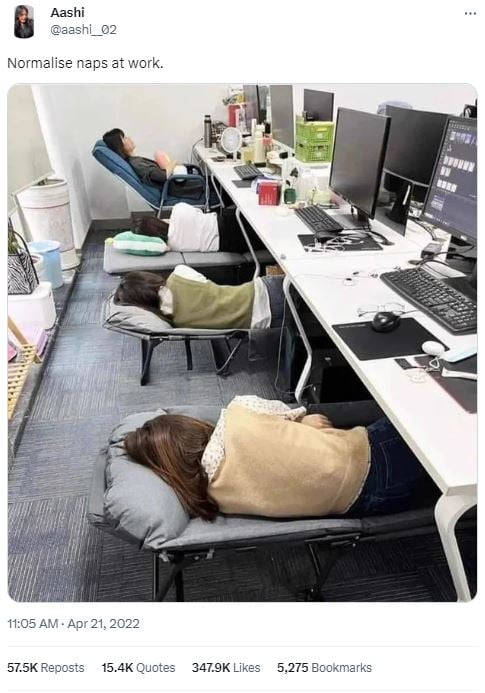
(Twitter screenshot; Used in accordance with Clause 27a of Copyright law)
Each generation’s perspective on napping is intrinsically linked to their perception of the labor market. Baby Boomers, forged in the crucible of the industrial revolution, perceive themselves as cogs in the relentless machine, where rest is a luxury machines can’t afford. Gen X embodies the “work hard, party harder” ethos and the hustle culture, often masking their need for a nap. Millennials, or Gen Y, once promised a formula of education, hard work, and homeownership, now find themselves disillusioned and burnt out, turning to napping as a remedy. Gen Z, witnessing the trials of millennials, opts for a more balanced life, prioritizing mental health amidst climate change anxieties, saying, “The hell with this world” and embracing napping.
Comedian Jake Lambert’s viral TikTok, with 1.3 million likes and countless confirming comments, perfectly encapsulates this generational shift.
Looking ahead, napping might become a sought-after employee benefit, supplanting the once-mocked Mediterranean Siesta.
The modern way of life exacerbates sleep deprivation, as the World Health Organization labels it an epidemic, alongside 2 additional invisible epidemics – burnout and the specter of COVID-19. Overbearing work hours, late nights, and endless commitments leave little room for proper rest.
In Japan, known for grueling work schedules, the term “karoshi,” or death from overwork, has gained notoriety. The case of Miwa Sado, who logged 159 overtime hours in one month before succumbing to heart failure in 2013, serves as a grim example. The Japanese Sleep Research Association reports that 71% of men sleep fewer than seven hours a night, often relying on alcohol to fall asleep. Japan has initiated efforts to encourage adequate sleep and rest during the day, with some companies incentivizing a good night’s sleep, even siestas, to boost productivity, often through sleep-monitoring apps. Some offices are adapting to accommodate power naps during lunch breaks, as a viral meme on Twitter, amassing 348k likes and 57.5k retweets, attests.
In this evolving landscape, the power of napping is emerging as a potent remedy for the afflictions of our time, promising a more balanced and productive future.