

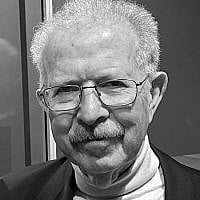
Genocide – 10 Questions. 10 Answers: Interview with Menachem Rosensaft
The following interview about genocide in its present-day context, conducted by journalist Heidi Kingstone, author of Genocide: Personal Stories, Big Questions (Yellow Press, London, 2024), first appeared in her Substack column and is published here with her permission.
Menachem Z. Rosensaft teaches the law of genocide at the law schools of Columbia and Cornell universities and serves as general counsel emeritus of the World Jewish Congress. He is the author of Burning Psalms: Confronting Adonai after Auschwitz (Ben Yehuda Press, 2025).
1. Genocide has become the issue of our time since Hamas’ genocidal attack on October 7, 2023, and Israel’s subsequent response, which some have characterised as genocidal. Why has this conflict galvanised people on both sides and worldwide in a way that many others haven’t?
Menachem Rosensaft: That is an excellent question because one of the things that I find noteworthy is that the same groups and people who are engaged in constant anti-Israel, pro-Palestinian demonstrations are nowhere to be found when it comes to Ukraine, or when it comes to the Uyghurs. They are nowhere to be found when it comes to what is happening with other atrocities that qualify much more clearly as genocide, or with other violations of human rights, or when it comes to the discrimination against women and against members of the LGBTQ community perpetrated by the Taliban in Afghanistan, in Pakistan, or Iran.
This is an explosive issue, but you do have to ask yourself, why it is that the human rights-oriented groups that will support women against all forms of discrimination and violence have been amazingly silent regarding October 7th and the rapes and violations perpetrated by Hamas against Jewish women to the extent of denying that they happened. You have to ask yourself whether the various LGBTQ groups that are demonstrating against Israel for Palestinian rights shouldn’t think a little bit deeper as to what it is that Hamas or Iran are doing concerning their counterparts.
This issue has become a flash point. The anti-Israel trend on university campuses has been there for a long time before October 7th. The demonisation of Zionism has been part of a very, very deliberate playbook on the part of those wanting to delegitimise Israel and that has fed into what is today one of the most prevailing, perhaps in some places, the most prevailing, form of antisemitism, because it has morphed from being against Israel to being against the existence of Israel.
It’s no longer just the occupation of territories, but the very fact that Israel exists, that has become the flashpoint. Whether it’s conscious or not, phrases like ‘globalise the Intifada’ and ‘from the river to the sea, Palestine shall be free’ have become antisemitic, anti-Jewish slogans. It’s not just criticism of Israel; anyone who supports Israel, and who is Jewish, is lumped together into the Israeli side of the equation and becomes the target of vicious and often violent attacks.
That’s unacceptable, but that’s where we are today. You don’t get a nuanced view from much of the pro-Palestinian, anti-Israel side of the equation. If you did, or when you do, then there is absolutely the possibility of dialogue. Still, you need that as a starting point.
At Cornell earlier this year, an event took place featuring former Israeli Foreign Minister Tzipi Livni, former U.S. Ambassador to Israel Dan Shapiro, and former Palestinian Authority Prime Minister Salam Fayyad, who engaged in a far-reaching discussion. That worked because everyone was willing to see the perspective of the other side. They were willing to understand that this was not a one-sided issue, but that a compromise solution would eventually be necessary.
The leaders of the anti-Israel demonstrations must be made to recognise that Israel does exist and will continue to exist and has the right to exist, that 7 million Jews living in Israel cannot be eliminated from the equation, and that wanting to eliminate them is, in fact, as much a genocidal concept as wanting to remove the Palestinian from Gaza or the West Bank.
That’s the standoff. Unless and until we get Israeli leaders who are willing to talk to Palestinians and Palestinian leaders who are prepared to speak with Israeli leaders, and jointly say, ‘how do we move forward?’, the rhetoric that we hear is not only unhelpful, but very much counterproductive,
At the same time, I want to emphasise that the often-heard charge that Israel is committing genocide in Gaza is, in my considered opinion, unfounded. Genocide requires the intent to destroy, in whole or in part, a national, ethnic, racial or religious group, as such. Israel’s motivation in waging war against Hamas in Gaza after October 7th was to remove the terrorist Hamas organisation as an existential threat to Israel’s existence. The contemplation is that after this war is over, there will still be around two million Palestinians living in Gaza. That undercuts the charge of genocide. I am not saying that this war has always been waged appropriately, or that it has been waged proportionally. But those are separate questions from whether a genocide is being committed.
2. We have bystanders, perpetrators, and collaborators. Are bystanders guilty of crimes?
Menachem Rosensaft: My father, a survivor of the Holocaust, was asked if he still believed in God. He said, ‘Look, I’m not holding the Master of the Universe responsible for Auschwitz, but on the other hand, I’m not giving him any medals for it either’.
That’s where we are with a lot of bystanders, people’s altruism is not something that can be mandated, but it does not make people heroes, either.
Do you then ask, ‘What does the bystander do?’ If the bystander looks away, it’s one thing. The average person in New York, LA or Chicago, who does not give a second thought to the Uyghurs in China, is not by definition, an evil person, but if the bystander profiteers from it, if the bystander then assists in preventing aid from going through, if the bystander then decides to vote for (far right Israeli Minister of national Security) Itamar Ben-Gvir or (far right Israeli Minister of Finance) Bezalel Smotrich, they have now moved into the active part of the equation. And this is not only on the Israeli side.
Every person, every Palestinian in Gaza City, who cheered when the bloodied hostages were dragged into Gaza City on October 7th ceased to be a bystander and became at least an aider and abetter, if not an accomplice. Every settler or every Israeli who condones the violence perpetrated by Jewish settlers against Palestinians on the West Bank is getting dangerously close to being more than just a bystander.
3 In the 20th and 21st centuries, we have had numerous genocides. What have we learned? Why can’t we stop the hate and the butchery? Why have genocide education, media coverage, museums, memorials, libraries of books, movies and TV series not made a difference?
Menachem Rosensaft: The problem is human nature. The problem is that we sometimes think, or people sometimes think, that genocide or crimes against humanity somehow are a modern-day invention, or that the Nazis dreamed it all up. They didn’t.
The Ottoman troops didn’t dream it up when they butchered the Armenians in the 1915 Armenian Genocide, either. You can go back to ethnic and religious butchery over the millennia, going back to Carthage and beyond. So, the idea that all of a sudden, the human family should come together and sing Kumbaya because of the passage or the adoption of the Genocide Convention, or the fact that we have Holocaust museums, is illusory.
Has it helped? Yes. We have learned how to punish perpetrators of genocide and crimes against humanity, but we have not learned how to prevent such atrocities. There needs to be a will on the part of the international community to stop such outrages, and that’s not present.
Until you have people with the will to do so and are prepared to commit to it, until you have some willingness on the part of the international community as a whole to take action, rather than simply engaging in rhetoric, very little will change.
4 All suffering is the same, and there is no hierarchy. The Nazis perpetrated what is still considered the worst crimes against humanity the world has ever seen, hence our continuing fascination with it despite the decades that have passed. How do victims become perpetrators?
Menachem Rosensaft: The short answer is that they don’t. Victims are victims, and perpetrators are perpetrators. The first corollary to this basic premise, of course, is that whether to become a perpetrator is a matter of an individual or collective choice. At the same time, victimisation or victimhood is imposed by the perpetrators on their individual or collective victims who, in contrast to the perpetrators, are not given and do not have a choice in the matter.
The second corollary is that neither being a perpetrator nor being a victim is transferable. The post-World War II generations of Germans did not perpetrate the Holocaust or are responsible for the perpetration of that genocide any more than Jews born after World War II have the right to wrap themselves in the mantle of Holocaust victimhood.
The Serbs who were slaughtered during World War II by the Nazi-like and Nazi-inspired Ustaša regime in the Hitler-allied Independent State of Croatia were victims of genocide. But these Serbs were not the same individuals-or the same collective-as the Bosnian Serbs who perpetrated a genocide against Bosnian Muslims in Srebrenica in eastern Bosnia. These were two separate and unrelated atrocities, and it is unseemly in the extreme to try to morph the victims of the first and the perpetrators of the second into one grouping to make simplistic but wholly specious judgments.
The same holds true concerning the Israeli Palestinian conflicts. The Hamas terrorists who perpetrated the brutal murders, rapes, and other savageries against Israeli Jews on the Israeli side of the Israel-Gaza border on October 7, 2023 cannot and must not be lumped together with Palestinian civilians attempting to live peacefully on the West Bank any more than the Israeli victims of the October 7 horrors can be lumped together with the Israeli Jewish settlers on the West bank who engage in criminal acts of violence against Palestinian civilians there.
5. How and why has the term genocide been weaponised?
Menachem Rosensaft: The fact of the matter is that once you say that genocide is the worst crime possible, anything less becomes less severe, and that simply is not the case.
There is absolutely no moral difference between crimes against humanity and genocide. I have never heard of a single instance of a victim saying, ‘Oh, it’s not genocide. It’s just a crime against humanity. I feel so much better.’
Let’s understand that the term is being used – and abused – today because it serves as a flashpoint, eliciting an often subliminal reaction. It works well on TikTok, effectively getting people in a crowd to scream a slogan. However, people usually fail to understand or want to understand that genocide is a narrowly defined term under international law. They don’t understand – or don’t want to understand – the relevant nuance.
And to that extent, I’m not all that certain that Lemkin did everybody a favour by promoting the narrow concept of genocide at the expense of the broader category of crimes against humanity, with genocide as a subset. But for Lemkin’s single-minded insistence on focusing exclusively on genocide, I think that we could have gotten, in 1948, a convention for the prevention and punishment of crimes against humanity, as defined by or expanded on the Nuremberg model. We might have been in a much better position today if that had been the case.
6. I wanted to call my book ‘Fear, Greed and Propaganda’, as those seemed to be the key motivators driving genocide. What links all genocides in your opinion? How are all genocides different but the same?
Menachem Rosensaft: From the victim’s perspective, they are all the same. And the thing that we often forget is the victim. We are forgetting those who are being killed, being slaughtered. It doesn’t matter if it’s Srebrenica, Auschwitz, or Rwanda, concerning the perpetrators.
Let me refer you to the opening line of Tolstoy’s Anna Karenina: “Happy families are all alike; each unhappy family is unhappy in its own way.” All genocides are unique in their way, and generalising and lumping them all together, other than with respect to the ultimate goal of the perpetrator, is a fundamental mistake because it won’t lead you to the cause of a genocide or a crime against humanity. Putin may or may not be perpetrating genocide in Ukraine. Still, Putin’s motivation differs from that of the government in Myanmar. It is not the same as what motivated Pol Pot and the Khmer Rouge in Cambodia. It is not the same as what motivates Hamas.
The attempt to find an easy common denominator is a mistake. As a historian and as a lawyer, one needs to be able to make the distinctions and then consider and address the problem that you have and not try to concoct a problem and fit the situation into the problem that you have devised.
7. What are the conditions in which genocides become possible?
Menachem Rosensaft: Genocide becomes possible when any group of people view another group of people as less human than themselves. Period, paragraph. I’m not saying that those doing so are contemplating committing genocide. Still, the moment one group decides that another group does not deserve the same rights or the same dignity, the potential is there. Ever-increasing discrimination and oppression left unchecked can lead to violence and potentially to crimes against humanity or even genocide.
8 Ben Ferencz was the youngest prosecutor at the Nuremberg Einsatzgruppen trials. He was 27 when he stood on the podium to give his opening address. He died a few years ago at the age of 103. I interviewed him (at your suggestion) when he was 101 and found him remarkable and brilliant. Talking to him was a true link to history. Despite, as he said, ‘peering into hell’, he never gave up hope that the world was inching forward to a better place. Some called him naive, others believed that he was an inspiration. The world is in a grim and dangerous place, sliding towards authoritarianism. What can or should we do?
Menachem Rosensaft: Keep emulating Ben Ferencz and keep fighting for what you believe in. Never give up your principles. Principles are there for a reason. We need to have them. We need to be aware of them. And we need to live by them.
We need to know when they are being violated, and we need to be able and willing to defend them. We cannot do so if the equation is always one of pragmatism and utilitarianism. We need the dissents of the minority on the present-day U.S. Supreme Court to remind us of what should have been a correct outcome.
That’s just where we are. We need personalities like Ben Ferencz, and others like him, and say, ‘Yes, that’s who we would like to be, that’s whom we would like to emulate.’
In the same vein, I greatly admired the late Pope Francis, as he set the standard in many ways for spiritual leadership.
9 How and why did you get involved in your field?
Menachem Rosensaft: My parents were genocide survivors. Every other member of their respective families, except for three of my father’s cousins, did not survive the Holocaust. Among the hundreds of thousands of Jews murdered at Auschwitz-Birkenau were my grandparents and my brother, my mother’s five-and-a-half-year-old son. I got involved because this is a part of my identity. I was born in the Displaced Persons camp of Bergen-Belsen after the war. I was aware of how defiant leadership can change circumstances and how altruism can make a difference. My mother, even though she had lost everyone and everything, including her parents, her first husband, and her child, devoted herself at Auschwitz, at Birkenau and Bergen Belsen to saving the lives of others.
I grew up knowing the existence and the meaning of both absolute good and absolute evil.
10. What key lessons have you learned?
Menachem Rosensaft: First, sadly, as an international community, we haven’t learned very much. In many ways, we are devolving rather than evolving.
I’ve learned that people can be very selective in espousing principles when it’s convenient and discarding them when they become inconvenient.
The long-time president of the World Jewish Congress, Nahum Goldmann, a close friend of my father’s, was often critical of the government of Israel’s positions and policies. He once wrote to me, ‘When you are in the right, you can be alone against everyone else’. And that’s basically what I want to convey to my students and my grandchildren: the one thing you have is your principles. If you stand by them, even if they are unpopular, even if you find yourself in a minority, you can sleep well at night. The analogue to this is that living and acting in accordance with one’s principles is not always simple or easy. Being in our world today is a complicated enterprise. Still, the trick is to balance different principles and remain true to your beliefs.