

French-Israeli Artist and Jewish Advocate
Genocide as a Punchline: How Social Justice Made Space for Antisemitism
Credit: YiddishFeminist, Morgane Koresh
I watched a podcast episode last week in which people openly called for the genocide of Jews, and no one in the room flinched. In fact, they laughed.
It was the Fresh and Fit podcast, a show with over a million followers. Its panelists, smiling and relaxed, told the audience that “Hitler was right,” that “Jews deserved it,” that the Shoah was necessary, and that “getting rid of those motherf**kers” would “save the world.” They casually offered genocide as a “solution” while the hosts nodded along. Not one person pushed back.
They said it out loud because they know they can.
Because the ground has been prepared by years of social justice discourse that painted Jews as fundamentally harmful, oppressive, inhuman. Once that narrative is accepted and even cloaked in the language of justice, it becomes easy to justify our erasure. First symbolically. Then violently.
This is where we are now.
Click here to see a segment of this podcast
The Betrayal That Opened the Door
Five years ago, I co-founded a feminist collective in Israel called Hastickeriot. We collaborated with feminist movements across the West. Everyone knew we were based in Tel Aviv. It was never a problem—until October 7th.
After the massacre, the same voices that once shouted about rape culture and patriarchal violence went silent. At best, they ghosted us. At worst, they said the slaughter was justified.
Jewish women were raped, mutilated, burned alive, and Western feminists said nothing. That silence wasn’t neutral. It was betrayal.
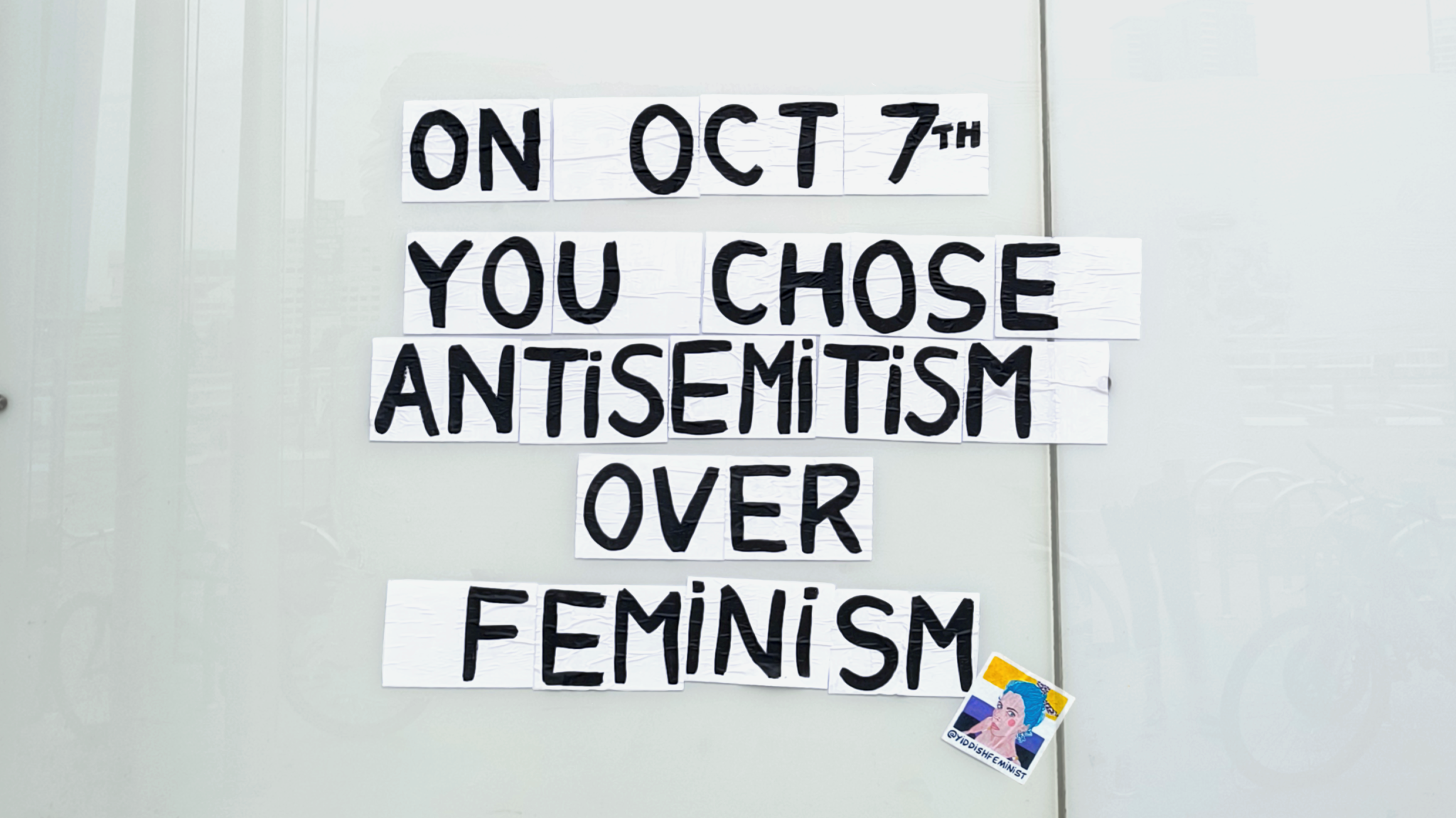
Most feminist movements chose antisemitism over feminism that day. And in doing so, they didn’t just abandon Jewish women—they made space for the idea that we deserved it.
That silence was the real turning point. It gave moral permission. It created legitimacy. It said: violence against Jews is acceptable if it can be framed as resistance.
From Silence to Bloodlust
What happened next was a chain reaction.
Israeli civilians were murdered and called “colonizers.” Jews mourning their dead were accused of “weaponizing trauma.” Jewish students were locked in libraries. Jewish businesses vandalized. Synagogues set on fire.
Every time we cried out, we were told to be quiet. Every conversation about Israel’s right to exist, let alone defend itself, was met with outrage. Every Jewish claim to indigeneity was mocked. Every expression of grief was seen as manipulative. Every act of self-defense called aggression.
We were told: there must be a diplomatic solution. Violence is never justified.
But that only applies to us.
No one demands nonviolence from Hamas. No one suggests they “try diplomacy.” Apparently, murdering Jews is the one form of political violence that remains sacred.
Jewishness Is Once Again Redefined to Exclude and Blame
The bad guys in today’s narrative are white. So Jews, suddenly and conveniently, have been rebranded as white. Not just white, but the whitest—the stand-ins for Western colonialism, for capitalism, for empire.
Never mind that no Jew is white. Whiteness is not about skin tone; it is a structure of power we were never part of. Jews were not white in Christian Europe, just like we were not Arabs under Muslim rule. We were Jews. In every land where we were told we didn’t belong. And we were persecuted for it.
The West promotes “land back” campaigns and romanticizes indigeneity, but somehow, the only indigenous people who must not return to their land are the Jews. The only nation whose sovereignty must be questioned is the Jewish one.
From Insult to Aspiration
First, Israelis were called Nazis—to mock our history and weaponize our trauma.
Then, the language shifted: maybe the Nazis were right. Maybe Hitler “had to do it.” Maybe exterminating Jews was necessary to “save civilization.”
This was said. On a public platform. Between bursts of laughter. It is no longer shameful to say these things. They are now “opinions.”
When Jewish existence is constantly framed as dangerous, when the Shoah and Hitler are glorified, people begin to see our eradication as justice. When that idea is normalized, it becomes contagious. And when it spreads, it kills.
A System Built to Exclude Us
In today’s West, social justice movements call for dignity and equality—for everyone except Jews.
Anti-racist activists treat othering Jews as progress. Human rights groups go silent when Jewish women are raped, when children are murdered. Progressive coalitions demand every voice be heard—except the Jewish one.
The moral clarity they demand for everyone else collapses when we speak.
Our pain is offensive. Our grief is manipulative. Our survival is violence. Even asking to be heard is framed as aggression.
This isn’t just hypocrisy. It’s an intentional boundary—one that excludes Jews from the circle of care and concern.
Selective Outrage Is the Opposite of Social Justice
When Jews are hated, we’re told to reflect and take accountability.
When Jews are murdered, we’re told not to overreact.
And when we speak, we’re told to shut up.
We are done with that.
If your values don’t include Jews, they’re not values. They’re just politics dressed in principle.
If justice excludes Jews, it’s not justice.
If you only care about some people’s pain, it’s not solidarity.
And this isn’t just offensive. It’s dangerous.
Every act of antisemitism—whether Jewish children are forcibly removed from a plane, insulted in a museum in Melbourne, an Israeli cellist is kicked out of a Vienna restaurant, American Jews are set on fire in Boulder, or Israeli diplomats are murdered—becomes encouragement.
And when antisemitism is given cultural legitimacy, it doesn’t stay cultural. It becomes violent. It tells others: this is allowed.
So let’s be clear: Jews are not asking for special treatment. Only for the same outrage. The same empathy. The same humanity.
But whether you offer it or not, and no matter how loud your hate gets—we are not going anywhere.