
Germany’s Staatsräson: Doctrine vs. Reality
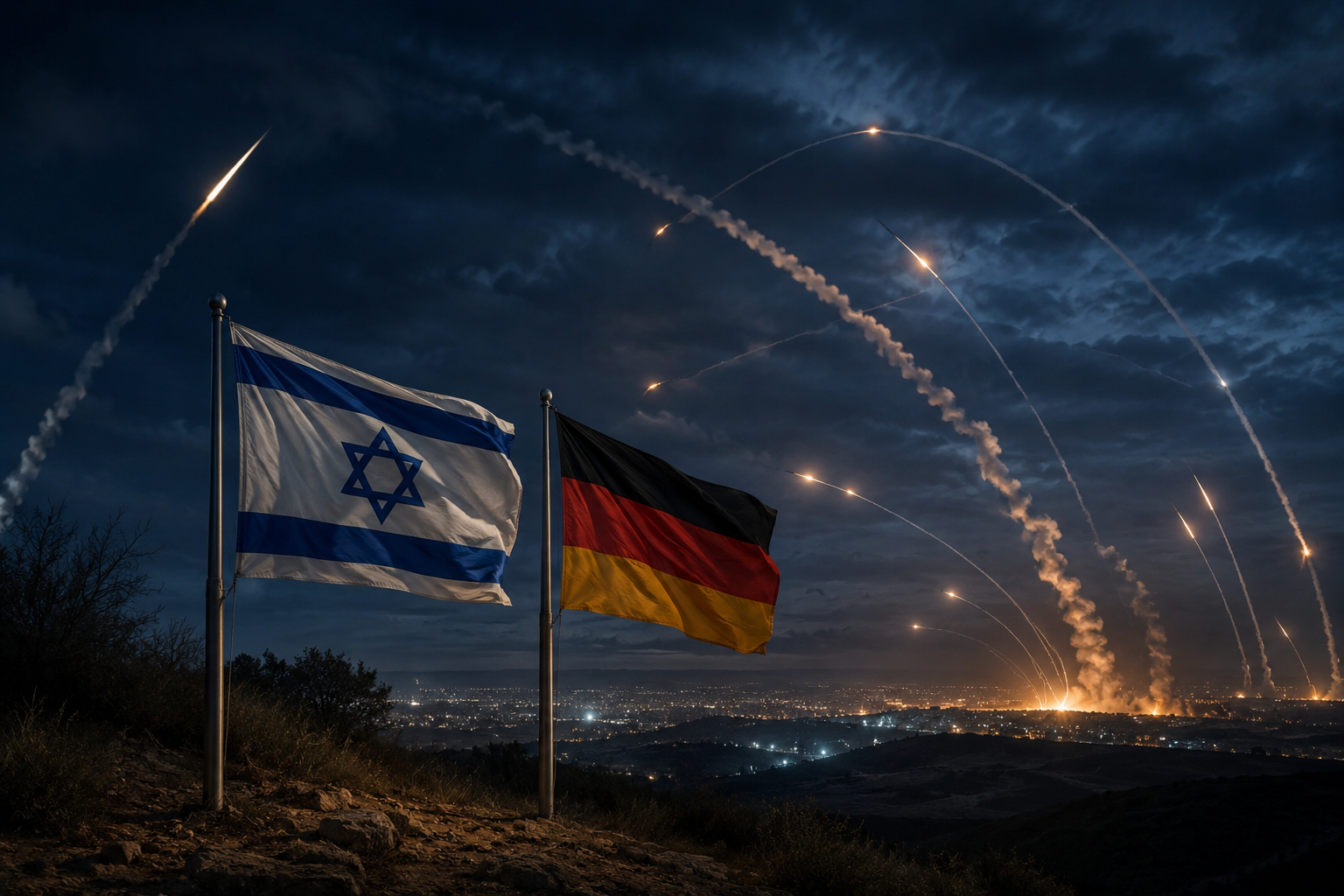
For nearly two decades, a phrase has defined the relationship between Germany and Israel more than any treaty or diplomatic declaration. The phrase, made famous by Chancellor Angela Merkel before the Knesset in 2008: “Israel’s national security is German Staatsräson.”
The German word Staatsräson [ˈʃtaːts.ʁɛ.zɔ̃] has no exact English equivalent. It is often translated as “reason of state” or “national raison d’état,” referring to fundamental interests, priorities, and guiding principles.
Yet Staatsräson is not a constitutional doctrine, nor is it codified in legislation. It describes a political commitment so central to a nation’s self-understanding that it shapes government policy across party lines, even in the absence of a formal legal obligation. Merkel declared that Germany’s historical responsibility for the Holocaust made Israel’s security “non-negotiable.”
History puts slogans to the test.
The Hamas massacre shattered many illusions in Europe. Germans witnessed the largest mass murder of Jews since the Holocaust, while celebrations erupted in Arab neighborhoods of Berlin and other major German cities only hours later. The images were devastating. Eighty years after the collapse of the Nazi terror regime, crowds celebrated the mass murder of Jews in the streets of the German capital. In that moment, Germany’s postwar promise of “Never Again” appeared less like a settled achievement than a challenge it had failed to meet. The events of October 7 and their aftermath exposed the extent to which decades of failed migration and integration policy had left the country ill-prepared to confront imported forms of antisemitism.
But how did it affect the German Staatsräson of Israel’s national security?
Chancellor Olaf Scholz declared in October 2023 that Germany stands “firmly and unwaveringly” beside Israel. German leaders repeated that Israel’s security remained Staatsräson. Berlin increased military cooperation, defended Israel diplomatically, and rejected accusations equating Israel’s self-defense with genocide. Germany even intervened politically in support of Israel at the International Court of Justice.
Yet the wars that followed – in Gaza, against Hezbollah, and later the direct confrontations with Iran in June 2025 and March 2026 – exposed the ambiguities hidden inside the concept of Staatsräson.
What exactly does the phrase mean in practice?
Does it mean Germany supports Israel’s existence? Almost all mainstream German parties agree on that. Does it mean Germany supports every Israeli government policy? Increasingly, Berlin says no. Does it imply military obligations? Strategic alignment? Diplomatic protection? Limits on criticism? Here the consensus begins to fracture.
The problem is that Staatsräson was always morally powerful but strategically vague. It emerged in a relatively stable era when Germany could combine historical responsibility with comfortable distance from Middle Eastern realities. After October 7, that distance disappeared.
Germany suddenly faced difficult questions. Could it support Israel’s right to eliminate Hamas while criticizing humanitarian conditions in Gaza? Could it defend Israel against Iranian aggression while opposing settlement expansion in the West Bank? Could it maintain Holocaust-based solidarity while large parts of German public opinion became increasingly critical of Israel’s military engagements?
Germany’s Staatsräson will face an unavoidable transformation. The generation shaped directly by Holocaust memory is gradually disappearing. Future German support for Israel cannot rely exclusively on inherited guilt. It will need strategic clarity, moral consistency, and public legitimacy.
The true test of Staatsräson was never whether Germany would support Israel in moments of international sympathy. The real test is whether Germany maintains that commitment when doing so becomes morally contested, politically costly, and internationally unpopular.
In light of Iran’s persistent pursuit of nuclear weapons capabilities and the openly declared ambition of its Islamist regime to eradicate the Jewish state, a question emerges that no German chancellor has ever wanted to answer: What is the practical meaning of German Staatsräson if the very existence of Israel could one day be threatened by a nuclear-armed adversary?
The concept is easy to invoke in speeches. German politicians have become highly proficient at reaffirming their country’s special responsibility toward Israel, often with considerable pathos. Yet words cost little. The moment of truth arrives when Staatsräson demands more than declarations, resolutions, and commemorative ceremonies.
If Israel’s security is truly part of Germany’s reason of state, then the question cannot end with what Germany is willing to say. It must extend to what Germany would be willing to do. Would Berlin merely express solidarity if Israel faced an existential threat, or would it be prepared to bear real costs in its defense? Ultimately, would Germany deploy armed forces and go to war against the Islamic Republic of Iran to protect the Jewish state?
That is the uncomfortable question at the heart of Staatsräson, one that now looms over German leadership more than ever. And it is precisely the question that German leaders have spent decades avoiding.
Given the situation in the Middle East, Berlin should have a clear answer ready for the moment of truth – and the resolve to act on it.