Israel-based writer
Featured Post
Glilot, 47 years later
The unheeded warnings of the 1978 Coastal Road Massacre still haunt me after another generation of attacks on civilians
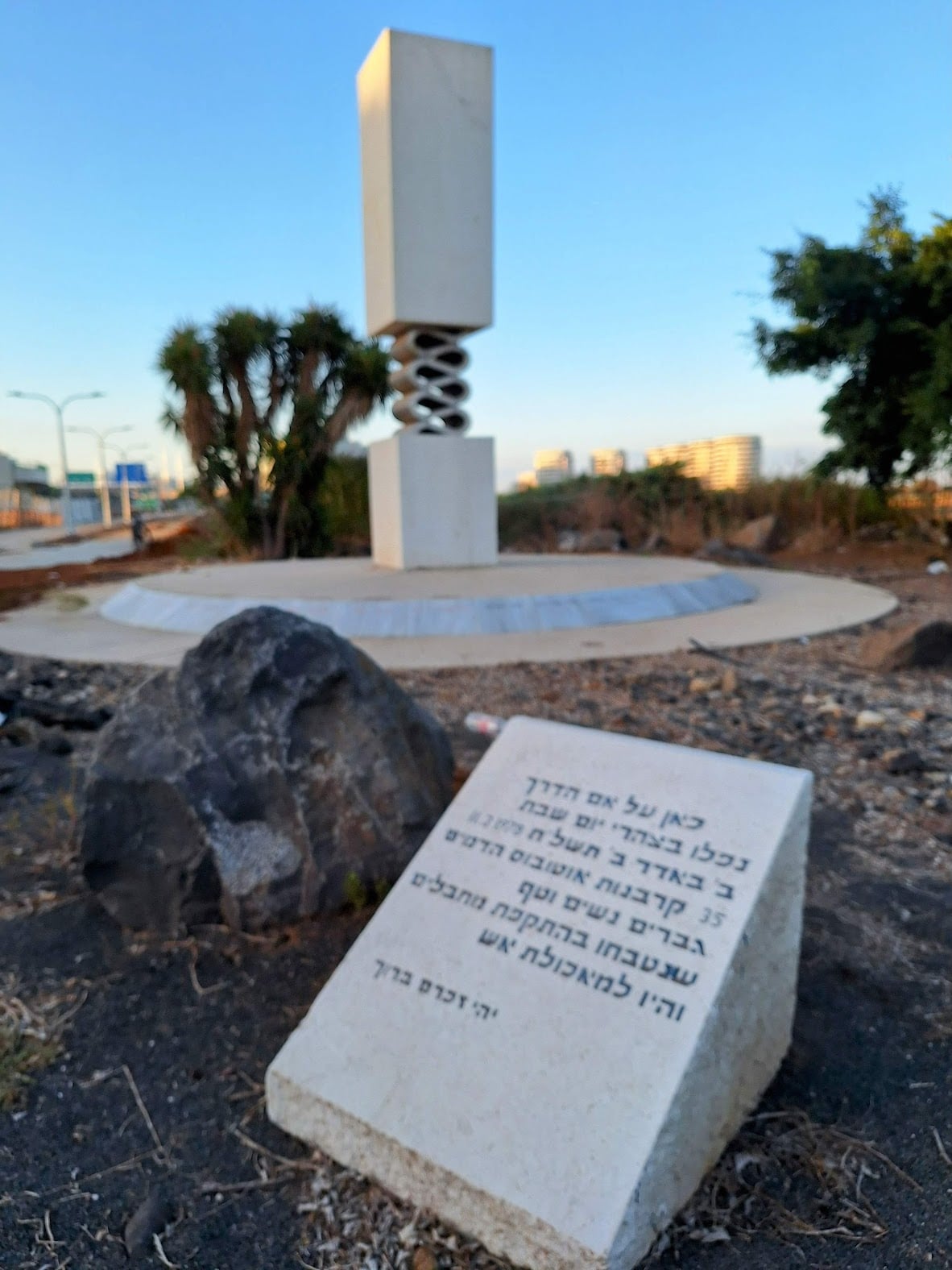
Memorial to the 38 Israeli civilian victims of the 1978 PLO Coastal Road Massacre - all photos courtesy of the author
The memorial
I live in Herzliya and on occasion ride my bike to Tel Aviv along the beautiful new bike path snaking along the coast. For a while, I kept noticing something near the Glilot interchange — a sculpture, set back from the road, easy for nearby drivers whizzing by to miss. I passed it on my bicycle several times before I finally stopped.
When I walked up to it, I realized it was a memorial. The stone with the Hebrew inscription at the base described what I was looking at: the site where 38 Israeli civilians were murdered on March 11, 1978, in what became known as the Coastal Road Massacre. I stood there for a moment. I had been riding by this sculpture for months without realizing what I was passing.

Then I looked across Highway 2 at Big Fashion Glilot — the brand-new world-class open-air mall on the other side of the road, café umbrellas, Shabbat crowds moving between storefronts of the world’s top consumer brands. Forty-seven years have passed. I was 21 years old when the events of 1978 that are now memorialized by this modern sculpture took place, and close enough to have heard the warning siren.
Ma’agan Michael, March 1978
That spring semester of 1978, I was completing the junior year abroad program at Hebrew University in Jerusalem. My girlfriend Shelly and I had taken a bus north to visit friends from Colorado volunteering at Kibbutz Ma’agan Michael, right on the Mediterranean coast south of Haifa. Wendy Loup was there, her boyfriend Lenny Pepper, and Lenny’s younger brother Scott. A weekend at a coastal kibbutz, catching up with old friends, felt like a good break from Jerusalem academia.
Ma’agan Michael is right on the water, with a nature reserve along the shoreline and a beach. We had been on that beach that Saturday morning in March, not many hours before everything changed.
On Saturday afternoon, March 11, 1978, a siren went off. Word came in pieces: something was happening near the beach, an infiltration. We were told to go to the bomb shelter, and we did — all five of us with kibbutz members and other guests, in a low-lit concrete room, waiting for information that didn’t come quickly. These were the days before cell phones, the internet, social media, or WhatsApp. We didn’t fully understand what had happened. Not until much later that night.
What happened that day
The picture came together in the hours and days after, from radio reports, front-page newspaper accounts, and conversations with kibbutz members who were shaken in a way I had never experienced before.
On the night of March 11, eleven armed PLO terrorists left Lebanon by boat and came ashore in rubber dinghies on the Israeli coastline — on the beach at the Ma’agan Michael nature reserve. The beach where we had relaxed just hours before.
The first person they encountered was an American nature photographer working in the reserve. They killed her and kept moving. The group reached Highway 2, stopped a bus at gunpoint, took passengers hostage, and drove south toward Tel Aviv, firing at other vehicles along the way. Israeli police and special anti-terrorist units determined to stop the hijacked bus before it reached Tel Aviv and chose the Glilot junction. In the attack, terrorists exploded their bombs, and the fully loaded bus caught fire. Thirty-eight civilians were killed. Dozens more were wounded. It was the deadliest terrorist attack in Israel’s history up to that point.
None of it was improvised. The night landing, the route through the reserve, the bus hijacking — it was all planned in advance. The goal was to kill as many unarmed Israeli civilians as possible. The stone inscription at the memorial says it directly, in Hebrew: “Here on the road we were murdered on the 2nd of Adar. The victims of the bloody bus attack were women and children massacred by terrorists. All were consumed by the fire. May their memory be blessed.”
I read every name and age carved into the base. Thirty-Eighty names.
What stayed with me
The thing that has stayed with me the longest is the realization of how close we came to the terrorists: we had been lounging on that beach that same morning. The Mediterranean I was looking at that weekend was the one they crossed in the dark. When you have actually been in a place and then learn what happened there hours later, it does not remain abstract. You understand it differently than you would from a news report read from somewhere safe.
What has never fully left me is not the fear of sitting in that shelter. It is what I understood in the days after. Eleven men fueled by Palestinian grievances had crossed the Mediterranean specifically to kill as many Israeli civilians as they could, and they expected to die doing it. The combination — suicidal intent, deliberate targeting of women and children, meticulous planning — was not something I had ever previously faced or even considered. There were people who hated us enough to do this. Who planned and trained in the belief they were justified. The atmosphere in Israel after the attack was one of stunned grief and anger.
That is something I will never forget.
I have been a dual citizen for some seven years now, an oleh who spent most of his adult life in Colorado, Washington DC and Florida with occasional visits to Israel before making the move official. The year at Hebrew University was one of the early milestones on that path. That weekend at Ma’agan Michael was another.
And then came the awful events of October 7, 2023. Followed by the same stunned grief and anger that continues to this day.
The warning
I don’t wish to conflate the differences between 1978 and 2023. Different attacks, different contexts, different specifics. But standing at this memorial, one question kept coming back to me: what did we do with the warning? The Coastal Road Massacre was not ambiguous. It showed clearly that a certain kind of Palestinian leadership was willing to exploit and manipulate young Palestinians to carry out merciless attacks on Israeli civilians, including women and children. Israel knew. The world knew. And yet here we are, with another memorial, another list of names, because another generation carried out the same deliberate mass murder of civilians.
I am not saying peace was never possible, or that all Palestinians share the ideology of those who landed on that beach. I do not ascribe to those beliefs. The Palestinians of Hamas were fueled by a religious fanaticism rooted in a perversion of Islam wherein God blesses those who murder Jews. But the warning was real, and it was not acted on decisively enough — not by Israeli governments over five decades, not by the international community, and not by Palestinian leadership that had chances to make a different choice for its own people. More should have been done. By a lot of people. And it was not.
Across Highway 2
While I was standing at the memorial, I could see the mall across the road. Families with babies in strollers. Teenagers. Couples at café tables. Normal life continuing — which is not, in itself, a bad thing. The terrorists who came ashore on that beach wanted to make normal life impossible. It is not.
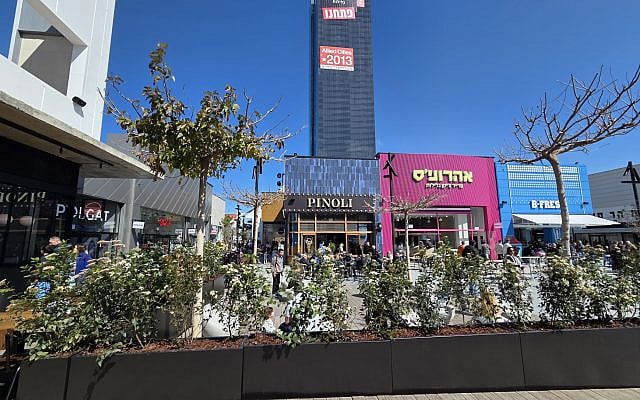 But I find myself wondering how many of those shoppers think about the devastatingly sad Glilot junction memorial just across the highway. I recall the inscription: “Here on the road we were murdered.” The Hebrew is communal and present-tense and does not let you look away.
Fifty years from now
In the years to come, memorials will be constructed in the Gaza envelope, and extremely sad and devastating ceremonies will take place there, if they have not already begun. Fifty years from now, Israelis will stand at them and ask whether enough was done to confront the grievances that facilitate and attract young people to religious and political fanaticism. One that offers justification for the deliberate murder of civilians in the eyes of those who carry it out. They will ask whether those in positions to act did everything possible, or whether they allowed the same reality to continue for another 50 years.
I hope they will have a better answer than we do. Standing at Glilot, 47 years later, I could not tell myself that with confidence.
Related Topics
Related Posts