
Global hate isn’t packing Jewish suitcases
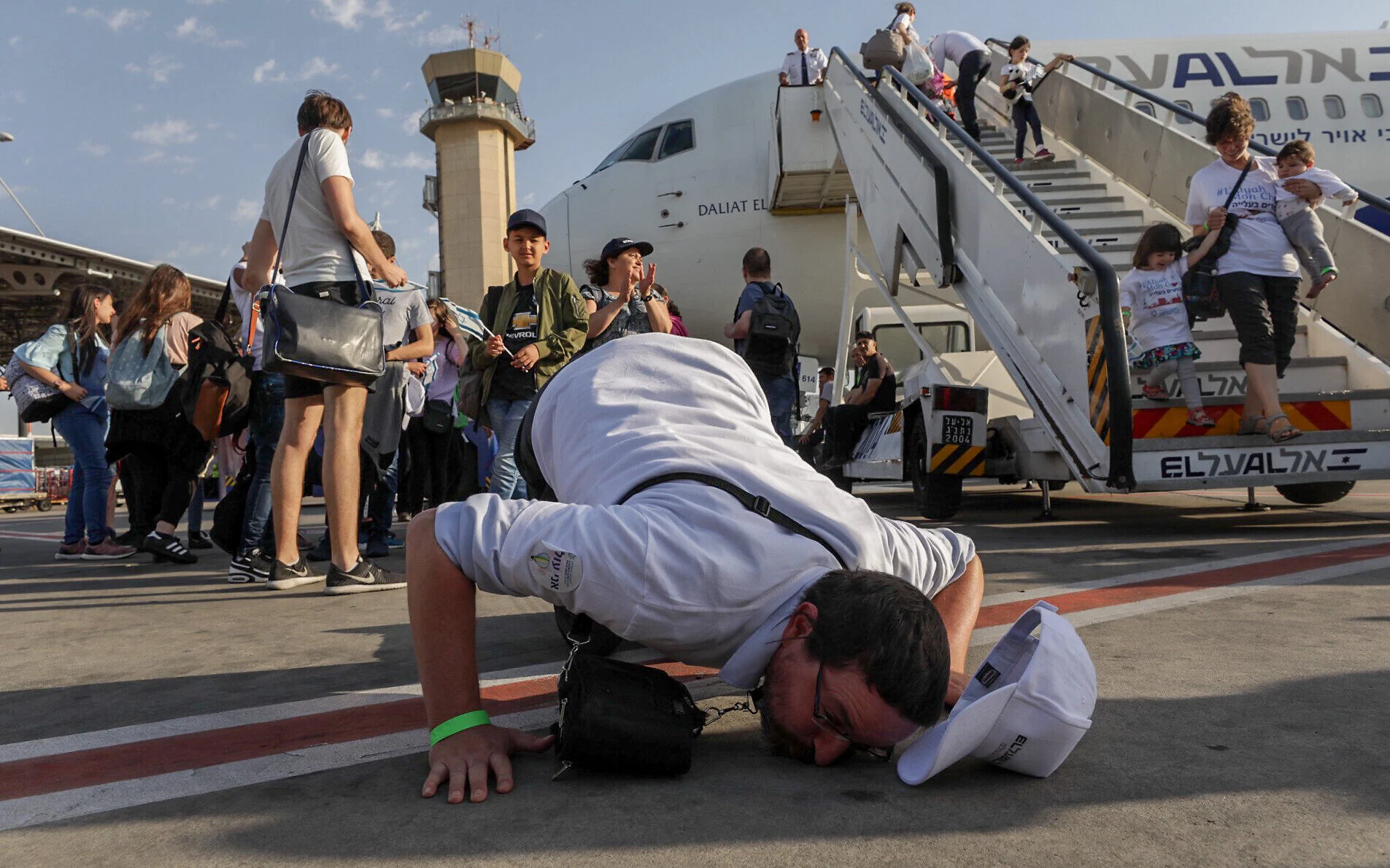
For decades, the story of aliyah was defined by the “Iron Door.” Immigrating to Israel was a saga of breaking through: the British blockades of the 1940s, the clandestine flights from Yemen, the grueling decade-long wait of the Soviet Refuseniks, and the harrowing trek of Ethiopian Jews through the Sudanese desert. Historically, the barrier to making Israel home was a physical or legal wall.
Today, in 2026, we face a haunting paradox. The iron door has been replaced by an open gate, yet the Jewish world stands paralyzed on the threshold.
The great sisconnect
We are living through a period of global cognitive dissonance. In 2024, over 31,000 Jews made aliyah; as we await the final data for 2025, it is becoming clear that the needle has barely moved.
While tens of thousands making aliyah sounds significant, it is, in reality, abysmal when measured against the scale of the moment. There are over 8 million Jews still living in the Diaspora, and for the vast majority, the “urge” to move hasn’t materialized.
This stagnation is occurring during a fever pitch of global antisemitism. We see elected officials in Western capitals who have effectively abandoned the interests of their Jewish communities, actively backing pro-Hamas stances under the guise of “progressive” politics. By any historical logic, this should be the “push factor” of the century. When government mirrors the rhetoric of those who seek your destruction, the suitcases should be packed. Yet, the bags remain in the closet.
The spreadsheet wall
Why this hesitation? The answer begins with the brutal math of 2026. Israel is no longer a scrappy, socialist experiment; it is a high-tech titan with a cost of living that rivals any global capital.
The Israeli government has introduced significant incentives, including a 0 percent income tax rate for certain new arrivals last year, but for many, this is a band-aid on a deep wound. When a modest three-bedroom apartment in the center of the country costs upwards of 4-5 million shekels, aliyah becomes a financial downgrade that many middle-class families simply cannot justify, even in the face of rising hate.
The invisible tax of family
Even for those who can solve the financial equation, there is the invisible tax: the family left behind. We are the “sandwich generation.” Many potential immigrants are the primary caregivers for aging parents in New York, London, or Paris.
In an era where we can see our parents’ faces in 4K resolution on a screen, the physical distance can feel more painful, not less. The guilt of the missed Shabbat dinner or the fear of a medical emergency occurring 6,000 miles away is a tether that no tax break can cut. For many, the choice isn’t between “Israel or the Diaspora” — it’s between “Zionism or my mother.”
The duty of the front line
Finally, we must speak the truth: the “Security Burden.” Since the tectonic shifts of 2023 and the regional volatility that followed, aliyah has become an act of profound existential courage. Moving to Israel today means realizing that your children will one day wear a uniform and stand on the front lines. In an unstable world, many parents are choosing the “known” hostility of a campus protest over the “unknown” danger of a multi-front war.
A personal reflection
I speak from a place of deep love for this country. I have had the immense privilege of making Israel my home for over 20 years. I have seen its triumphs and shared in its sorrows. Yet, even as a veteran Oleh (immigrant), I must acknowledge a sobering reality that haunts my own dinner table: the challenge my children face as they begin their lives here.
Watching them navigate the economic constraints of our day is a reminder that the Zionist dream is becoming increasingly difficult to sustain. We want our children to build their futures here, to stay near us, and to continue the story we started, but the Diaspora looks more tempting when the basic dream of homeownership in their own land feels like a mathematical impossibility.
The new Zionism
The Jewish world is in suspended animation. Diaspora Jews are trapped in a “Golden Cage” — a place where the politics are turning sour and the streets are growing colder, but where the comforts and the family ties remain too thick to break.
The gates to Israel are wider than ever. But until we address the staggering cost of living and the psychological weight of leaving the “village” behind, the 31,000 who arrive will remain a drop in an ocean of 8 million. In 2026, aliyah is no longer about escaping an enemy; it is about choosing a destiny. The question is no longer “Can we get in?” but “Can we afford to stay?”