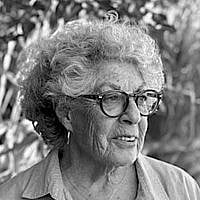
Gloria Steinem: Activist, Feminist, Zionist
Gloria Steinem: Activist, Feminist, Zionist (March 25, 1934 – September 2, 2026)
A few Steinem quotes:
- “Never in my life have I identified as a Christian, but wherever there is antisemitism, I identify as a Jew.”
- “I do feel socially drawn to Jewish warmth, sensuality, expressiveness.”
**
Gloria Steinem considered herself Jewish because she was an outsider and she thought of Jews as the ultimate out group. She was born to a Presbyterian mother and a Jewish father, but her mother encouraged her to embrace her Jewish roots and Jewish values. As such, she strongly believed that Jews had a right to self-determination in the land of Israel, the indigenous homeland of the Jewish people. Early Zionist feminists like Steinem viewed the national liberation of the Jewish people and women’s emancipation as interconnected. She saw the movement as a vehicle to escape European antisemitism and as a way to reinvent the Jewish identity through self-determination of the Jewish people.
Steinem became active in women’s rights in the late 1960s and co-founded Ms. Magazine in 1972. She wasn’t the first in her family to be a feminist activist. Her paternal grandmother, Pauline Steinem, was a suffragist and was a delegate to the 1908 International Council of Women. She also helped rescue family members from Europe during the rise of Naziism. Knowledge of her grandmother’s activities further connected Steinem to her Jewish heritage.
**
The Shock: Zionism equals Racism
On Nov. 10, 1975, the United Nations General Assembly passed Resolution 3379 stating “Zionism is a form of racism and racial discrimination.” The vote passed with 72 countries in favor, 35 against, and 32 abstentions, backed primarily by Arab, Soviet-bloc, and non-aligned nations.
Gloria Steinem was among 60 prominent women, including Betty Friedan and Bella Abzug, who issued a statement condemning the resolution. The women sent a telegram to UN Secretary General Kurt Waldheim, General Assembly President Gaston Thorn, and Assistant Secretary General Helvi Sipila condemning the antizionist resolution.
“As women committed to the worldwide struggle for human rights and equality,” it is “our unanimous conviction that all human rights are indivisible. We are appalled at the ‘racist’ label applied solely to the national self-determination movement of the Jewish people. We decry this implicit denial of Israeli statehood and this incitement to worldwide anti-Semitism.” The resolution, they continued, is the “first and only time an authentic movement for national and ethnic survival would be condemned as racist. This resolution endangers the moral principles of the United Nations Charter by abandoning them to cynical political expediency.”
Steinem and others understood that Jewish self-determination was not racism – even while remaining free to disagree with and criticize the Israeli government. The Jewish Telegraphic Agency wrote about the UN resolution and the women’s condemnation on that same day. For the full list of women who signed the telegram, see: https://www.jta.org/archive/60-prominent-women-condemn-un-anti-zionist-resolution
**
The Precursor to UN Resolution 3379
Five months earlier, (June 19-July 2, 1975) at the United Nations World Conference of the International Women’s Year (IWY) in Mexico City, geopolitical tensions over antizionism and Middle Eastern politics erupted within the global women’s movement for the first time. The point of the conference was to launch the United Nations Decade for Women.
Unfortunately, also on the docket, there was a UN-sponsored forum that included a declaration equating Zionism with racism. Specifically, “The Declaration of Mexico on the Equality of Women and their Contribution to Development and Peace” included a passage calling for the elimination of colonialism, foreign occupation, Zionism, and apartheid. Those responsible for including this language were the Soviet and Arab delegations including the delegates from the Palestine Liberation Organization (PLO). The United States, Israel, Canada, and Australia strenuously objected, as well as Western European and Scandinavian countries, but to no avail. They were outvoted.
Gloria Steinem and other prominent American feminist leaders, including Betty Friedan, Letty Cottin Pogrebin, and Bella Abzug, attended the conference as US delegates. They pushed back against the language equating Zionism with racism, viewing the political maneuver as divisive and a distraction from core transnational women’s rights. Steinem stated that it denied Israeli statehood and encouraged global antisemitism.
The inclusion of the “Zionism equals racism” language at the Mexico City conference served as a direct model for United Nations General Assembly Resolution 3379. The debate deeply divided both the international women’s movement and the American women’s movement. After passage of the resolution, Jewish women around the world felt personally attacked. It caused Jewish and liberal Zionist feminists to face difficult questions on identity and political affiliations. It catalyzed deep debates regarding antisemitism, antizionism, and coalition building – debates that are still going on today.
**
Conclusion
One of Steinem’s favorite Jewish activities was participation in feminist seders, which she did for more than 20 years. The first was hosted by Author E.M. Esther Broner in 1976. A core group of influential women, known as the Seder Sisters, gathered to celebrate and rewrite the holiday narrative year after year. Aside from Gloria Steinem, others included Bella Abzug, Letty Cottin Pogrebin, Robin Pogrebin, Ruth Messinger, Naomi Nimrod, Grace Paley, Naomi Wolf, and Phyllis Chesler among others. Broner and Nimrod co-authored a Women’s Haggadah for these seders that highlighted female biblical figures left out of traditional texts. Steinem described the Women’s Seder as the first spiritually centered experience of her feminist life.
The women who participated tied biblical heroines of the Exodus to their organizing work. Jewish women of today and in the future will always think of Gloria Steinem as a heroine of biblical proportions. We all owe so much to her.
May her memory forever be a blessing.
**
For more information on the issue of Zionism is racism – see this informative case study by Evelyn Sommer written for the World Jewish Congress: https://www.worldjewishcongress.org/en/85th-anniversary/fighting-delegitimization-the-united-nations-zionism-is-racism-resolution-a-case-study