

English Professor; Executive Director, Writing on the Wall
God is a Zionist!
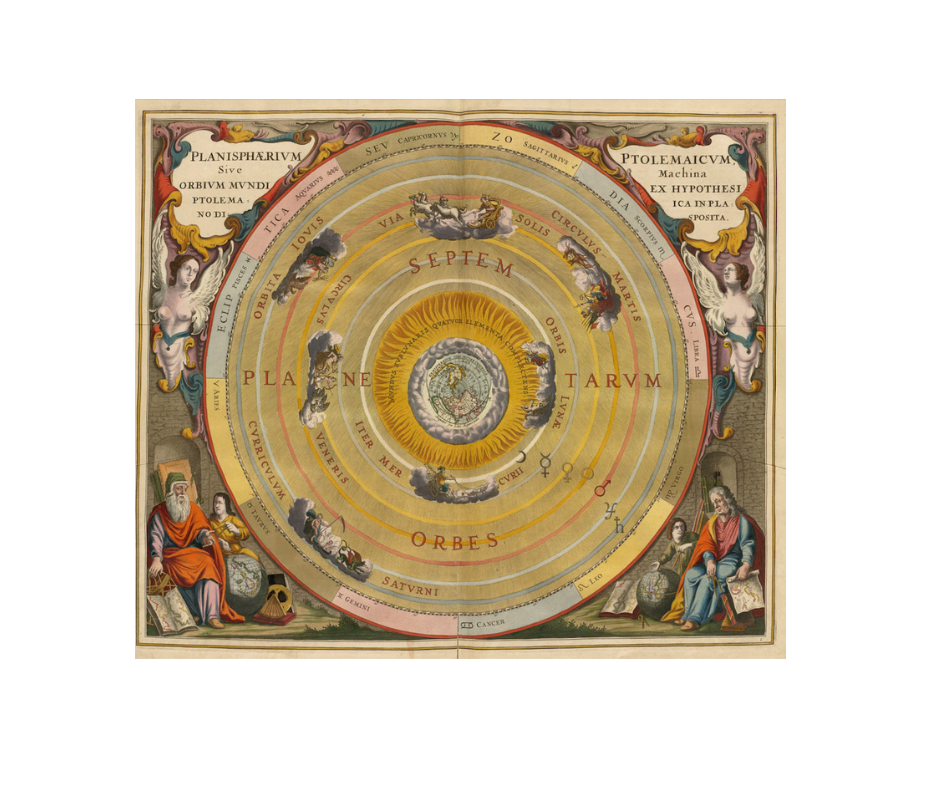
Andreas Cellarius, 1661 [Wiki-Commons]
Will Zion be consoled?
In our last episode, God pulls Zion out of her domestic depression, promising that from her cramped home, her tent, she will burst outward – from Jerusalem to the Land of Israel, and then further to all humanity, to the whole cosmos.
The penultimate act of our seven-act drama, From Catastrophe to Consolation, moves not from the inside out but from the outside in. The created world converges on Zion; Seas and skies turn toward her; Lebanon’s forests uproot themselves and advance; flocks from Sheba and beyond press forward. All creation circles inward, gathering around Zion as its center.
Creation 2.0
Isaiah starts with a new creation: 2.0.
Genesis begins with ‘Let there be light’; Isaiah responds with: ‘Rise, shine for thy light is come.’ And again in Genesis, ‘and darkness covered the earth’; the parallel in Isaiah, ‘behold the darkness covers the earth.’
The new creation Isaiah describes is not, as in Genesis, the heavens and the earth, but Israel as Light. This is not the visible light of sun, moon, and stars, created on the fourth day, but the hidden light of the first day — the primordial radiance that God set aside, preserved for the righteous in the world to come.
In this ecstatic vision, Israel both sees this light and becomes its radiant source.
A new twist on Israel as a light to the nations: they are the light, invisible, that illuminates the created world for all of Humanity. Having been schooled in reading God’s legible hand in the universe, Israel, through her light, now enlightens the world.
Isaiah has already shown us the terrifying sublimity of Israel’s suffering; now God shows Israel experiencing something like a divine terror of sublime joy at the scene she is invited to watch.
In a reversal of Genesis, the ‘tide of camels’ darkens the earth, but with a darkness shining with Israel’s prosperity. In awe, Israel sees former predators bearing riches, spices and minerals to Zion, and bringing the exiled back in their caravans and ships. Even the rams brought from distant lands are carried to Jerusalem, destined for God’s altar. The gates of Jerusalem remain open, no fear of attack, to receive bounty brought by the seas, the wealth of nations.
The prophet himself exclaims in a flight of innocent wonder: ‘who are these who fly like a cloud and like doves to their dovecotes?’ The skies also bring God’s creations to the world’s center, Jerusalem.
From the air to the sea: the ships of Tarshish bear the exiled coming home, carrying troves of gold and silver. Then Lebanon’s trees, cypress, fir, and box, are taken into the centrifugal field of Zion. Not only the natural world bends towards Zion, but also the former despots and dictators, oppressors of Israel, who glorify the God of Israel, Israel’s Holy One, and acknowledge Zion as the City of God.
Poetry for Pagans
In the new light of Zion, the nations discover a language they never imagined; they also are able to read the poetry of God’s creation.
Formerly idolaters, literalists, they now hear the walls of Jerusalem calling out ‘Redemption.’ The gates, similarly, no longer needed for defense, cry out ‘God’s Praise.’ In the light of Zion, the city itself, even its stones become a voice to the nations, including those who sought to destroy her.
The glow of the moon and the shining light of the sun make one final appearance in this eschatological vision, before being outmoded by the infinite, eternal light bestowed by God upon Israel.
In the final breathtaking inversion, God alters the cosmic order: it is not Israel who brings glory to God, but God who becomes the glory of Israel. In the sublimity of messianic days, ‘your God,’ says the prophet to Zion, ‘shall be Your glory.’ Microcosm and macrocosm, in this virtuoso poetic performance, are fused: God and Zion enlighten the world through their shared glory.
But the prophet does not leave us with visions of heavenly splendor. He stops in mid-sentence—seeming to say, ‘it’s about time.’
And so: our act ends, with a return to time, and human mortality: ‘your mourning,’ the prophet interjects ‘shall come to an end.’ Encouraging news, but in the future tense.
In the end of our act, back in time, Isaiah shows Israel small, diminished, but hopeful: a ‘shoot’ still nurtured by God, but one day to become a ‘mighty nation.’
For now God waits—“I, the Lord, will hasten it in its time.”
God says: I’m ready. Are you?
Stay Tuned for the Final Act!